Post-credit scenes: results for “tag: apple”

Snow White and the Seven Dwarfs (1938) artwork. Still a mystery after the credits.

A beautiful girl, Snow White, takes refuge in the forest in the house of seven dwarfs to hide from her stepmother, the wicked Queen. The Queen is jealous because she wants to be known as "the fairest in the land," and Snow White's beauty surpasses her own.

Poster, Snow White (2025). You can get up when the credits start.

Following the benevolent King's disappearance, the Evil Queen dominated the once fair land with a cruel streak. Princess Snow White flees the castle when the Queen, in her jealousy over Snow White's inner beauty, tries to kill her. Deep into the dark woods, she stumbles upon seven magical dwarves and a young bandit named Jonathan. Together, they strive to survive the Queen's relentless pursuit and aspire to take back the kingdom.

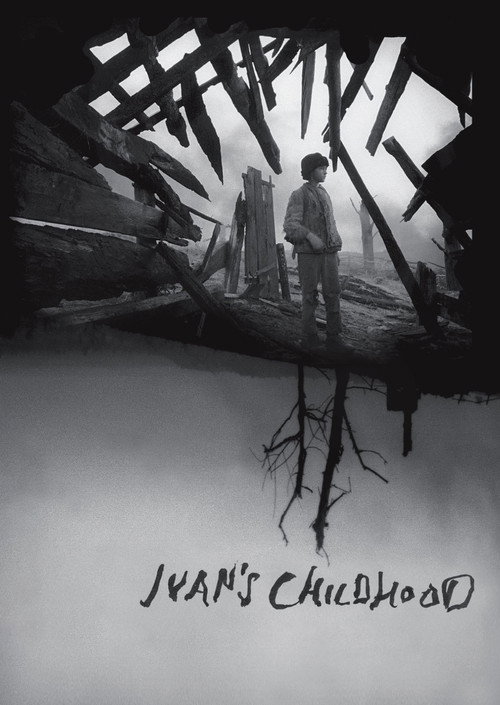
Poster, Ivan's Childhood (1962). Nobody has voted on this one.

In WW2, twelve year old Soviet orphan Ivan Bondarev works for the Soviet army as a scout behind the German lines and strikes a friendship with three sympathetic Soviet officers.

Movie art for William Tell (2025), post-credit scene unknown.

The narrative unfolds in the 14th Century, when the European nations vie for supremacy within the Holy Roman Empire. The ambitious Austrian Empire, desiring more land, invades neighbouring Switzerland, a serene and pastoral nation. Protagonist William Tell, a formerly peaceful hunter, finds himself forced to take action as his family and homeland come under threat from the oppressive Austrian King and his ruthless warlords.

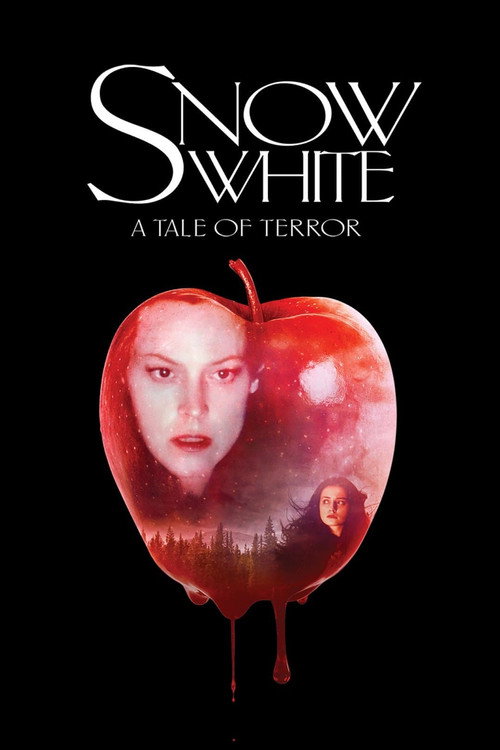
Poster for Snow White: A Tale of Terror (1997), awaiting its first vote.

When young Lili's mother dies in childbirth, her father remarries Lady Claudia, a woman ruled by an evil mirror with the power to make her queen of all living things. After escaping an attempt on her life, Lili finds herself lost in a dark forest, where living happily ever after seems unlikely.

Eagle vs Shark (2007): nobody has checked the credits yet.

Love blossoms for Lily over double Meaty Boy burgers at mid-day when uber-computer nerd Jarrod comes in and leaves with free extra large fries. After gatecrashing Jarrod's party and proving her skills on the game console, Lily goes down to Jarrod's home town with him so he can settle an old score with a past school bully.

Poster for Yellow Submarine (1968). Never been answered.

The wicked Blue Meanies take over Pepperland, eliminating all color and music. As the only survivor, the Lord Admiral escapes in the yellow submarine and journeys to Liverpool to enlist the help of the Beatles.

Poster for The Thief of Bagdad (1924), awaiting its first vote.

A nameless thief falls in love with the Caliph of Bagdad's daughter. The Caliph will give her hand to the suitor that returns with the rarest treasure after seven moons. The thief sets off on a magical journey while, unbeknownst to him, another suitor, the Prince of the Mongols, is not playing by the rules.

Movie poster for Steve Jobs: The Man in the Machine (2015), waiting for its first vote.

When Steve Jobs died the world wept. But what accounted for the grief of millions of people who didn’t know him? This evocative film navigates Jobs' path from a small house in the suburbs, to zen temples in Japan, to the CEO's office of the world's richest company, exploring how Jobs’ life and work shaped our relationship with the computer. The Man in the Machine is a provocative and sometimes startling re-evaluation of the legacy of an icon.

Poster for The Botany of Desire (2009). No votes yet on whether it has a post-credit scene.

Featuring Michael Pollan and based on his best-selling book, this special takes viewers on an exploration of the human relationship with the plant world — seen from the plants' point of view. Narrated by Frances McDormand, the program shows how four familiar species — the apple, the tulip, marijuana and the potato — evolved to satisfy our yearnings for sweetness, beauty, intoxication.

An Apple from Paradise (2010) poster. Still unanswered: is there a scene after the credits?

A pious old man, who is a proponent of suicide attackers, comes to Kabul to visit his only son, who, after the holy war had remained in the Soviet Union. He had enrolled his son in a religious school "to study the Koran and return to the village as a Mullah". In Kabul he learns that his son had decided to become a divine suicide bomber so as to go to Heaven. The film presents two different forces of the inner world of the protagonist father: paternal feelings and the holy religious ideology. The spectator witnesses how he loses his only son and holy belief. Shot in chaotic and dirty Kabul, the film portrays the incorrect interpretation of religion and the conflict of generations.

Faraway Fields (2022) poster. The count is still zero.

Jean, a young French hooligan, is sent on a forced vacation to his grandfather Evald, who lives in the Slovenian countryside. Despite Evald's warm welcome, Jean remains quite withdrawn, speaks only French with his grandfather, and coldly rejects his lifestyle, which is mainly devoted to tending the orchard and selling apples on the local road. While they struggle to get used to life together, frost is slowly approaching Evald's orchard.

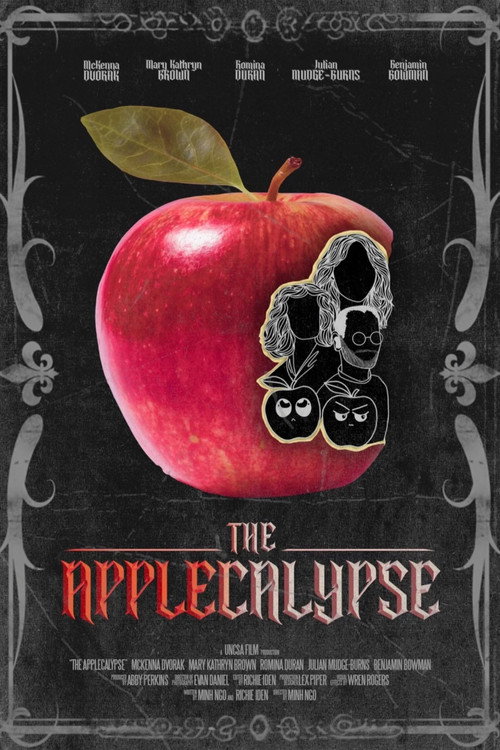
Poster art for The Applecalypse (2024), an open question on post-credit scenes.

After Eve causes a cataclysmic event that sucks all apples into a dark void, the two surviving apples must recruit the help of Steve Jobs and Isaac Newton to save the Garden of Eden.

The Orchard (1995). Nobody has said whether there is anything after the credits.

One morning, as kids are stealing apples from an old man’s orchard high above a seaside town, an earthquake hits. No one is hurt, and the townsfolk are non-plussed, but the old man is agitated: he alone is aware of the imminent tsunami and tries to warn the village. Based on a classic Japanese fable, The Orchard was made by one-man band Bob Stenhouse, who had been nominated for an Academy Award the previous decade for pioneer tale The Frog, The Dog and The Devil. Fans of the animator will recognise his lush, luminous hand-drawn style.

The Steamroller and the Violin (1961) poster. Still unanswered: is there a scene after the credits?

Seven year old Sasha practices violin every day to satisfy the ambition of his parents. Already withdrawn as a result of his routines, Sasha quickly regains confidence when he accidentally meets and befriends worker Sergei, who works on a steamroller in their upscale Moscow neighborhood.

Privacy policy

When you vote, we save your Yes or No answer and when you voted.

We use a cookie and your internet address to recognize your vote on each movie. This prevents repeat votes. The cookie lasts for five years.

Your votes are kept as part of the movie totals.