Post-credit scenes: results for “tag: backpack”

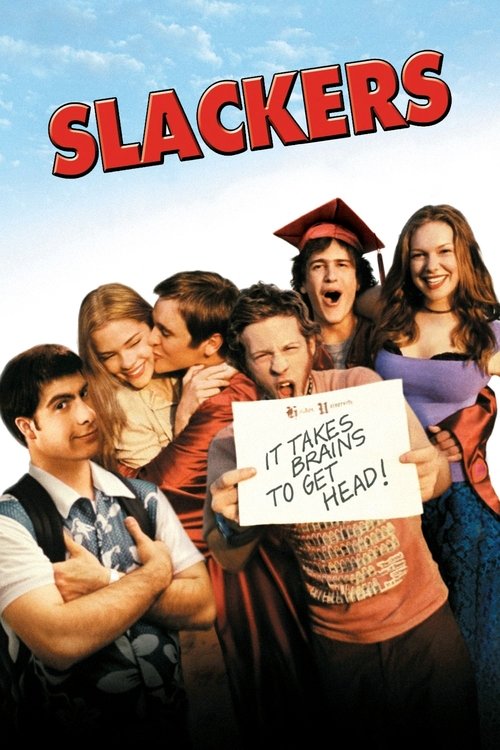
Slackers (2002) poster image. Zero votes so far.

Dave, Sam and Jeff are about to graduate from Holden University with honors in lying, cheating and scheming. The three roommates have proudly scammed their way through the last four years of college and now, during final exams, these big-men-on-campus are about to be busted by the most unlikely dude in school. Self-dubbed Cool Ethan, an ambitious nerd with a bad crush, enters their lives one day and everything begins to unravel.

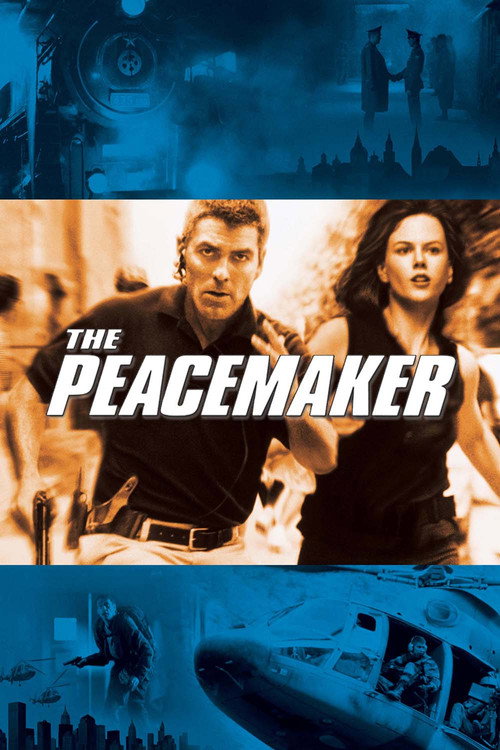
Cover image for The Peacemaker (1997), not yet voted on.

When a train carrying atomic warheads mysteriously crashes in the former Soviet Union, a nuclear specialist discovers the accident is really part of a plot to cover up the theft of the weapons. Assigned to help her recover the missing bombs is a crack Special Forces Colonel.

Movie art for Survive (2021), post-credit scene unknown.

In a near-future post apocalyptic world, a father must cross a dangerous landscape to reunite with his wife and daughter.

Monsieur Lazhar (2011): nobody has checked the credits yet.

During a harsh Montréal winter, an elementary-school class is left reeling after its teacher commits suicide. Bachir Lazhar, a charismatic Algerian immigrant, steps in as the substitute teacher for the classroom of traumatized children. All the while, he must keep his personal life tucked away: the fact that he is seeking political refuge in Québec – and that he, like the children, has suffered an appalling loss.

Axolodyssey (2026) poster. Still unanswered: is there a scene after the credits?

An animated adventure about Jojo the Axolotl, taking on the world to find his family, set in a fantastically inspired Mexican lakeside.

Crocodile (2000). Nobody has said whether there is anything after the credits.

Eight college students board a houseboat for spring break that promises to be the best of their young lives...how many will survive?

Backpack Thieves (2026) cover. Nothing recorded about its credits.

It's 4 PM at the Hollywood Reservoir... and there's a backpack thief on the loose. Tracking the thief through "Find My," two teenage boys chase him down to Compton, California.

Film poster, Move (2011). No post-credit verdict yet.

3 guys, 44 days, 11 countries, 18 flights, 38 thousand miles, an exploding volcano, 2 cameras and almost a terabyte of footage - a short devoted to motion and travel.

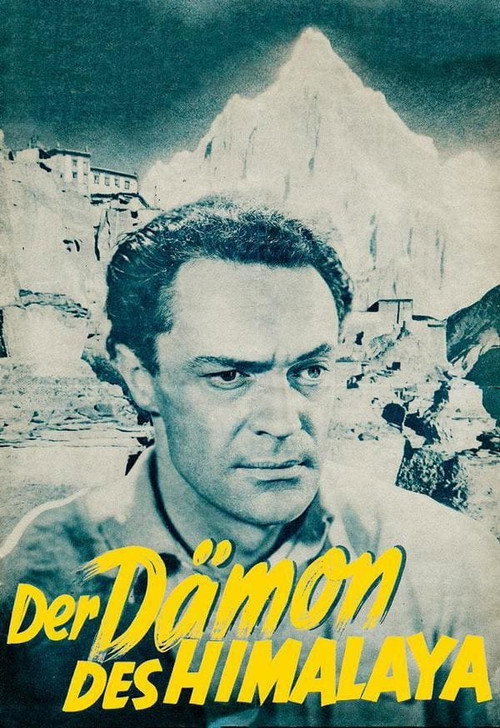
Key art for Demon of the Himalayas (1935), unanswered on the post-credit question.

German film about a Himalayan expedition and the search for a mountain spirit, who guarded, according to the tradition of the locals, the peaks of high mountains. The long-lost and recently rediscovered and restored film is now a unique cinematic document because it is the first feature film that was shot directly in the Himalayas (up to 6400 m altitude). Hans Ertl even turned his Bell & Howell to the main summit of Sia Kangri, 7422m. Likewise, the film contains footage from India and Tibet, from a time long before the emergence of mass tourism. Some of the footage was later recycled in ‘Lost horizon’ (1937) by Frank Capra and in ‘Storm over Tibet’ (1952).

Film artwork for Backpack (2020), no verdict on the credits.

A co-dependent, anxiety ridden couple find themselves lost in the woods, fighting to survive their surroundings -- and their relationship.

Alpine Refuges (1943). Nobody has said whether there is anything after the credits.

Documentary on alpine refuges and the life of mountaineers. The film begins with images recreating vintage mountain climbers that end up spending a night in a fortune shelter. Then the scene is linked with images of a current refuge and explains how refuges are today, showing models and images of real refuges and explaining how life is in them and the role they play in mountaineering. The film was produced in 1942 by the Instituto Nazionale Luce during the Italian Fascist regime.

Poster art for The Mountain Calls (1938), an open question on post-credit scenes.

During an early, unsuccessful attempt at climbing the Matterhorn, Edward Whymper finds himself rescued by an italian guide, Jean Antoine Carrel. The two men quickly build a friendship and agree to reach the peak together. However, local villagers ploto to divide the alliance of Whymper and Carrel and both men join rival teams as they set out in a race to conquer the mountain. A mountaineering drama based on the novel by Carl Haensel and inspired in the dramatic true story of Edward Whymper, who led the first successful ascent of the Matterhorn in 1865. There is another version of the film titled The Challenge, shot the same year in English.

Movie poster for 73 Seconds (2024), waiting for its first vote.

It's 1986, Shannon Crane means to be bound for a future she cannot know, on a day filled with possibility and hope. In her 7th grade class, Shannon has to reckon with the ordinary calamity of being herself after a simultaneous incident of being bullied, is caught between the extraordinary catastrophic event of the space challenger disaster, leaving a debris of searching, questioning.

Three Lives and a Rope (1934). Nobody has said whether there is anything after the credits.

The idea is a simple one: three alpinists climb in the Mont Blanc Massif. This situation brings one face to face with the dangers of the mountain: avalanches, crevasses, fog, the climbing of the rocks, roping up, etc. All of this is magnified, transcended by a remarkable and strong use of the language of cinema. One of the first films about high mountains with Roger Frison-Roche and magnificent music by Maurice Jaubert

Last Stop for Paul (2008) cover. Nothing recorded about its credits.

Charlie and Cliff decide they want to go to the Full Moon party in Thailand. Along the way they travel around the world sprinkling the ashes of their dead friend Paul. As they go from country to country they meet a wide variety of crazy people and have insane adventures.

Poster for Cervino 1901 (1903). Never been answered.

On September 28th, 1903, the Urban Mountaineering Expedition, headed by Frank Ormiston-Smith, left Zermatt to attempt the conquest of the Matterhorn. On the 29th, the conquest was completed by the filming of the panorama from the actual summit of the mountain. The film consists of 20 scenes and illustrates the whole ascent from Zermatt through the Hornli Ridge. A copy of the film was found in Zermatt in 1953 and was was erroneously attributed to Frederick Burlingham and dated 1901. Since then, the film has been widely publicized as the first mountain film under the title of 'Cervin 1901', but this is incorrect. Ormiston previously had made 'Alpine series' (1901), 'The ascent of Mont Blanc' (1902), 'Climbing the Great Schreckhorn' (1902) and 'Ascent of the Jungfrau' (1903). The pictures and descriptions of the Charles Urban Trading 1903 film catalogue show without any doubt that 'Ascent of the Matterhorn' and 'Cervin 1901' are the same film.

Poster for Battle for the Mountain (1941), awaiting its first vote.

Sound and shortened version of 'Im Kampf mit dem Berge', Arnold Fanck's second major mountaineering film, from 1921. The film follows two mountain enthusiasts, battling through a glacier area in the Swiss mountains. The mountaineers are two very prominent skiers at the time, Hannes Schneider and Ilse Rohde, who climb the Lyskamm. Arnold Fanck's film production company (Berg und Sportfilm GmbH) was acquired in 1925 by the UFA, whose cultural department reedited the film into a short and sound version in 1940 with the music of Giuseppe Becce.

Privacy policy

When you vote, we save your Yes or No answer and when you voted.

We use a cookie and your internet address to recognize your vote on each movie. This prevents repeat votes. The cookie lasts for five years.

Your votes are kept as part of the movie totals.