

After the death of the paranoid emperor Tiberius, Caligula, his heir, seizes power and plunges the empire into a bloody spiral of madness and depravity.
After the death of the paranoid emperor Tiberius, Caligula, his heir, seizes power and plunges the empire into a bloody spiral of madness and depravity.

Drunk and disillusioned Roman, Marcellus Gallio, wins Jesus' robe in a dice game after the crucifixion. Marcellus has never been a man of faith like his slave, Demetrius, but when Demetrius escapes with the robe, Marcellus experiences disturbing visions and feels guilty for his actions. Convinced that destroying the robe will cure him, Marcellus sets out to find Demetrius — and discovers his Christian faith along the way.

The story picks up at the point where "The Robe" ends, following the martyrdom of Diana and Marcellus. Christ's robe is conveyed to Peter for safe-keeping, but the emperor Caligula wants it back to benefit from its powers. Marcellus' former slave Demetrius seeks to prevent this, and catches the eye of Messalina, wife to Caligula's uncle Claudius. Messalina tempts Demetrius, he winds up fighting in the arena, and wavers in his faith.

Roman emperor Caligula leaves the last days of glory amidst orgies of food and sex. During a show by two nude slaves, the emperor is particularly attracted to one of them, Lysia, ignoring that she had been planted close to him with orders to murder him. Only, the young man makes her feel for him, passion and motherly love, and she'll protect him rather then fulfill her mission. Drama ensues.

What is true and what is false in the hideous stories spread about the controversial figure of the Roman emperor Gaius Julius Caesar Augustus Germanicus (12-41), nicknamed Caligula? Professor Mary Beard explains what is accurate and what is mythical in the historical accounts that portray him as an unbalanced despot. Was he a sadistic tyrant, as Roman historians have told, or perhaps the truth about him was manipulated because of political interests?
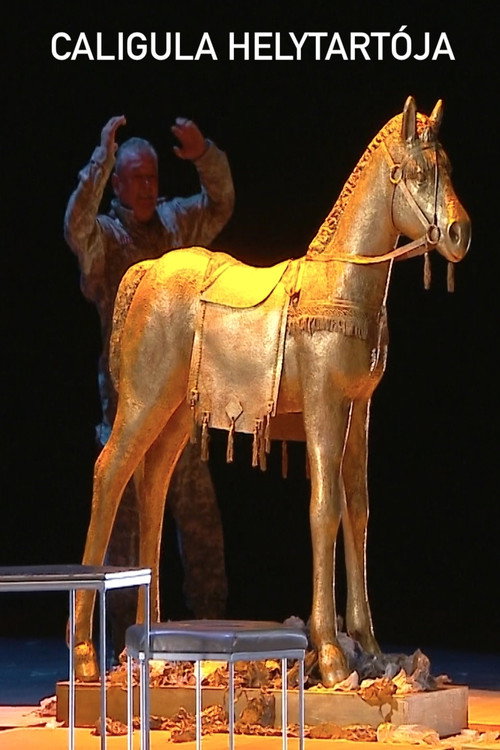
Caligula, governor of Syria, is ordered by the emperor to take his statue to the temple in Jerusalem. The governor becomes a point of conflict between the will of the emperor and the Jewish community, which opposes it, and with crystal-clear logic he ends up refusing to obey the order.

Inspired by the writings of Suetonius and Dio Cassius, this baroque-style film, which blends theatre and cinema, retraces key events and facets of the personality of the third Roman emperor: Caligula.