Post-credit scenes: results for “tag: deforestation”

Princess Mononoke (1997). Nobody has said whether there is anything after the credits.

Ashitaka, a prince of the disappearing Emishi people, is cursed by a demonized boar god and must journey to the west to find a cure. Along the way, he encounters San, a young human woman fighting to protect the forest, and Lady Eboshi, who is trying to destroy it. Ashitaka must find a way to bring balance to this conflict.

Film artwork for OZI: Voice of the Forest (2024), no verdict on the credits.

Separated from her parents when their forest home is destroyed, Ozi is taken in by kind wildlife sanctuary owners who keep her safe and slowly teach her to communicate through sign language. With the combination of her new skills and natural talent for social media, Ozi soon has a worldwide following. When she learns that her parents might be alive, Ozi sets off on a quest to find them and to tell the world what is happening to the rainforest before it’s too late. With help from new friends, cheeky monkey Chance and loveable rhino Honkus, Ozi discovers that one voice really can change the world.

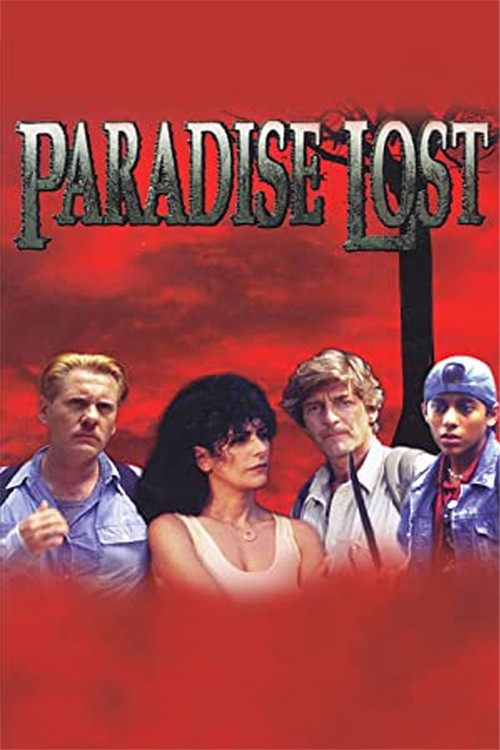
The Emerald Forest (1985) poster. Still unanswered: is there a scene after the credits?

For ten years, engineer Bill Markham has searched tirelessly for his son Tommy who disappeared from the edge of the Brazilian rainforest. Miraculously, he finds the boy living among the reclusive Amazon tribe who adopted him. This is when Bill's adventure truly begins.

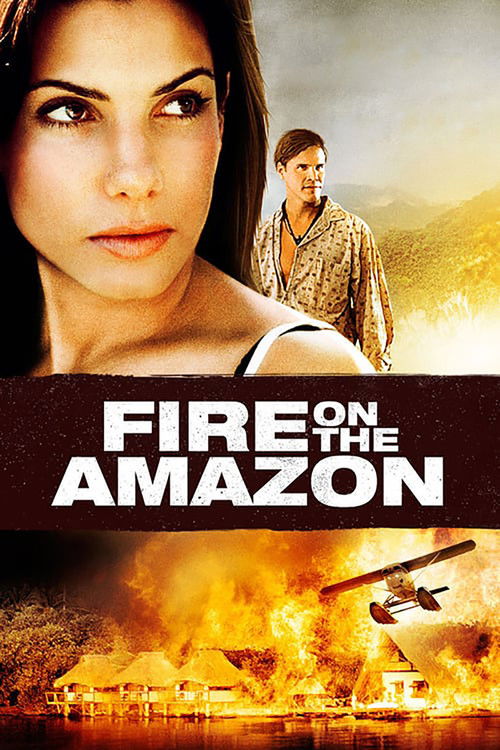
Movie poster for Fire on the Amazon (1993), waiting for its first vote.

When a well-known environmental researcher is murdered in the Amazon jungle, an arrogant photojournalist joins forces with a beautiful young activist to find out who is responsible. Along they way, they fall in love as they discover the men responsible for the killing would be more than willing to murder again if it will keep them quiet.

Film poster, Forest Warrior (1996). No post-credit verdict yet.

McKenna, the spirit of Tanglewood Forest, can transform into a bear, a wolf or an eagle. When a gang of evil lumberjacks led by Travis Thorne arrive in Tanglewood to chop the forest down, McKenna cannot let this happen. With his new friends, the Lords of Tanglewood, a band of children who love to play in the forest, he battles Thorne and his gang.

Film poster, 2067 (2020). No post-credit verdict yet.

A lowly utility worker is called to the future by a mysterious radio signal, he must leave his dying wife to embark on a journey that will force him to face his deepest fears in an attempt to change the fabric of reality and save humankind from its greatest environmental crisis yet.

Cover image for Jamary (2025), not yet voted on.

Ane, a 12-year-old influencer, spends her afternoons playing in the Jamary village, located in the Amazon region. One day, after being challenged by her cousins, Ane ventures into the forest and encounters the Anhangá, a mystical indigenous spirit devoted to protecting the rainforest.

Poster for Planet of the Humans (2019), blank on post-credit scenes.

Forget all you have heard about how “Renewable Energy” is our salvation. It is all a myth that is very lucrative for some. Feel-good stuff like electric cars, etc. Such vehicles are actually powered by coal, natural gas… or dead salmon in the Northwest.

Poster for Breakpoint: A Counter History of Progress (2019). Never been answered.

An account of the last two centuries of the Anthropocene, the Age of Man. How human beings have progressed so much in such a short time through war and the selfish interests of a few, belligerent politicians and captains of industry, damaging the welfare of the majority of mankind, impoverishing the weakest, greedily devouring the limited resources of the Earth.

Poster art for When Two Worlds Collide (2016), an open question on post-credit scenes.

In this tense and immersive tour de force, audiences are taken directly into the line of fire between powerful, opposing Peruvian leaders who will stop at nothing to keep their respective goals intact. On the one side is President Alan Garcia, who, eager to enter the world stage, begins aggressively extracting oil, minerals, and gas from untouched indigenous Amazonian land. He is quickly met with fierce opposition from indigenous leader Alberto Pizango, whose impassioned speeches against Garcia’s destructive actions prove a powerful rallying cry to throngs of his supporters. When Garcia continues to ignore their pleas, a tense war of words erupts into deadly violence.

Movie poster for Surviving Progress (2011), waiting for its first vote.

Humanity’s ascent is often measured by the speed of progress. But what if progress is actually spiraling us downwards, towards collapse? Ronald Wright, whose best-seller, “A Short History Of Progress” inspired “Surviving Progress”, shows how past civilizations were destroyed by “progress traps”—alluring technologies and belief systems that serve immediate needs, but ransom the future. As pressure on the world’s resources accelerates and financial elites bankrupt nations, can our globally-entwined civilization escape a final, catastrophic progress trap? With potent images and illuminating insights from thinkers who have probed our genes, our brains, and our social behaviour, this requiem to progress-as-usual also poses a challenge: to prove that making apes smarter isn’t an evolutionary dead-end.


Poster art for Who Bombed Judi Bari? (2012), an open question on post-credit scenes.

Judi Bari and Darryl Cherney were falsely arrested for car-bombing themselves on May 24, 1990 while on an Earth First! musical organizing tour for Redwood Summer. They sued the FBI for violations of the First Amendment, claiming the FBI knew they were innocent but arrested them to try to silence them. Having survived the bomb but now stricken by cancer, Judi Bari, a leader of the movement to save California's old growth redwoods, gives her on-camera, deathbed testimony about the attempt on her life and her colorful organizing history with the radical environmental movement Earth First.

Poster for Takeout (2020). Never been answered.

Filmmaker Michal Siewierski embarks on an audacious journey to expose the real reasons behind the Amazon forest fires and the alarming rate of deforestation in Brazil. Ranging from people’s food choices, to major political corruption, corporate greed and crimes against people and nature. Takeout tackles the facts and stories that traditional media outlets are too afraid to cover.

Axolodyssey (2026) poster. Still unanswered: is there a scene after the credits?

An animated adventure about Jojo the Axolotl, taking on the world to find his family, set in a fantastically inspired Mexican lakeside.

Film poster, Butterfly (2001). No post-credit verdict yet.

Living in an ancient redwood tree for more than two years to prevent the tree from being clear-cut, Julia Butterfly Hill captured our hearts and minds by showing us that one person can make a difference. Through interviews with Hill, filmmaker Doug Wolens paints a portrait of an intensely spiritual and articulate woman who encountered both beauty and horror (she was assaulted by lumber company helicopters at one point) during her time above ground.

Privacy policy

When you vote, we save your Yes or No answer and when you voted.

We use a cookie and your internet address to recognize your vote on each movie. This prevents repeat votes. The cookie lasts for five years.

Your votes are kept as part of the movie totals.