Post-credit scenes: results for “tag: experimental animation”

Movie poster for Projections (1993), waiting for its first vote.

The innovative and influential British filmmaker Derek Jarman was invited to direct the Pet Shop Boys' 1989 tour. This film is a series of iconoclastic images he created for the background projections. Stunning, specially shot sequences (featuring actors, the Pet Shop Boys, and friends of Jarman) contrast with documentary montages of nature, all skillfully edited to music tracks.

Sweet Spot (2025) poster. Still unanswered: is there a scene after the credits?

“Sweet Spot” is an experimental animated short film that uninhibitedly explores the dialog between the work and its authors, Jorge Ribeiro and Paulo Patrício, whose points of view and creative approaches, both in terms of cinematographic language and ways of being, are quite different. Through this duality, and starting from a shared but at the same time individual process, the directors seek to understand at what point the short film they are making together reaches its “sweet spot”. In other words, the ideal point at which the work is considered finished.

Poster, Debt Quest (2024). Nobody has voted on this one.

In this 90-minute epic (comprised of community sourced experimental animation from the Hellavision Television Network) - the story follows Clover, a carefree spirit who joins a party go on an adventure as they try to pull themselves from financial despair by fulfilling the Bug King’s Debt Quest.

Regeneration (2009) artwork. Still a mystery after the credits.

Regeneration is a film about transformation. Starting in a dark place the character reaches toward the divine and breaks into the world of the spirit. Through this act representing an outstretched hand we see that the Holy Spirit represented as a dove is pursuing us even more urgently. The meeting of the two represents the freedom in flight found in trusting fully in the Holy Spirit and is completed with the return to the heart now fully regenerated.

Poster for Anthropic Principle (2016), awaiting its first vote.

arc of the natural world’s evolution from the primeval environment to the Anthropocene and back again premiered in program Death is Green at the Whitney Museum of American Art part of Dreamlands: Immersive Cinema and Art 1905-2016 organized by Chrissie Iles

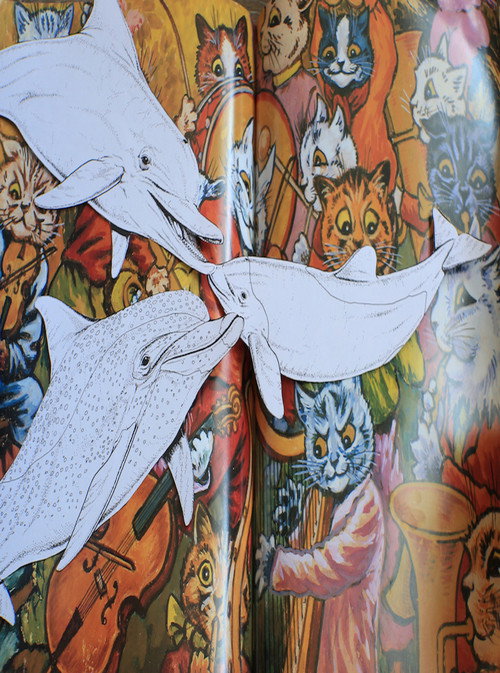
Key art for Secret (2020), unanswered on the post-credit question.

A family pod of three dolphins navigates decay as an inevitable register while also having a secret ascension to a higher ground.

Image for Losing Touch, a film with no post-credit data.

Searching for life in daily rituals, Losing Touch undertakes a shift in perception and presents the city as an ugly yet ecologically rich landscape. The film depicts the internal dialogue on coping with the grief and fear of ecological degradation, using the local streets of Berlin as a means to materialise and confront these emotions. As both the body and mind begin to wander, encounters with the landscape over a 24 hour period are transformed into an overstimulating and emotionally charged journey. Camcorder footage, film developed in beer and cyanotype create sensational and playful depictions of the surroundings, joining the rats scurrying on the ground and fleeing the night lights with the moths. Creatures of metal and flesh interact within and between the frames, coming together as an ugly yet vibrant community. Subverting the nature-culture dichotomy, a new image of nature is formed, not only as a romantic, distant place, but rather a dirty, omnipresent force.

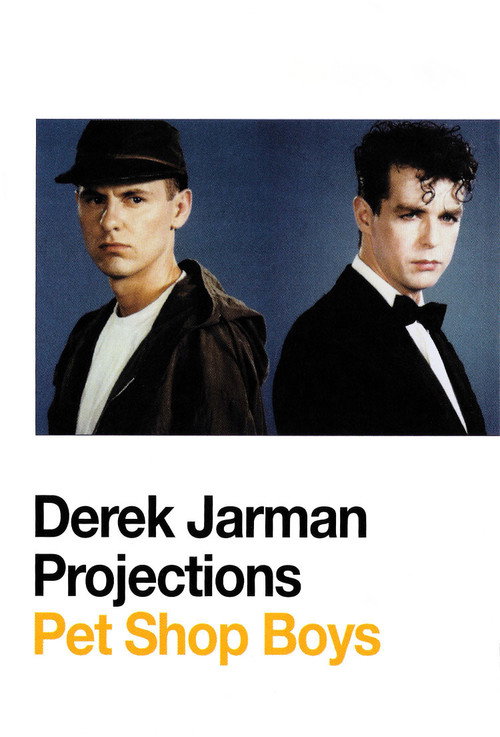
Image for Stitched Together, a film with no post-credit data.

An experimental hand-stitched short film, exploring the feelings of gender dysphoria experienced by transgender people.

Movie art for chimera (2024), post-credit scene unknown.

A child is attacked and turned into a chimera and must learn to navigate his strange world as an entirely new kind of being.

Norsk Folksang (2011): nobody has checked the credits yet.

Emerging from the sea onto land an axolotl swims through complex terrain parallel to a man searching for an encounter with God.

Poster art for The Sketch (2023), an open question on post-credit scenes.

Upon his arrival in Paris, filmmaker Tomas Cali immerses himself in learning French, as well as the language of sketching. In an art studio, he meets transgender life model Linda Demorrir, who helps him to connect with himself and his new city in a profoundly different way.

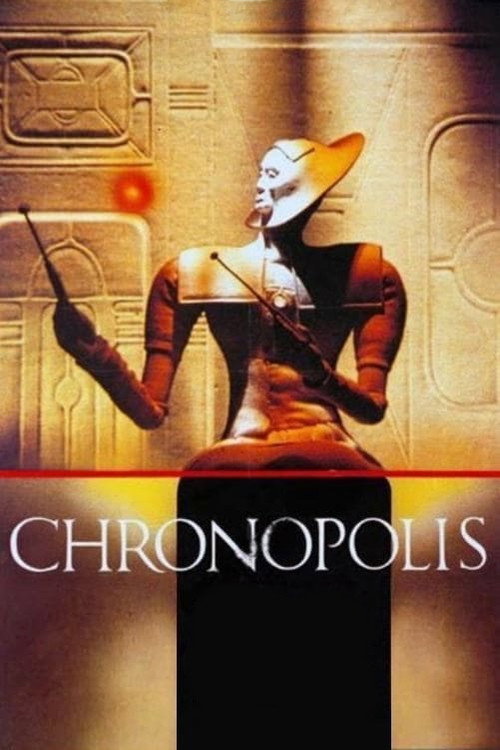
Poster for Chronopolis (1983). No votes yet on whether it has a post-credit scene.

In a gargantuan city lurking in the sky, powerful immortals who have become jaded with eternal life. Most of their time is spent monotonously constructing bizarre and unusual objects while waiting for the ultimate gift to arrive.

Movie poster for High Frequency (2023), waiting for its first vote.

In a world of her own, a young sound engineer spends all her time recording the sounds of the city. That is, until she encounters a man and succeeds in picking up the frequencies of his inner melody.

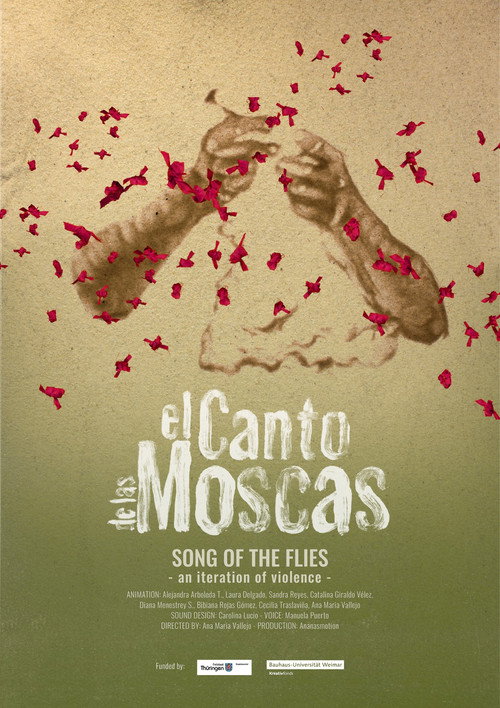
Poster for Song of the Flies (2021), blank on post-credit scenes.

The experimental animated film Song of the Flies (El Canto de las Moscas), translates the desolation caused by the violence of the Colombian armed conflict through the poetic voice of Maria Mercedes Carranza (1945–2003) and the audiovisual dialogue between 9 Colombian women. In 24 places, as a transit over the course of a day (Morning, Day, Night) a map of terror is drawn where massacres took place in Colombia in the 1990s. Archival images, the artists’ personal memories and the use of loops and analogue materials bring to life the landscapes ravaged by violence and build a polyphony of memory and mourning, a universal song of pain.

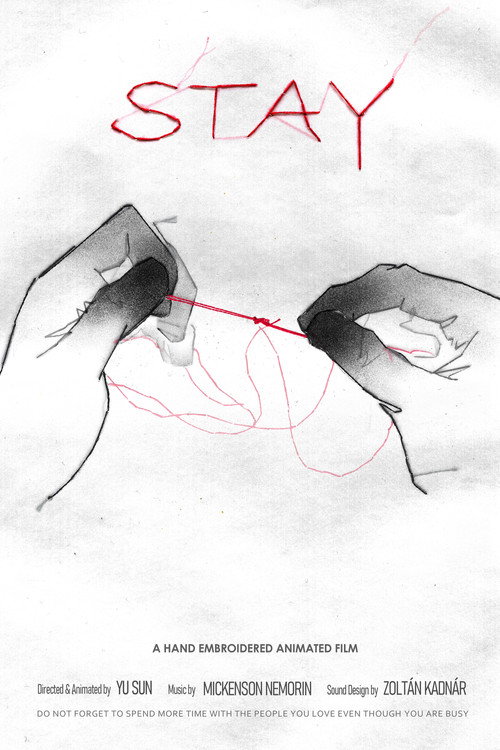
Poster for Stay (2022), awaiting its first vote.

Needles are used to repair the damage. Stay is a 5-minute animated film made using hand embroidery on tracing paper, depicting the relationship between a daughter and her absent father. Don’t forget to spend more time with the people you love even though you are busy.

Phantasia (2024) poster image. Zero votes so far.

X-ray images were invented in 1895, the same year in which the Lumière brothers presented their respective invention in what today is considered to be the first cinema screening. Thus, both cinema and radiography fall within the scopic regime inaugurated by modernity. The use of X-rays on two sculptures from the Bilbao Fine Arts Museum generates images that reveal certain elements of them that would otherwise be invisible to our eyes. These images, despite being generally created for technical or scientific purposes, seem to produce a certain form of 'photogénie': they lend the radiographed objects a new appearance that lies somewhere between the material and the ethereal, endowing them with a vaporous and spectral quality. It is not by chance that physics and phantasmagoria share the term 'spectrum' in their vocabulary.

Privacy policy

When you vote, we save your Yes or No answer and when you voted.

We use a cookie and your internet address to recognize your vote on each movie. This prevents repeat votes. The cookie lasts for five years.

Your votes are kept as part of the movie totals.