
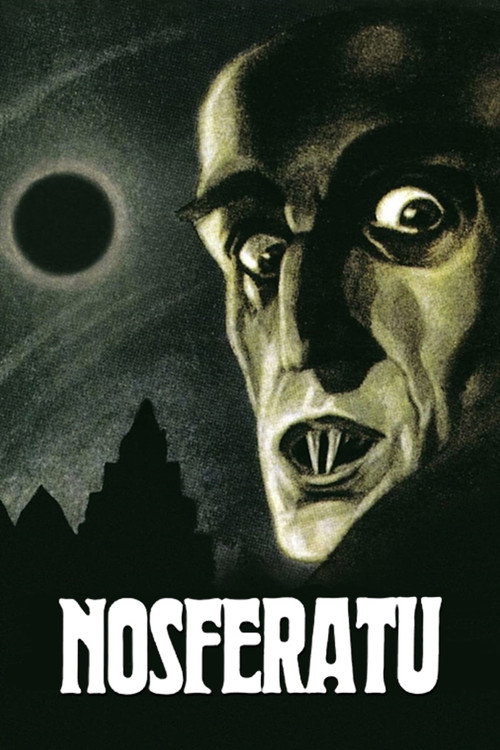
The mysterious Count Orlok summons a happily married real estate agent to his castle, located up in the Transylvanian mountains, to finalise a terrifying deal.
The mysterious Count Orlok summons a happily married real estate agent to his castle, located up in the Transylvanian mountains, to finalise a terrifying deal.

In this classic German thriller, Hans Beckert, a serial killer who preys on children, becomes the focus of a massive Berlin police manhunt. Beckert's heinous crimes are so repellant and disruptive to city life that he is even targeted by others in the seedy underworld network. With both cops and criminals in pursuit, the murderer soon realizes that people are on his trail, sending him into a tense, panicked attempt to escape justice.
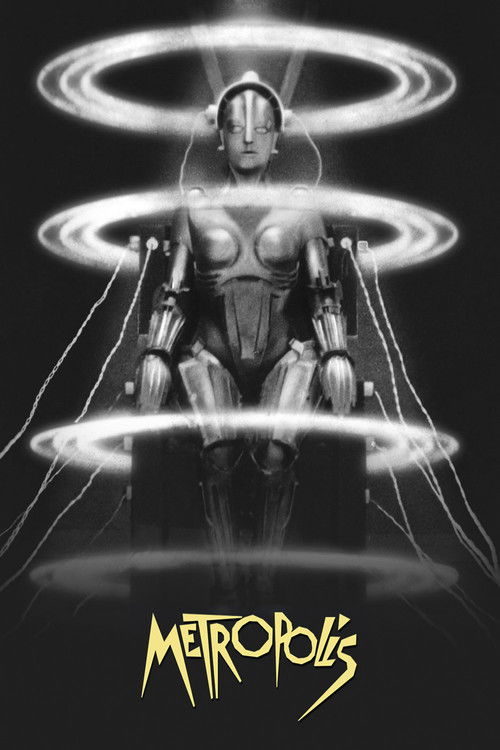
In a futuristic city sharply divided between the rich and the poor, the son of the city's mastermind meets a prophet who predicts the coming of a savior to mediate their differences.

In Depression-era West Virginia, a serial-killing preacher hunts two young children who know the whereabouts of a stash of money.

Francis, a young man, recalls in his memory the horrible experiences he and his fiancée Jane recently went through. Francis and his friend Alan visit The Cabinet of Dr. Caligari, an exhibit where the mysterious doctor shows the somnambulist Cesare, and awakens him for some moments from his death-like sleep.

Nick Hart is a struggling American artist who lives amongst the expatriate community in 1920s Paris. He spends most of his time drinking and socializing in local café's and pestering gallery owner Libby Valentin to sell his paintings. He becomes involved in a plot by wealthy art patroness Nathalie de Ville to forge three paintings. This leads to several run-ins with American rubber magnate Bertram Stone, who happens to be married to Hart's ex-wife Rachel.
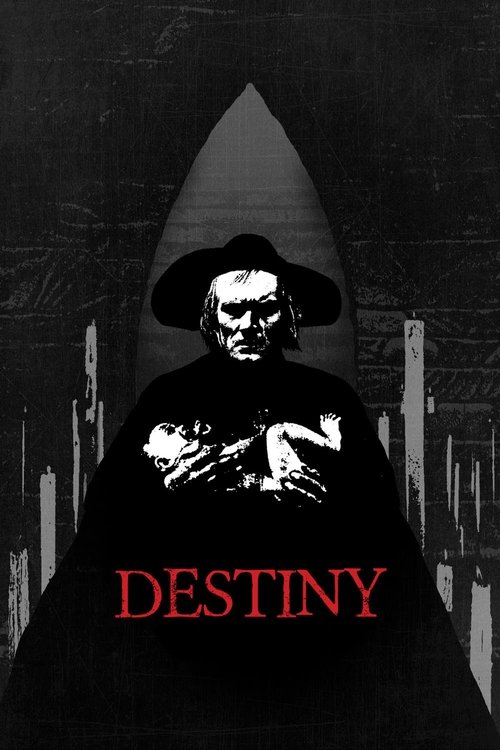
As a young couple stops and rests in a small village inn, the man is abducted by Death and sequestered behind a huge doorless, windowless wall. The woman poisons herself in order to join him and is met by Death, who gives her three opportunities to prove that love is stronger than death, thereby freeing her beloved from his fate.

A darkly brilliant stop-motion adaptation of The Pied Piper of Hamelin about a plague of rats that punish townsfolk corrupt with greed. One of the most ambitious Czech animation projects of the 1980s, notable for its unusual dark art direction, innovative animation techniques and use of a fictitious language.

In August of 1949, Life Magazine ran a banner headline that begged the question: "Jackson Pollock: Is he the greatest living painter in the United States?" The film is a look back into the life of an extraordinary man, a man who has fittingly been called "an artist dedicated to concealment, a celebrity who nobody knew." As he struggled with self-doubt, engaging in a lonely tug-of-war between needing to express himself and wanting to shut the world out, Pollock began a downward spiral.

Prim professor Immanuel Rath finds some of his students ogling racy photos of cabaret performer Lola Lola and visits a local club, The Blue Angel, in an attempt to catch them there. Seeing Lola perform, the teacher is filled with lust, eventually resigning his position at the school to marry the young woman. However, his marriage to a coquette -- whose job is to entice men -- proves to be more difficult than Rath imagined.

In 16th-century Prague, a rabbi creates the Golem - a giant creature made of clay. Using sorcery, he brings the creature to life in order to protect the Jews of Prague from persecution.

In Edo-era Japan, a ukiyo-e artist languishes in his master’s shadow. Creatively stifled, he finds consolation in the company of a prostitute, and becomes entangled in a love triangle. A mystery emerges involving two portraits and the sudden disappearance of the artist Sharaku. Helmed by Cannes-selected director Tatsuji Yamazaki, the film employs kabuki-inspired sequences and stylised sets.

Documentary about the life and work of Mário Eloy, one of the greatest painters of the second generation of modernism in Portugal.

Former student Raskolnikov is pushed to murder when struggling to pay the rent on his apartment. When the murder is being investigated by the police, Raskolnikov struggles between trying to hide his guilt and the pressure to confess.


Woken up from a delightful dream, a nondescript citizen finds himself irredeemably able to see what is decreed forbidden. Dreading the outcome of his disobedience, he is yet desperately incapable of blocking this unlawful vision...

Edogawa Rampo is a writer whose latest work is censored by the government, deemed too disturbing and injurious to the public to be allowed to be published. However, after burning his drafts, his publisher shows him a newspaper with an account of events just like his forbidden story. As the film progresses, fantasy and reality intermingle in a tale that draws heavily on influences from Poe and Stoker's Dracula. The film's strongly Expressionistic direction skillfully combines a variety of media (animation, computer-generated imagery, grainy black-and-white fast film stock, color negatives) for artistic effect.

Emil Nolde was a Nazi – and so what, asks contemporary German artist Daniel Richter. “It’s a moralistic debate. A debate, that mirrors the moralism and bigottery of a generation that seems to think, that the world is a moral playground.” Emil Nolde’s relationship to the Nazi-regime in the Third Reich has given rise to immense discussions within the last months. For decades the broader public had a picture of Nolde being one of the “entartete” artists as well as being prohibited painting by the Nazi-regime. Though this on the surface is true, it was the result of a great disappointment to Nolde. For years, he had strived to become “the” artist of the Thrid Reich, praising his own art as true, German, anti-French and anti-Jewish. Possible competitors within the German art world like Max Pechstein he actively denounced to the Nazi authorities.

A cinematic version of the Royal Winnipeg Ballet's adaptation of Bram Stoker's gothic novel Dracula. Filmed in a style reminiscent of silent Expressionist cinema of the early 20th century (complete with intertitles and monochrome photography), it uses dance to tell the story of a sinister but intriguing immigrant who preys upon young English women.