
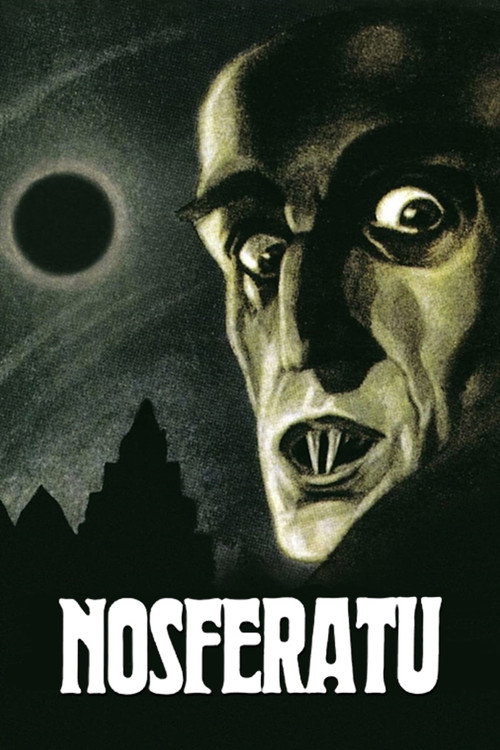
The mysterious Count Orlok summons a happily married real estate agent to his castle, located up in the Transylvanian mountains, to finalise a terrifying deal.
The mysterious Count Orlok summons a happily married real estate agent to his castle, located up in the Transylvanian mountains, to finalise a terrifying deal.

In this classic German thriller, Hans Beckert, a serial killer who preys on children, becomes the focus of a massive Berlin police manhunt. Beckert's heinous crimes are so repellant and disruptive to city life that he is even targeted by others in the seedy underworld network. With both cops and criminals in pursuit, the murderer soon realizes that people are on his trail, sending him into a tense, panicked attempt to escape justice.
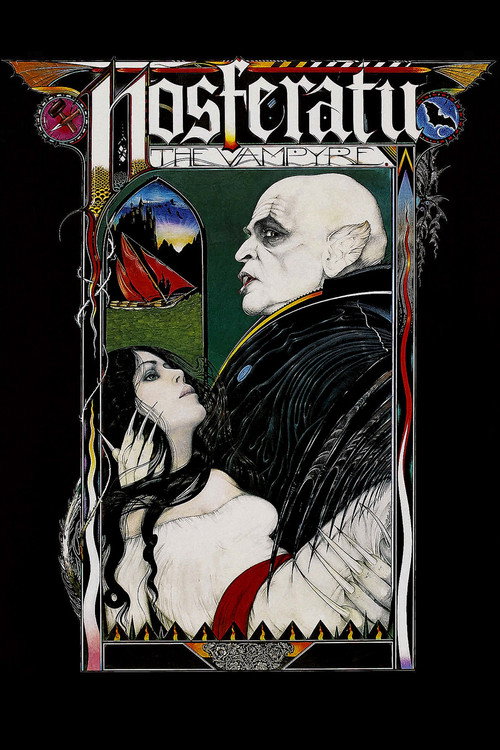
A real estate agent leaves behind his beautiful wife to go to Transylvania to visit the mysterious Count Dracula and formalize the purchase of a property in Wismar.
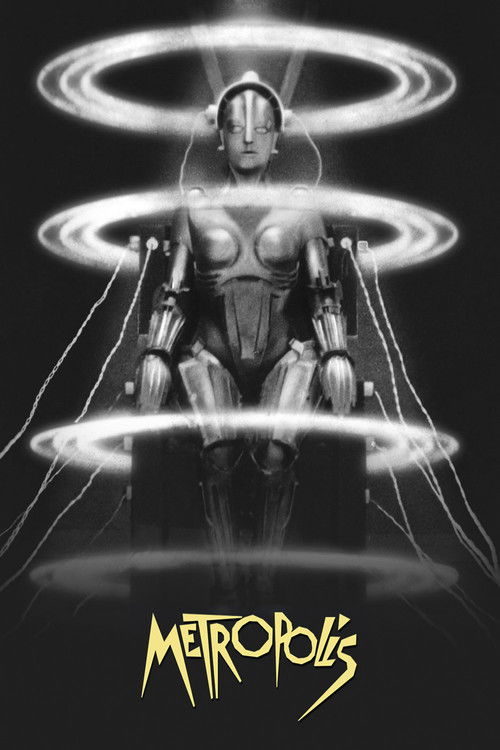
In a futuristic city sharply divided between the rich and the poor, the son of the city's mastermind meets a prophet who predicts the coming of a savior to mediate their differences.

Francis, a young man, recalls in his memory the horrible experiences he and his fiancée Jane recently went through. Francis and his friend Alan visit The Cabinet of Dr. Caligari, an exhibit where the mysterious doctor shows the somnambulist Cesare, and awakens him for some moments from his death-like sleep.

A married farmer falls under the spell of a slatternly woman from the city, who tries to convince him to drown his wife.

An aging doorman, after being fired from his prestigious job at a luxurious hotel, is forced to face the scorn of his friends, neighbours and society.

Murnau’s epic adaptation of Goethe’s tragedy stands with Fritz Lang’s Metropolis among the supreme achievements of German silent cinema. Gösta Ekman plays the alchemist who, his faith shaken in a time of plague, is offered the gift of healing and eternal youth… in exchange for his soul.

After a detective is assaulted by thugs and placed in an asylum run by Professor Baum, he observes the professor's preoccupation with another patient, the criminal genius Dr. Mabuse the hypnotist. When Mabuse's notes are found to be connected with a rash of recent crimes, Commissioner Lohmann must determine how Mabuse is communicating with the criminals, despite conflicting reports on the doctor's whereabouts, and capture him for good.

Dr. Mabuse and his organization of criminals are in the process of completing their latest scheme, a theft of information that will allow Mabuse to make huge profits on the stock exchange. Afterwards, Mabuse disguises himself and attends the Folies Bergères show, where Cara Carozza, the main attraction of the show, passes him information on Mabuse's next intended victim, the young millionaire Edgar Hull. Mabuse then uses psychic manipulation to lure Hull into a card game where he loses heavily. When Police Commissioner von Wenk begins an investigation of this mysterious crime spree, he has little to go on, and he needs to find someone who can help him.

A world-famous pianist loses both hands in an accident. When new hands are grafted on, he is horrified to learn they once belonged to a murderer.

In 16th-century Prague, a rabbi creates the Golem - a giant creature made of clay. Using sorcery, he brings the creature to life in order to protect the Jews of Prague from persecution.
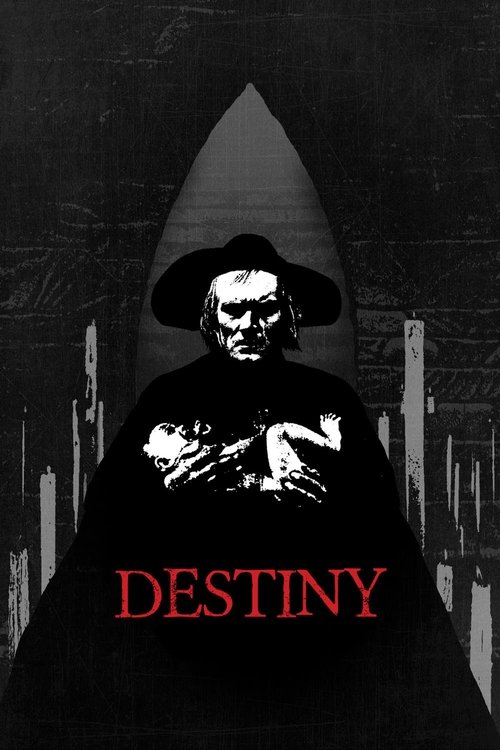
As a young couple stops and rests in a small village inn, the man is abducted by Death and sequestered behind a huge doorless, windowless wall. The woman poisons herself in order to join him and is met by Death, who gives her three opportunities to prove that love is stronger than death, thereby freeing her beloved from his fate.
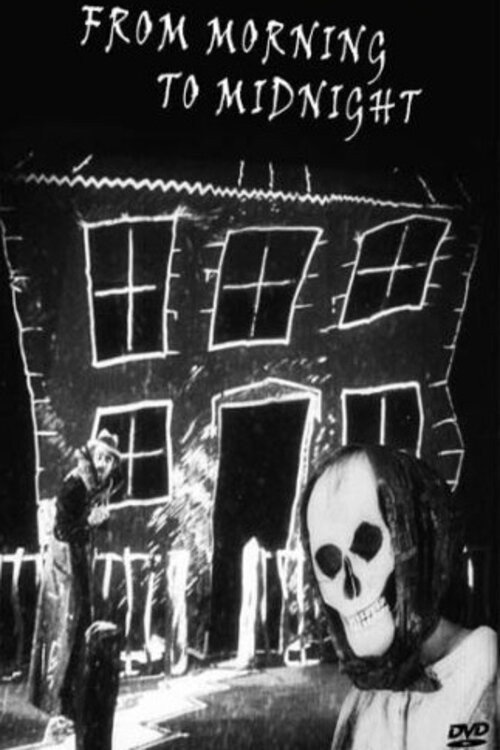
A cashier in a bank in a small German town is alerted to the power of money by the visit of a rich Italian lady. He embezzles 60,000 Marks and leaves for the capital city, where he attempts to find satisfaction in politics, sport, love and religion.


A pampered American oyster tycoon decides to buy a husband for his daughter, but things don’t go quite as planned. Along the way there are mishaps, misunderstandings and a foxtrot sequence that must be seen to be believed.

The film tries to capture the "nervous epidemic" caused by war and misery which "drives people mad". This unique portrait of the life in 1919 Germany, filmed on location in Munich, describes the cases of different people from all levels of society: Factory owner Roloff, who loses his mind in view of catastrophies and social disturbances; teacher John, who is the hero of the masses; and Marja who turns into a radical revolutionary.

Prague, Bohemia, 1820. Balduin, a penniless student, falls in love with Countess Margit, a wealthy noblewoman whom he has saved from drowning.

In this film essay, critic Peter Buchka explores the German cinema of the 1920s, ranging from the disquieting images of Fritz Lang's Metropolis to the castrating sexuality of Marlene Dietrich in Die Blaue Engel. The program provides an introduction to Weimar cinema, with Buchka's essay narrated over the images from film clips of 1920s era German films.

In 1919 an art school opened in Germany that would change the world forever. It was called the Bauhaus. A century later, its radical thinking still shapes our lives today. Bauhaus 100 is the story of Walter Gropius, architect and founder of the Bauhaus, and the teachers and students he gathered to form this influential school. Traumatised by his experiences during the Great War, and determined that technology should never again be used for destruction, Gropius decided to reinvent the way art and design were taught. At the Bauhaus, all the disciplines would come together to create the buildings of the future, and define a new way of living in the modern world.