Post-credit scenes: results for “tag: grotesque”

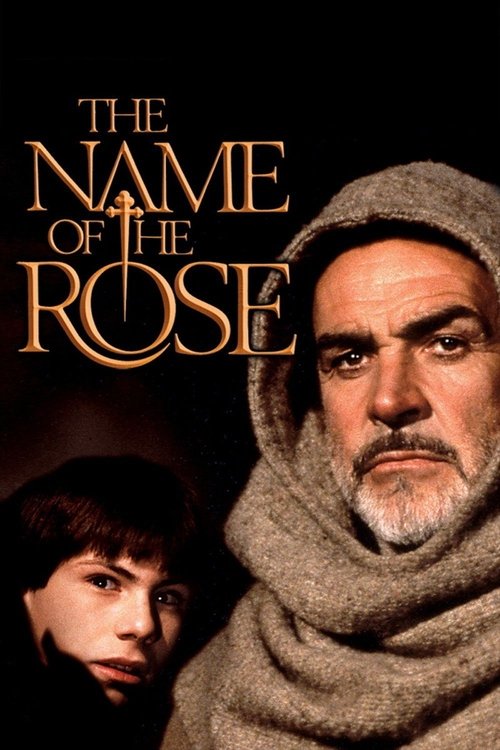
The Name of the Rose (1986) poster. The count is still zero.

14th-century Franciscan monk William of Baskerville and his young novice arrive at a conference to find that several monks have been murdered under mysterious circumstances. To solve the crimes, William must rise up against the Church's authority and fight the shadowy conspiracy of monastery monks using only his intelligence; which is considerable.

Key art for Mai-chan's Daily Life (2014), unanswered on the post-credit question.

Miyako starts a live-in maid job and quickly discovers that housecleaning is the least of her duties, as her employers use the maids in their twisted fantasies. Her co-worker Mai-chan, who can miraculously recover from any injury, becomes the focus of horrific, indulgent violence that Miyako is soon drawn into.

Cemetery Man (1994) poster image. Zero votes so far.

Francesco Dellamorte is the groundskeeper at a cemetery where the dead just won’t stay dead—and it’s up to him to deal with those who come back to life with a hunger for human flesh. But Dellamorte’s job soon becomes much more complicated when he falls for an enigmatic young woman whose husband has recently died.

Film artwork for What? (1972), no verdict on the credits.

A young American woman traveling through Italy finds herself in a strange Mediterranean villa where nothing seems quite right.

August Underground's Penance (2007) poster image. Zero votes so far.

Has someone ever handed you a movie, not telling you one thing about it, only telling you to watch it. What if that tape was the personal home video of two sociopaths on a killing spree? This is their home movie, for their eyes-only. This is August Underground's Penance. The third and final film in the AU franchise directed by Fred Vogel and starring Cristie "Crusty" Whiles. Penance shows the dark decline of the two nameless killers from the previous films as they continue to videotape their madness on their path to destruction.

Poster for Virile Games (1988), blank on post-credit scenes.

A man sits down to watch a football match, which seems to consist of the players being violently mutilated in various inventive ways. The players then leave the football pitch and invade the spectator's flat.

Club of the Discarded (1989) poster. The count is still zero.

Laid-off old mannequins spend their cracked and broken lives in an old, abandoned warehouse. New mannequins are brought to the warehouse. They are old as well, but from a younger generation. The two groups must live together, but it's not easy at all.

Poster for The Belly of an Architect (1987), blank on post-credit scenes.

Stourley Kracklite, a driven, detail-obsessed architect, travels from America to Rome with his much younger wife, Louisa, to oversee an architectural homage to a personal hero, 18th-century master builder Etienne-Louis Boullée. En route by train, Stourley and Louisa conceive a much-wanted child — but Stourley's obsession with his wife's expanding belly, her perceived infidelity, and his own recurrent bouts of abdominal pain reach epic and dangerous proportions.

Key art for Junk Head (2021), unanswered on the post-credit question.

Mankind can no longer reproduce because of gene manipulation aimed at making life longer. The clones ruling the bottomless underworld may have become fertile. Parton is selected to go on a mission through a subterranean labyrinth crawling with monsters to secure humanity's future.

Poster for Vuja de (2022), awaiting its first vote.

Forced by the parents to be married, a young couple in Paris discover things about themselves as they mature through their romance together.

Poster for Bad Biology (2008), blank on post-credit scenes.

Driven by biological excess, a young man and woman search for sexual fulfillment, unaware of each other's existence. Unfortunately, they eventually meet, and the bonding of these two very unusual human beings ends in an explosive and ultimately over-the-top sexual experience, resulting in a truly god awful love story....

Movie art for The Little Sotmaid (1998), post-credit scene unknown.

On a remote almost uninhabited island, there are two gently friendly representatives of the once opposing sides. They have long been accustomed to each other and do not expect any changes in life. And all of a sudden a woman appears on the island!

Örkény István: Tóték (1978) poster. The count is still zero.

Lajos Tót, municipal firefighter at the Mátraszentanna. His house is clean, his garden bathed in sunshine. If his son weren't serving on the Russian front, Lajos Tót would only know there was a war on from the radio. When his son's commanding officer turns up one fine day to rest from the shocks of war at the Tót's, Lajos Tót and his family do everything to make the Major feel at home. Everything that is humanly possible. But what is humanly possible, in times of hardship at least, is a matter of opinion. "If a snake (a rarity) devours itself, is there a snake-sized void left behind? And is there any power that can feed a man his being? Is there? No? Is there? A toothy question!"

Film poster, Hemet, or the Landlady Don't Drink Tea (2024). No post-credit verdict yet.

A domineering landlady uses a bizarre crisis to tighten her grip on an apartment building’s tenants. As paranoia spreads, their behavior becomes increasingly erratic and grotesque, turning the building into a darkly comic pressure cooker of control, discomfort, and escalating absurdity.

Poster for Opera Kitsch (2026). No votes yet on whether it has a post-credit scene.

Do we still know the grotesque when we see it? Muniz Sodré and Raquel Paiva, two of Latin America's greatest thinkers in the field of Communication and authors of the seminal book 'O Império do Grotesco', revisit their work after two decades in an opera-doc that invites reflection on the grotesque today.

Blind Country (1989) poster. The count is still zero.

This collaborative video project is based on a short story by H.G. Wells called "The Country of the Blind"—about a man who travels to a country of blind people and attempts to dominate their sensual, feminine culture with his male, sight-derived power. Following this theme, "Blind Country" begins with animated fruit dancing over Mike Kelley's body and the admonition of "Northerners" to "refill the quickly emptying sack." In the male-dominated land of the North, candy-spurting pinatas stand as phallic symbols. Presumably castrated, and stripped of his authority, Kelley acts the buffoon as he is led through the murky land of the South, a "female," earthy, "realm of the senses" opposing the phallocentric world of the North.

Privacy policy

When you vote, we save your Yes or No answer and when you voted.

We use a cookie and your internet address to recognize your vote on each movie. This prevents repeat votes. The cookie lasts for five years.

Your votes are kept as part of the movie totals.