

In 1960s Wyoming, two men develop a strong emotional and sexual relationship that endures as a lifelong connection complicating their lives as they get married and start families of their own.
In 1960s Wyoming, two men develop a strong emotional and sexual relationship that endures as a lifelong connection complicating their lives as they get married and start families of their own.
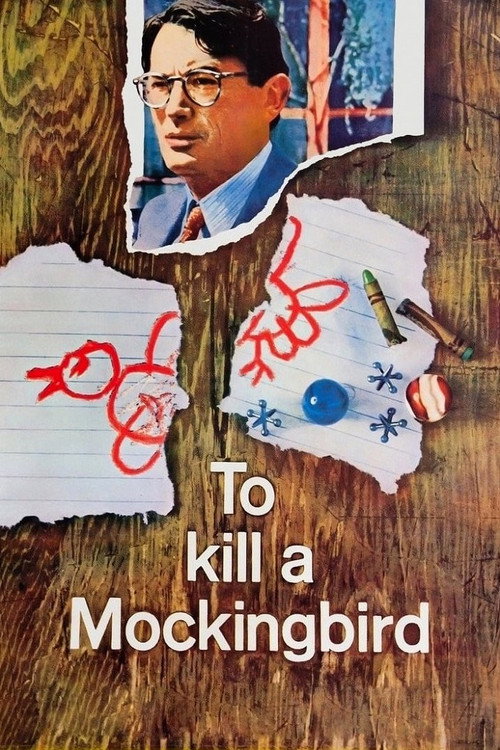
Scout Finch, 6, and her older brother Jem live in sleepy Maycomb, Alabama, spending much of their time with their friend Dill and spying on their reclusive and mysterious neighbor, Boo Radley. When Atticus, their widowed father and a respected lawyer, defends a black man named Tom Robinson against fabricated rape charges, the trial and tangent events expose the children to evils of racism and stereotyping.

Based on the classic novel by Orson Scott Card, Ender's Game is the story of the Earth's most gifted children training to defend their homeplanet in the space wars of the future.

Bobby Griffith was his mother's favorite son, the perfect all-American boy growing up under deeply religious influences in Walnut Creek, California. Bobby was also gay. Struggling with a conflict no one knew of, much less understood, Bobby finally came out to his family.

The story of Jody, a misguided, 20-year-old African-American who is really just a baby boy finally forced-kicking and screaming to face the commitments of real life. Streetwise and jobless, he has not only fathered two children by two different women-Yvette and Peanut but still lives with his own mother. He can't seem to strike a balance or find direction in his chaotic life.

Spike Lee's take on the "Son of Sam" murders in New York City during the summer of 1977 centering on the residents of an Italian-American Northeast Bronx neighborhood who live in fear and distrust of one another.

The story of a poor young woman, separated by prejudice from her husband and baby, is interwoven with tales of intolerance from throughout history.

An ongoing feud between punk rockers and a more affluent clique in a small Texas town leads to a hate crime.


Dissident artist Hu Jie has managed to make more than 30 documentaries. Films like Though I Am Gone and Searching for Lin Zhao's Soul are vital to understanding Chinese history and society. Widely recognized as the first artist to dare talk about the Great Famine, the labor camps, and the Cultural Revolution, Hu Jie is considered China's first historical documentary filmmakers.

Joe is invited for dinner at his estranged father's house. He brings orange cheesecake and is greeted by his dad's new girlfriend, but throughout the night tensions rise as his dad's true intentions are revealed.

After traveling to London to check on their missing children in the wake of the 2005 terror attacks on the city, two strangers come to discover their respective children had been living together at the time of the attacks

Graça, a lesbian woman living in Belo Horizonte with her French girlfriend Clara, gives private French lessons to support herself in a large Brazilian metropolis. As an independent Black woman from a lower-middle-class background, she finds herself confronted by the dark side of religious fanaticism when she is forced to live with an extremist evangelical family that gradually involves her in a mysterious plot that leads her to lose her mind.

Marie-Francine Hébert based the script for No Fish Where to Go on her book, which was published in 2003 and illustrated by Janice Nadeau. Directed by Nicola Lemay and Nadeau, this modern tale compassionately and poetically addresses intolerance and the consequences of war.

In France in 1946, the difficult return to civilian life of five deportees and prisoners of war after having lived through the hell of the Second World War.

While being questioned in the principal’s office, enemies David and Randall learn they’re more alike than they thought.

A re-edited version of the second episode of Intolerance (1916); a mountain girl who loves Belshazzar strives to protect him against the evil High Priest of Bel and his treacherous cohorts.

A re-edited version of the fourth episode of Intolerance (1916); two youth are made homeless by a strike, and struggle valiantly to survive their desolate situation, which worsens as reform-minded citizens remove the couple's child from their care and the young father is falsely accused and convicted of murder.

A comical romantic parable of human's all devouring craving for territory. One day Karim finds a stranger in his apartment. To his astonishment this attractive girl claims to be the new owner.