

Seasonal workers at a remote sugar factory must uncover the source of a vengeful demon kingdom’s wrath before its supernatural terror claims their lives.
Seasonal workers at a remote sugar factory must uncover the source of a vengeful demon kingdom’s wrath before its supernatural terror claims their lives.

After losing their family home in a devastating fire, two impoverished siblings accept the hospitality of a wealthy long-lost uncle, unaware that his grand estate holds a sinister plot to exploit them.
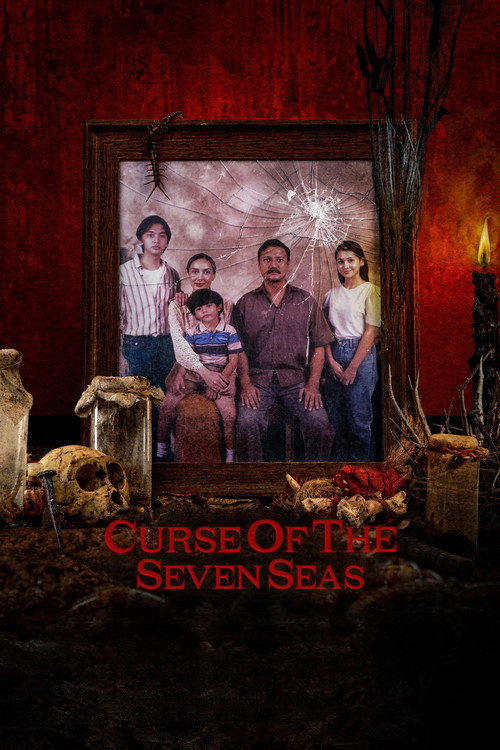
After finding a strange package, Sucipto and his family suspect a terrible curse is responsible for a string of misfortunes taking over their lives.

A young man discovers he is the descendant of a powerful warrior and must unlock his hidden abilities to fight an ancient enemy who seeks to alter history and destroy the world.

Called home to visit their dying uncle, two siblings discover his eerie resistance to death when a series of supernatural events haunts them.

A cursed mirror opens up a supernatural bridge to a demonic force that disturbs and terrorises young Maya and her family.

Jeru wants his band to be a success. But when he meets Bethari, their romance puts his dreams at risk as her royal family seeks to sabotage their lives.

The five-year war; the Javanese Prince Diponegoro against Dutch colonial ruled between 1825 and 1830, which claimed the lives of more than an estimated 200,000 people and pushed the Dutch colony to the brink of collapse.

In this trip Burton Holmes takes your patrons to Java, the richest island of the Dutch East Indies, and Batavia, its capital city, one of the most picturesque and interesting cities of the Far East. We see many unusual sights, such as the embarking of the Dutch troops for Sumatra, another Dutch possession, to quell a revolt. Then a Dutch treat. How many have wondered where the expression Dutch treat came from? We are shown an original one. An important feature concerning this so-called "treat," which is termed by them as the "Rice Table," is the amount of service required to serve the courses, of which there are as many as there are varieties of Heinz's pickles. It takes seventeen waiters or attendants to make the meal complete.

While restoring an old mansion, the project's team uncovers a cursed heirloom, releasing a deadly force that threatens their lives.

After opening scenes showing volcanoes of Java, an underground river, waterfalls, cloud effects, a coral island, the Ghost Rocks of Buru, and a tiger hunt in Siam, documentary footage of the cannibal tribes of New Guinea is framed by a fictional narrative in which the scientific expedition is shipwrecked along the southern New Guinea coast in the land of the Kia Kia headhunters, thus affording the crew the opportunity to film the tribal customs of these cannibals.

In the midst of the condition of her family full of problems, whether problems about the father or the economic conditions in her home, Her mother cry and calling name of God loudly for help on their suffering. But Siti, the child, looked confused. At this moment she still wonders who actually is called God?

A woman's life turns upside down when her husband takes a second wife with a dark secret, upending her marriage and unleashing supernatural terrors.

A woman of nobility battles patriarchal norms in order to improve educational access for women in early 1900s Indonesian society.
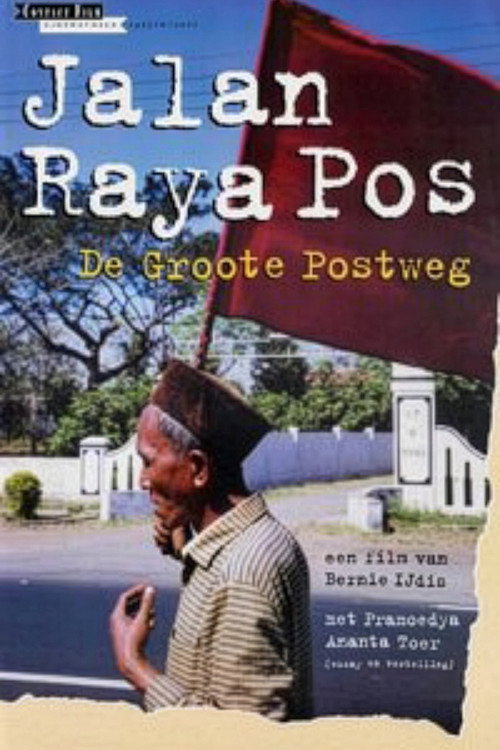
Road movie-style documentary about the Great Post Road (De Groote Postweg/Jalan Raya Pos). Pramoedya Ananta Toer (1925), one of the most important Indonesian authors of recent decades, wrote an essay about the Great Post Road at the request of director Bernie IJdis. This thousand-kilometer road across Java was built at the beginning of the last century under the leadership of the Dutchman Daendels and cost the lives of thousands of Indonesian forced laborers. Because Toer, as a former political prisoner, is restricted in his freedom of movement, the filmmakers act as his eyes and ears during a trip along the Post Road. During the journey, parallels between Indonesia in the past and present slowly unfold. In addition, as the film progresses, the grimness of Toer's situation and the situation in his country becomes palpable.

This Technicolor portrait of Jakarta was filmed when it was called Batavia and formed part of the Dutch East Indies colonial empire. The film portrays the daily life of citizens and the relaxed atmosphere that prevailed at the time. We see Batavia's Amsterdam Gate, built by the Dutch around 1664, along with the strong influence of Dutch architecture upon other buildings, streets and waterways.

To preserve the reputation of their family's traditional fertility herbal shop from neighbors' ridicule, a married couple who have been childless for years pretend to be pregnant so they can claim a found baby as their own.
Travelogue released on the 28th of May, 1917. Produced by Burton Holmes.
Surabaya, Java, is the busiest headquarters of the Dutch in the Far East. Here the white-clothed man from Holland has established the commercial metropolis of the Dutch East Indies. Here one sees evidence of "big business" and also finds satisfaction in traveling around the other parts of the town where evidence of "small business," done in a large way, may be seen. Among the inhabitants of this busy little town are many Chinese, who are considered to be the thrifty men of the Far East. Many other wonderful sights in this quaint and picturesque little town await your patrons.