Post-credit scenes: results for “tag: kuwait”

Poster, The Manchurian Candidate (2004). Nobody has voted on this one.

Years after his squad was ambushed during the Gulf War, Major Ben Marco finds himself having terrible nightmares. He begins to doubt that his fellow squad-mate Sergeant Raymond Shaw, now a vice-presidential candidate, is the hero he remembers him being. As Marco's doubts deepen, Shaw's political power grows, and, when Marco finds a mysterious implant embedded in his back, the memory of what really happened begins to return.

Movie art for The Men Who Stare at Goats (2009), post-credit scene unknown.

A reporter in Iraq might just have the story of a lifetime when he meets Lyn Cassady, a guy who claims to be a former member of the U.S. Army's New Earth Army, a unit that employs paranormal powers in their missions.

Three Kings (1999) poster. Still unanswered: is there a scene after the credits?

A group of American soldiers stationed in Iraq at the end of the Gulf War find a map they believe will take them to a huge cache of stolen Kuwaiti gold hidden near their base, and they embark on a secret mission that's destined to change everything.

Key art for Jarhead (2005), unanswered on the post-credit question.

Jarhead is a film about a US Marine Anthony Swofford’s experience in the Gulf War. After putting up with an arduous boot camp, Swofford and his unit are sent to the Persian Gulf where they are eager to fight, but are forced to stay back from the action. Swofford struggles with the possibility of his girlfriend cheating on him, and as his mental state deteriorates, his desire to kill increases.

Uncle Sam (1996). Nobody has said whether there is anything after the credits.

It's Fourth of July Weekend, and the recently discovered corpse of Sgt. Sam Harper rises from the dead to punish the unpatriotic.

Film artwork for Bye Bye London (1982), no verdict on the credits.

A comedy about an old married man that travels to London with his nephew who does his to save him from exposure to fraud, and being mugged in London, the play also covers some political aspects and projections in addition to social criticism of some of the Arab situations.

Lessons of Darkness (1992) poster image. Zero votes so far.

Shortly after the Gulf War, oil fires were raging all through Kuwait. In the week before this sea of fire would be extinguished, Werner Herzog filmed this apocalyptic landscape with its murky skies, scorched earth and capricious flames.

Poster for Fires of Kuwait (1992). No votes yet on whether it has a post-credit scene.

After Saddam Hussein had the Kuwait Oil wells lit up, teams from all over the world fought those fires for months. They had to save the oil resources, as well as reduce air pollution. The different teams developed different techniques of extinguishing the fires. Man's emergency creativity can be seen at it's best.

Poster for Bye Bye Arab (1986), blank on post-credit scenes.

A dark Kuwaiti comedy that follows "Arab," an idealist who embarks on a fantastical journey with "Marjan the Genie" to unite the Arab world—only to confront a reality far from his hopes.

The Trap (1983) poster. Still unanswered: is there a scene after the credits?

The story revolves around people who go out in the spring to the desert and hunt pigeons. A person sets off into the desert, and while he is out in the desert, his car breaks down on one of the sand dunes in bad weather conditions, which exposes him to very bad situations, and things get worse when a wolf appears in front of him. The wolf attacks the car and tries to get him.

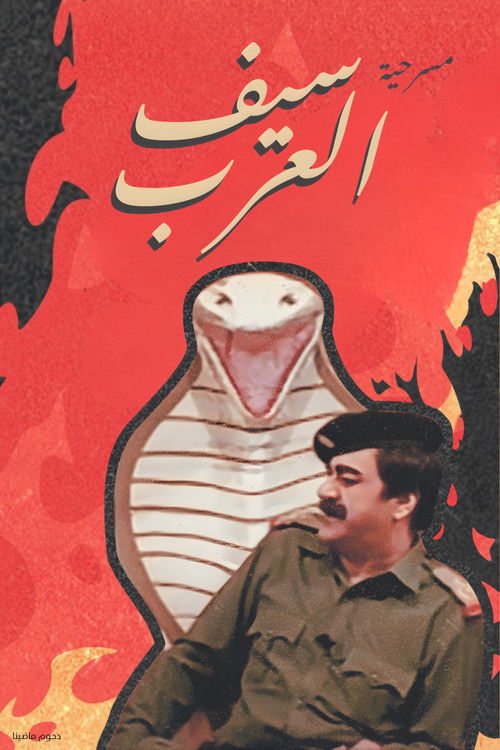
The Sword Of The Arabs (1992) poster. The count is still zero.

The play deals in a social comic framework, the period of the Iraqi invasion of Kuwait in 1990, and what was experienced by Kuwaitis and Iraqis alike during the aggression period, through the social changes that occurred in both societies in that period.

Movie poster for Al-Manakh Knights (1983), waiting for its first vote.

The first Gulf economic play centered on an issue that affected members of Kuwaiti society, which sparked widespread controversy between Kuwaiti society and the Gulf community in general, and the issue was the "Al Manakh Market" crisis in 1982, which ended in losses exceeding $ 22 billion. Where the story tells about the second oil boom of the Gulf states at the end of the seventies and the beginning of the eighties of the twentieth century AD where the price of oil increased continuously until the Gulf countries recorded large financial surpluses, so the money poured into the stock market significantly until it opened a stock trading office in a semi-parallel office and was named a market "Al Manakh" in which money flowed greatly from almost all segments of Kuwaiti society and even foreign residents and some individuals from the Gulf states and increased frantic speculation and increased buying and selling for the future until it reached astronomical numbers.

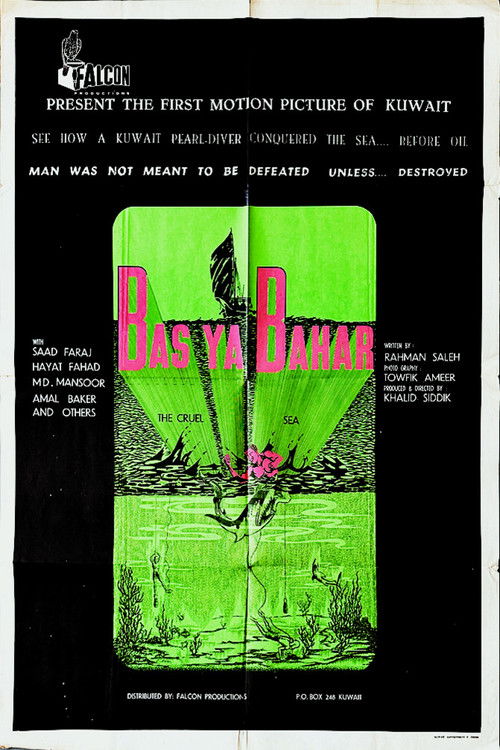
Movie art for The Cruel Sea (1971), post-credit scene unknown.

The first feature film to be made by the state of Kuwait. It is a period piece about Kuwait before the discovery of oil when fishing was the predominant occupation. Bas Ya Bahar is the story of a crippled pearl diver who forbids his son Mussaid to go to sea to dive for pearls.

Film poster, Elect Mother of Ali (1993). No post-credit verdict yet.

A Kuwaiti comedy play that talks about the period that followed the liberation of Kuwait from the Iraqi invasion. The play cynically dealt with the issue of women entering the political battlefield through Umm Ali (Ansar Al-Sharah) mother, wife and housewife who decides to run in the parliamentary elections and faces many problems and strange situations .

Film artwork for The Silence (1980), no verdict on the credits.

The events take place in Kuwait in the 1940s before the advent of oil, and the story of a shy love in the conservative society between Mary and Khalifa, and the obstacles they face.

The Venal Gentlemen (1983) poster. Still unanswered: is there a scene after the credits?

Mahmoud, a simple employee of the Ministry of Health, loves lawyer "Amal", who trains in the office of her teacher, "Ali Hammad", Mahmoud "travels" to Kuwait to improve his financial situation. Her wealthy professor escapes chasing her cousin, Fathi officer, Mahmoud settles in Cairo after returning from abroad and renews his hope to marry Amal after her husband's death. Bribery from "Ibrahim Al-Fakharani" to facilitate the process of importing rotten food for "Al-Fakharani". Amal defends him and accuses her cousin of fabricating the accusation. Mahmoud's order is revealed, he collapses and confesses that he is already bribed after he reaches his home to find that his brother, sister and children died after eating the canned food that he admitted to the country.

Movie art for The Storm (1965), post-credit scene unknown.

The Kuwaiti short film العاصفة (The Storm) explores Kuwait's social and economic shifts before and after the discovery of oil. Through the perspectives of an older father and his modernized son, it delves into the challenges of tradition versus rapid modernization.

Privacy policy

When you vote, we save your Yes or No answer and when you voted.

We use a cookie and your internet address to recognize your vote on each movie. This prevents repeat votes. The cookie lasts for five years.

Your votes are kept as part of the movie totals.