

Taking place after alien crafts land around the world, an expert linguist is recruited by the military to determine whether they come in peace or are a threat.
Taking place after alien crafts land around the world, an expert linguist is recruited by the military to determine whether they come in peace or are a threat.

With the 70s behind him, San Diego's top rated newsman, Ron Burgundy, returns to take New York's first 24-hour news channel by storm.

After an unprecedented global pandemic has turned the majority of humankind into violent infected beings, Morgan, a man gifted with the ability to speak the infected's new language, leads the last survivors on a hunt for patient zero and a cure.
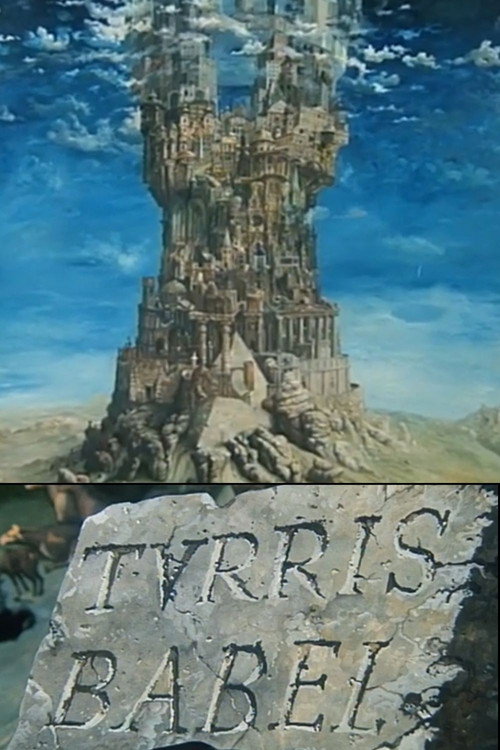
The inhabitants of Babel, from all periods of history, attempt to flee a divine flood.

A Japanese man and a gay bar-owner in Hong Kong drink beer as they talk about their childhood and experiences.

A short documentary film that explains why ancestral languages are dying and promotes their preservation.

The story of the New York accent, as told by New Yorkers.

Alistair Heather sets out on a mission to reclaim the Scots language. For decades, his fellow-Scots speakers have been mocked, their language oppressed by educators, politicians and broadcasters. One famous report claimed that 'Scots is not the language of educated people anywhere'. Alistair tells the history of the language and argues that Scots is fighting back after decades of ignorance and oppression.

After 45 years, a second-generation filmmaker embarks on a mission to rediscover her mother's roots and save what's left of her family's fading memories of their refugee journey to Canada. To do so, she must overcome one of the greatest challenges for every Asian kid - talking to their parents about the past.

She was born in a cave, more than 60 years ago. Now she lives in a village, with many children and grandchildren to look after. Sometimes, she dreams of her dead mother calling her home – to the cave.

Victor Klemperer (1881-1960), a professor of literature in Dresden, was Jewish; through the efforts of his wife, he survived the war. From 1933 when Hitler came to power to the war's end, he kept a journal paying attention to the Nazis' use of words. This film takes the end of 1945 as its vantage point, with a narrator looking back as if Klemperer reads from his journal. He examines the use of simple words like "folk," "eternal," and "to live." Interspersed are personal photographs, newsreel footage of Reich leaders and of life in Germany then, and a few other narrative devices. Although he's dispassionate, Klemperer's fear and dread resonate

For his 45th birthday, wealthy Californian Adam receives a surprise gift from his choreographer partner: 100 weekly Spanish lessons with Cariño, a vivacious expat who teaches virtually from her home in Costa Rica. Adam's unconvinced at first; a self-described “creature-of-habit”, he’s unsure about where or how this new element will fit into his carefully-structured routine.

The confluence of words and movement propels this multi-layered collaboration by Atlas, choreographer Douglas Dunn, and poets Anne Waldman and Reed Bye. Dunn's athletic choreography is performed to the rhythms, cadences, and associative meanings of the poets' "cascade of words," which function as music. Atlas introduces narrative references, ironically staging the dance in unexpected locations, including domestic interiors and vehicles. In a self-referential deconstruction that punctures the theatrical illusion, the poets are seen reading their texts and interacting as self-conscious performers within the dance. Atlas and his collaborators intersect the language of words with the language of the body.

There are about 250 people with a unique ancestry. Livonians – one of the smallest and most endangered nations. Each of Livonians has a duty to preserve their identity and the great history of their ancestors. Trillium follows the footsteps of a poet and researcher Valts Ernštreits, who is one of 20 people able to speak fluent Livonian – an indigenous language related to Estonian and Finnish – in his efforts to look after the language and culture of these ancient settlers of the Baltic Sea coast.


Michel Thomas is one of the most brilliant language teachers in the world. His usual clients are movie stars and business leaders. This programme takes him to a Sixth Form College in London to work with school pupils, to test his claim that he can teach anyone a language in a week - with no reading, writing or homework. The film also explores his personal history - as a hero of the French Resistance during WW II. Nigel’s documentary with the 85 year old Michel Thomas was the first time that Thomas allowed his techniques to be made public. The subsequent success of the film transformed Thomas into a global celebrity and his method into one of the most highly regarded in the world of education.

The documentary proposes a unique meeting with the speakers of several indigenous and inuit languages of Quebec – all threatened with extinction. The film starts with the discovery of these unsung tongues through listening to the daily life of those who still speak them today. Buttressed by an exploration and creation of archives, the film allows us to better understand the musicality of these languages and reveals the cultural and human importance of these venerable oral traditions by nourishing a collective reflection on the consequences of their disappearance.

It is estimated that 40% of the world’s population lack the opportunity to be educated in their own language. In Colours of the Alphabet we get an insight into the challenges this poses as we follow a group of first graders in Zambia – a country with 72 local languages where education is primarily offered in English.

This short documentary examines an innovative educational program developed by John and Gerti Murdoch to teach Cree children their language via Cree folklore, photographs, artifacts, and books that were written and printed in the community. Made as part of the NFB’s groundbreaking Challenge for Change series, Cree Way shows that local control of the education curriculum has a place in Indigenous communities.

How do German couples communicate in private? What are they arguing about? Is the way to a man’s heart really through his stomach? This docu-fictional hybrid production discusses such questions with the help of authentic interview snippets that were edited under the staged plot. We get an insight into the life of an animal couple, who experience typical everyday situations on behalf of us humans. At first, our fox is emotionally contained, while the penguin lady may get wild as hell. With a wink, the filmmakers hold up a mirror to the audience in the cinema.