Post-credit scenes: results for “tag: modernity”

PlayTime (1967): nobody has checked the credits yet.

Clumsy Monsieur Hulot finds himself perplexed by the intimidating complexity of a gadget-filled Paris. He attempts to meet with a business contact but soon becomes lost. His roundabout journey parallels that of an American tourist, and as they weave through the inventive urban environment, they intermittently meet, developing an interest in one another. They eventually get together at a chaotic restaurant, along with several other quirky characters.

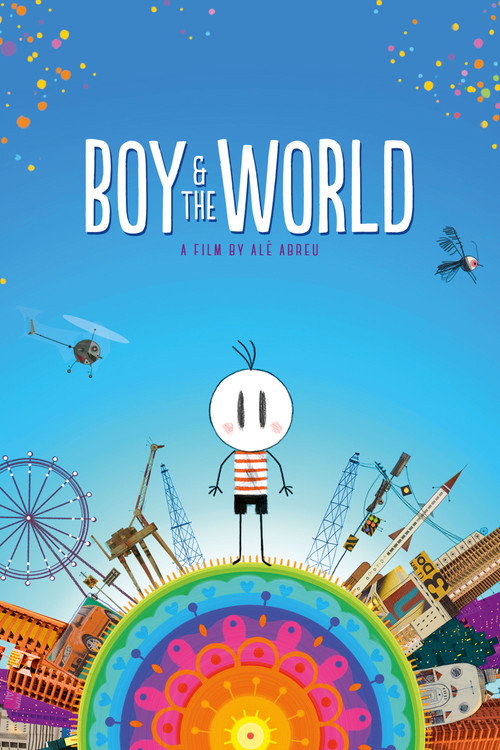
Film artwork for Boy & the World (2014), no verdict on the credits.

Suffering because of his father's departure to the big city, a boy leaves his village and discovers a fantastic world dominated by bug-engines and strange beings. An unusual animation with various artistic techniques that portrays the issues of the modern world through the eyes of a child.

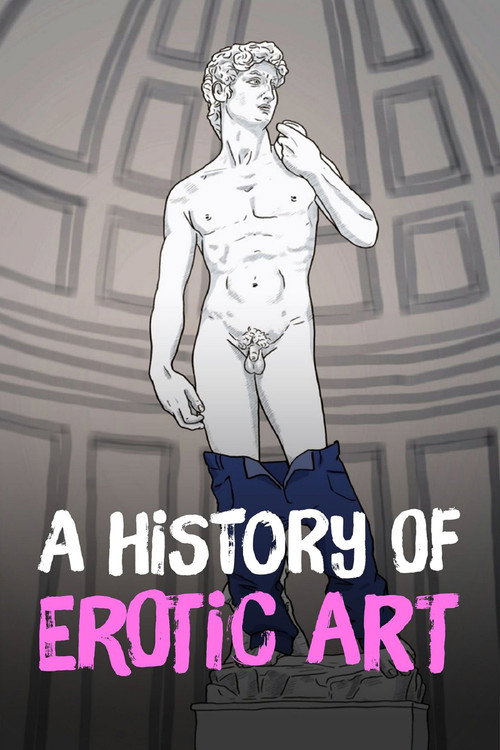
A History of Erotic Art (2025): nobody has checked the credits yet.

The people of Antiquity had little problem with nudity and would not find graphic depictions of sexual acts as morally suspect or obscene. But Christianity changed perspectives, bringing in notions of shame and the negation of the body. This documentary looks at the erotic in art over the last two thousand years.

Poster, Mon Oncle (1958). Nobody has voted on this one.

Genial, bumbling Monsieur Hulot loves his top-floor apartment in a grimy corner of the city, and cannot fathom why his sister's family has moved to the suburbs. Their house is an ultra-modern nightmare, which Hulot only visits for the sake of stealing away his rambunctious young nephew. Hulot's sister, however, wants to win him over to her new way of life, and conspires to set him up with a wife and job.

The Seventh Continent (1989) poster. The count is still zero.

Chronicles three years of a middle-class family seemingly caught up in their daily routines, troubled only by minor incidents. Behind their apparent calm and repetitive existence, however, they're planning something much more sinister.

Poster, Trafic (1971). Nobody has voted on this one.

Mr. Hulot is the head designer of the Altra Automotive Co. His latest invention is a newfangled camper car loaded with outrageous extra features. Along with the company's manager and publicity model, Hulot sets out from Paris with the intention of debuting the car at the annual auto show in Amsterdam. The going isn't easy, however, and the group encounters an increasingly bizarre series of hurdles and setbacks en route.

Childhood in Art (2025) artwork. Still a mystery after the credits.

How have the changing views on children been reflected in their representation in art? From Baby Jesus to the first photographic portraits, an exploration of six centuries of art history through the prism of childhood.

Poster for Shower (1999). Never been answered.

An aged father and his younger, mentally challenged son have been working hard every day to keep the bathhouse running for a motley group of regular customers. When his elder son, who left years ago to seek his fortune in the southern city of Shenzhen, abruptly returns one day, it once again puts under stress the long-broken father-son ties. Presented as a light-hearted comedy, Shower explores the value of family, friendship, and tradition.

Poster for Rush (2024), awaiting its first vote.

Rush (Ìwàǹwara)" is a cautionary tale about the risks of divining head-first into online relationships and the misconceptions about love and material wealth. It also underscores the themes of redemption, the resilience of the human spirit, and the power of genuine love

Damp Moss (2023) poster. The count is still zero.

Glittering illusions of vectorized providence struggle to guide the viewer toward a path of re-enchantment.

Film poster, Drone (2024). No post-credit verdict yet.

Émilie lives in a world of surveillance: her camgirl work; the camera phone lingering on a crush from afar; the headset affording her a drone’s perspective. The same drone that stalks each move she makes, offering inspiration, noting rivals. An unsolicited companion is conspiring with or against her. A financially strapped transplant now living in the Paris suburbs, Émilie is thrust into a high-powered world when she is chosen for a renovation workshop with a prestigious architect. Her classmates come mostly from “filthy rich” backgrounds, like cocky Olivier, who wants Émilie as his conquest. But Émilie has shy eyes only for self-sufficient Mina, whose music builds like a “helicoid.” A drone—unlike any known model—is watching her all along waiting for her next move and paying handily for the privilege.

Poster for The Noise of Time (2024), awaiting its first vote.

In the town of Xoco, the spirit of an old villager awakens in search of its lost home. Along its journey, the ghost discovers that the town still celebrates its most important festivities, but also learns that the construction of a new commercial complex called Mítikah will threaten the existence of both the traditions and the town itself.

Image for The Moon Also Rises (2024), a film with no post-credit data.

Just before the launch of artificial moons, a retired couple finds their harbor in the fading darkness. Trying to catch up with the pace of modernity, their daily life traces this forthcoming brightness back to its earthly origins.

Key art for Mongolian Ping Pong (2005), unanswered on the post-credit question.

Bilike has never seen a ping-pong ball before. He and his family live without electricity and running water in a solitary tent home among the vast steppe grasslands. The magnificent landscape here has changed little since the days of Genghis Kahn. But life in the middle of nowhere can be exciting for a young boy. The smallest of details become big events for curious Bilike and his best friends Erguotou and Dawa. The mystery of the small white ball floating in the creek leads to questions about the world around them, as well as innocent mischief.

The Hasty Man Drinks His Tea with a Fork (2003) poster. Still unanswered: is there a scene after the credits?

A blend of drama and documentary, this film follows several people caught up in the turmoil of the modern world. The drama centres on a woman who has burned out and who holds up her own despair – and her attempts to rebuild her life – as a mirror to the rest of us. With a blend of gravity and humour, Sylvie Groulx's film shows the absurdity of a society dedicated to the cult of speed at all costs.

Poster for La Pensée-Machine (2025), blank on post-credit scenes.

The film tackles the theme of the invasion of machines around us. With the advent of artificial intelligence, people are concerned about the increasing autonomous capabilities of technology. Have we passed the tipping point, and have machines become too powerful to be controlled by humans? While legitimate, these fears conceal the real danger. Beyond technological objects, the machine has infiltrated our very being, our way of thinking and seeing the world.

Poster for Two City Girls (1963), awaiting its first vote.

In order to wait for her lover Fan Chun-tak to finish his study in Australia, Tang Sau-man works as a governess in Chui Shek-wah's house. Chui is Fan's brother-in-law. Chui spoils his wife Fan Kam-ping. She becomes lazy and dependent on Tang. Fan finishes his study and returns. He decides to transform his elder sister. He asks her best friend, Pang Shui-ha, to persuade her. Pang has a crush on Fan. Pang uses this opportunity to get intimate with Fan. Tang originally thinks that after Fan comes back, she no longer has to live in somebody's shelter. But Fan spends all his time with Pang. Tang is unhappy and drinks to vent her unhappiness. Tang gets drunk and Chui takes care of her. However, Ping thinks that they have dubious relationship and throws Tang out. Tang falls down a slope and loses one leg. Fan is angry with himself and decides to marry Tang. Ping also realises that she is wrong. She decides to change her lazy character and takes care of the disabled Tang.

Film poster, Mr. Park (1960). No post-credit verdict yet.

Mr. Park raises his children by repairing charcoal pits. Although ignorant and stubborn, Mr. Park has a good heart. He is displeased, however, with his eldest daughter, Yong-sun (Jo Mi-ryeong), because of her close relationship with Jae-cheon (Hwang hae), who is a scamp in his eyes. He is also unsatisfied with his second daughter, Myeong-sun (Eom Aeng-ran), for liking Ju-sik (Bang Su-il). Only his eldest son, Yong-beom (Kim Jin-gyu), is the apple of his eye, as he approves of his son's wife, Jeom-rye (Kim Hye-jeong). When Yong-beom is sent to a foreign branch office, Mr. Park is against it at first but approves of it, as he knows what it means for his son's future. Eventually, too, he begins to approve of his two daughters' relationships.

Being Seen Seeing (2022) poster. Still unanswered: is there a scene after the credits?

What happens when we meet in the street? Suddenly, mistakenly, intimately. Estranged, rushed, too much, too little, too late. Smiles, small talk, and promises.

Privacy policy

When you vote, we save your Yes or No answer and when you voted.

We use a cookie and your internet address to recognize your vote on each movie. This prevents repeat votes. The cookie lasts for five years.

Your votes are kept as part of the movie totals.