Post-credit scenes: results for “tag: nuclear power”

The China Syndrome (1979) cover. Nothing recorded about its credits.

While doing a series of reports on alternative energy sources, opportunistic reporter Kimberly Wells witnesses an accident at a nuclear power plant. Wells is determined to publicize the incident, but soon finds herself entangled in a sinister conspiracy to keep the full impact of the incident a secret.

Voices from Chernobyl (2016). Nobody has said whether there is anything after the credits.

This film does not deal with Chornobyl, but rather with the world of Chornobyl, about which we know very little. Eyewitness reports have survived: scientists, teachers, journalists, couples, children... They tell of their old daily lives, then of the catastrophe. Their voices form a long, terrible but necessary supplication which traverses borders and stimulates us to question our status quo.

Uranium (1990) cover. Nothing recorded about its credits.

Explores the consequences of uranium mining in Canada. Toxic and radioactive waste pose profound, long-term environmental hazards. Miners suffer a substantially increased risk of getting cancer. Most mining occurs on Indigenous People's land, violating their traditional economic and spiritual lives. Given our limited knowledge of the risks associated with uranium mining, why continue?

Key art for Mysterious Island (2012), unanswered on the post-credit question.

During the American Civil War, five northern POWs make the decision to escape the war by hijacking a hot air balloon. Drifting through the night, they wake to find themselves marooned on a desert island, but they aren't alone.

The War, Donald Trump and Us (2026) poster. The count is still zero.

2025, the year of the intensification of a total and deadly war, which nothing and no one seems able to stop, targeting military personnel and civilians, and which has now claimed more than 1.5 million lives or left that many wounded on both sides. But 2025 is also the year of our break with Donald Trump's America, an America with violent and unpredictable reactions, which risks abandoning the old continent, its most loyal ally for 80 years, for Vladimir Putin. How can we stop this bloodshed on our doorstep? How can we contain the master of the Kremlin, a dictator whose predatory logic threatens to spread beyond Ukraine? Sabotage, ghost ships, interference operations, and drone flights: he is already waging a hybrid war against the rest of Europe. Is armed conflict between Europe and Russia now a possibility?

Key art for Fiend Without a Face (1958), unanswered on the post-credit question.

An American airbase in Canada provokes resentment from the nearby residents after fallout from nuclear experiments at the base are blamed for a recent spate of disappearances. A captain from the airbase is assigned to investigate, and begins to suspect that an elderly British scientist who lives near the base and conducts research in the field of mind over matter knows more than he is letting on..

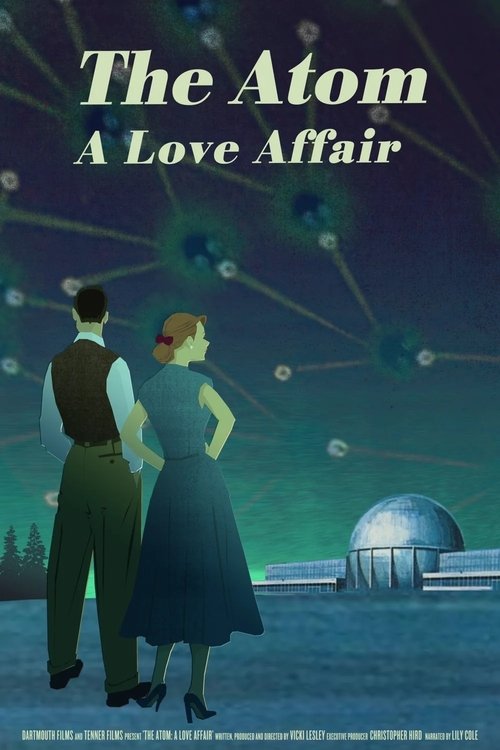
Poster for The Atom: A Love Affair (2019), blank on post-credit scenes.

With a wealth of fantastic archive footage and a series of revealing interviews with those who had first-hand experience, filmmaker Vicki Lesley tells the turbulent story of the West’s love-hate relationship with a nuclear power over the past seventy years. Capturing both the tantalising promise and the repeated disappointments of this singular technology, the film reveals how the post-war, romantic fantasy of an Atom-powered future developed into the stormy, on-off relationship still playing out today. A tale of scientific passion and political intrigue all wrapped up in the packaging of a sentimental screen melodrama.

Kim Jong-un: The Unauthorized Biography (2015) poster. Still unanswered: is there a scene after the credits?

A journey through several countries to find those who really know Kim Jong-un, North Korea's leader, in an attempt to profile a contradictory dictator who seems to rule his nation with both disturbing benevolence and cold cruelty while being worshipped as a living god by his subjects in exalted displays of ridiculous fanaticism.

Film poster, The Battle of Chernobyl (2007). No post-credit verdict yet.

On April 26, 1986, a 1,000 feet high flame rises into the sky of the Ukraine. The fourth reactor of the Chernobyl nuclear power plant just exploded. A battle begins in which 500,000 men are engaged throughout the Soviet Union to "liquidate" the radioactivity, build the "sarcophagus" of the damaged reactor and save the world from a second explosion that would have destroyed half of Europe. Become a reference film, this documentary combines testimonials and unseen footage, tells for the first time the Battle of Chernobyl.

Film artwork for Nuclear Now (2023), no verdict on the credits.

With unprecedented access to the nuclear industry in France, Russia, and the United States, Nuclear Now explores the possibility for the global community to overcome the challenges of climate change and energy poverty to reach a brighter future through the power of nuclear energy. Beneath our feet, Uranium atoms in the Earth’s crust hold incredibly concentrated energy. Science unlocked this energy in the mid-20th century, first for bombs and then to power submarines. The United States led the effort to generate electricity from this new source. Yet in the mid-20th century as societies began the transition to nuclear power and away from fossil fuels, a long-term PR campaign to scare the public began, funded in part by coal and oil interests.

Film artwork for Inside The Atom (1948), no verdict on the credits.

This short documentary offers a look at Canada’s Chalk River Project in the late 1940s. While humanity pondered the ultimate threat or promise of atomic energy, Chalk River scientists worked on the first set of experiments that attempted to apply atomic energy to medical and biological uses. Inside the Atom examines this frontier of science and assesses its value in terms of human progress.

Film poster, Uranium Drive-In (2013). No post-credit verdict yet.

A new uranium mill -- the first in the U.S. in 30 years -- would re-connect the economically devastated rural mining community of Naturita, Colorado, to its proud history supplying the material for the first atomic bomb. Some view it as a greener energy source freeing America from its dependence on foreign oil, while others worry about the severe health and environmental consequences of the last uranium boom.

Poster for Nuclear Fusion: The Promise of a New Energy Source (2023), awaiting its first vote.

In October 2023, a European research team succeeded in generating an enormous amount of energy from very little fuel. A success that fusion research had been working towards for around 70 years. Now the competition for a fusion reactor has been reignited. What role can electricity from nuclear fusion play in the future?

Film artwork for Atomic: Living in Dread and Promise (2015), no verdict on the credits.

Using only archive film and a new musical score by the band Mogwai, Mark Cousins presents an impressionistic kaleidoscope of our nuclear times – protest marches, Cold War sabre-rattling, Chernobyl and Fukishima – but also the sublime beauty of the atomic world, and how x-rays and MRI scans have improved human lives. The nuclear age has been a nightmare, but dreamlike too.

Thorium, the Far Side of Nuclear Power (2016) poster. The count is still zero.

Ever heard of the Thorium molten salt reactor? That's hardly surprising, as for 70 years, it has been inexplicably kept under wraps by the nuclear industry, despite the fact it could revolutionise energy production. It offers the promise of nuclear energy without waste and without danger. The "green atom": fact or fiction? Research that was dropped without explanation in 1973, has now become a topic of lively discussion...

Film artwork for The Red Princess (2022), no verdict on the credits.

Who is Kim Yo-jong? In a context of maximum tensions between North Korea and the United States, Pierre Haski paints an unprecedented portrait of the little sister of Kim Jong-un, whose influence in Pyongyang is growing stronger day by day.

Poster for Nuclear Power - End of an Era? (2023), awaiting its first vote.

Nuclear has always been a controversial energy source. While Germany is phasing out its nuclear power plants, France is building a new generation of nuclear reactors to keep the lights on. A look at the nuclear debate over the last few decades and what the future holds for atomic energy.

Fission (2025) artwork. Still a mystery after the credits.

The climate crisis, Germany’s nuclear phase-out and Russia’s war against Ukraine are just three of the heavy pieces in the dramatic game about the future of energy. Caught in the middle are two small towns with barely a thousand residents each: Gundremmingen in Bavaria, home to a shuttered nuclear plant, and Choczewo on Poland’s Baltic coast, where the country’s first facility is now under construction. What do the good people on the ground think about it all?

Am Tag als Bobby Ewing starb (2005). Nobody has said whether there is anything after the credits.

1986 - The protest movement against the construction of the nuclear power plant in Brokdorf is on its last legs. Only one rural commune remains: the "Alternative Wohnkollektiv Regenbogen". For them, it could go on and on with endless consensus discussions, shearing sheep and naked communal bathing. One day, the lowland communards are joined by two city dwellers, Hanne and her son Niels. While Hanne gets used to scream therapy and raising vegetables surprisingly quickly - and even more quickly to the tantra games with commune guru Peter - Niels has less and less desire for the dogmatic commune rules. Out of defiance, he joins the violent nuclear power plant resistance, thus upsetting the tranquil chaos of the commune. The big bang, however, comes when a reactor explodes in distant Chernobyl. Exactly on the day Bobby Ewing dies, the petroleum prince from "Dallas" and series favorite of the commune.

Privacy policy

When you vote, we save your Yes or No answer and when you voted.

We use a cookie and your internet address to recognize your vote on each movie. This prevents repeat votes. The cookie lasts for five years.

Your votes are kept as part of the movie totals.