Post-credit scenes: results for “tag: observatory”

Contact (1997). Nobody has said whether there is anything after the credits.

A radio astronomer receives the first extraterrestrial radio signal ever picked up on Earth. As the world powers scramble to decipher the message and decide upon a course of action, she must make some difficult decisions between her beliefs, the truth, and reality.

Poster for Detective Conan: One-Eyed Flashback (2025), blank on post-credit scenes.

As police inspector Yamato Kansuke pursues a certain man in the snowy mountains of Nagano, a shadow suddenly appears in his field of vision. While he's distracted, a rifle bullet fired by someone grazes his left eye and causes an avalanche accompanied by a roar. Ten months later, Kansuke, having miraculously survived the avalanche, receives a report that a researcher at the Nobeyama National Astronomical Observatory has been attacked.

The Arrival (1996) poster image. Zero votes so far.

Zane Ziminski is an astrophysicist who receives a message that seems to have extraterrestrial origins. Eerily soon after his discovery, Zane is fired. He then embarks on a search to determine the origins of the transmission that leads him into a Hitchcockian labyrinth of paranoia and intrigue.

Film poster, Bliss (2021). No post-credit verdict yet.

A mind-bending love story following Greg who, after recently being divorced and then fired, meets the mysterious Isabel, a woman living on the streets and convinced that the polluted, broken world around them is just a computer simulation. Doubtful at first, Greg eventually discovers there may be some truth to Isabel’s wild conspiracy.

The Crawling Eye (1958). Nobody has said whether there is anything after the credits.

A United Nations investigator crosses paths with a pair of psychic sisters on his way to Trollenberg observatory in the Swiss Alps, which has been plagued by a series of mountaineer disappearances that may be related to a radioactive cloud at the mountain's south face.

Cover image for Chasing Spaceships (2019), not yet voted on.

When George's suspicions get him fired from the observatory, there is only one path he can seek to fulfil his retribution. The new order is upon us!

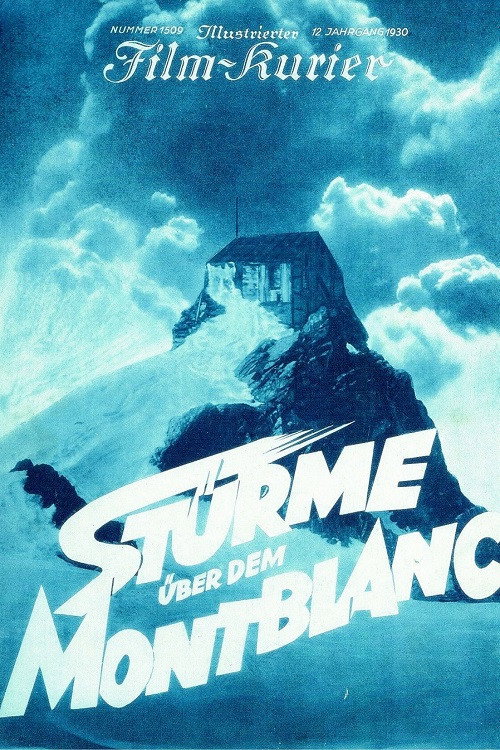
Storm Over Mont Blanc (1930): nobody has checked the credits yet.

Hannes is employed at the Mont Blanc Observatory; the only outside connection is a pilot and Hella over the radio. Hella ascends the mountain but her father dies along the way.

Key art for Mauna Kea: Temple Under Siege (2005), unanswered on the post-credit question.

Although the mountain volcano Mauna Kea last erupted around 4,000 years ago, it is still hot today, the center of a burning controversy over whether its summit should be used for astronomical observatories or preserved as a cultural landscape sacred to the Hawaiian people. For five years the documentary production team Nā Maka o ka 'Āina ("the eyes of the land") captured on video the seasonal moods of Mauna Kea's unique 14,000-foot summit, the richly varied ecosystems that extend from sea level to alpine zone, the legends and stories that reveal the mountain's geologic and cultural history, and the political turbulence surrounding the efforts to protect the most significant temple in the islands: the mountain itself.

Shinpei (2024). Nobody has said whether there is anything after the credits.

An older brother who can't fit into society, a father who has given up on his future, and a younger sister who is tied to the house. This is the story of the small steps these three people take. The Great East Japan Earthquake suddenly changed the peaceful daily life of the people of Fukushima. Many people lost their homes and jobs due to not only the earthquake and tsunami, but also the nuclear accident, and left Fukushima. This is the story of a family living in the aftermath three years later, in Fukushima, where deep scars remain.

Cosmis Flows: The Cartographers of the Universe (2019): nobody has checked the credits yet.

Man has always sought to seek further afield. After the seafaring explorers of the 16th century, 21st century cosmologists today navigate more celestial oceans, with each mission providing an ever-broader and more impressive cartography of our surroundings. At the avant garde of modern technology, these strange travellers are actually immobile, and their vessels are powerful and spectacular telescopes, on the Earth or in space, constantly widening the limits of our knowledge and giving form to our dreams of infinity. From Hawaii to Australia, via South Africa and China, we set out on an incredible scientific and human adventure to visit the planet's greatest cosmic exploration centres to discover the new challenges involved in understanding the universe. A journey on Earth and in the heavens that will take your breath away!

The Eclipse: Courtship of the Sun and Moon (1907) cover. Nothing recorded about its credits.

In this film, Méliès concocts a combination fairy- and morality tale about the foolishness of trying to look too deeply into the workings of an unstable and inscrutable universe. At a medieval school, an old astronomer begins to teach a class of young men, all armed with telescopes, about the art of scrutinising an imminent eclipse. When a mechanical clock strikes twelve, all the young men rush to the windows and fix their telescopes on the heavens.

Poster for Undaunted: The Forgotten Giants of the Allegheny Observatory (2012). No votes yet on whether it has a post-credit scene.

This film tells the surprising story of how the Allegheny Observatory has been a world leader in the study of the stars since the 1860s. Self-educated, and often facing unrelenting hardships, the people associated with the Allegheny Observatory defied the odds to make enormous contributions to the founding of astrophysics and early aviation.

Movie poster for Lick Observatory, Mt. Hamilton, Cal. (1897), waiting for its first vote.

From F.Z. Maguire catalogue: The background of this picture is the Lick Observatory, Mount Hamilton, Cal. This observatory, the gift of James Lick, of Pennsylvania, was constructed at a cost of $700,000, being equipped with one of the most powerful telescopes that has ever been produced, and is famous the world over. The view of the Observatory is very complete, showing the style of architecture, including the glass covered dome in which are placed the various astronomical instruments. Every Saturday night throughout the year is set apart for visitors to inspect the Observatory and look through the great glass. This view shows a coach load driving up and alighting.

Cover image for From the Atoms to the Stars (2017), not yet voted on.

An incredible travel through space and time between the walls of the Paris Observatory, which is celebrating its 350th birthday. Place of discoveries such as speed of light or Neptune’s existence, it is still today one of the oldest operating observatories and the greatest hub in the world for astronomy and astrophysics researches, second only to Harvard.

An Ascent of the Monte Rosa Glaciers (1932): nobody has checked the credits yet.

An alpine ascent Monte Rosa glacier by a large group of mountaineers equipped with crampons and ice axes. The group ascends from the Gabiet lake to the Corno del Camoscio (3.024 meters) and up the Capanna Gnifetti hut at 3.647 meters. From there they continue the progression by the glacier up to the Capanna Regina Margherita hut at 4.559, the highest observatory in Europa at the time, from where they start the way back to the village of Gressoney. The film was produced in 1932 by the Instituto Nazionale Luce during the Italian Fascist regime.

Poster for The Ascent of Mont Blanc (1907). No votes yet on whether it has a post-credit scene.

Joseph Vallot and his team of guides and porters climb Mont Blanc in 1906. Their ascent will take three days. They spent their nights at the Grands Mulets refuge and the Grand Plateau refuge. This is the very first successfully filmed ascent. Joseph Vallot (1854-1925), rich heir of Lodève in Occitania. He devotes part of his fortune to the observation of the Alps, sometimes opposing the scientific community. He built an observatory, still standing today.

Privacy policy

When you vote, we save your Yes or No answer and when you voted.

We use a cookie and your internet address to recognize your vote on each movie. This prevents repeat votes. The cookie lasts for five years.

Your votes are kept as part of the movie totals.