Post-credit scenes: results for “tag: opera live performance”

Puccini: La Bohème (2008) cover. Nothing recorded about its credits.

Puccini’s evergreen paean to young love and the bohemian life has captivated generations of Met-goers through Franco Zeffirelli’s iconic production. Movie theater audiences for the high-definition transmission of this staging got to see it with fresh eyes in a touching performance starring Angela Gheorghiu and Ramón Vargas as the frail seamstress and her poetic lover.

Strauss: Salome (2018) poster. The count is still zero.

The story is set at the beginning of the Christian era on a large terrace of Herod’s palace, during the reign of Herod Antipas. At night, on a terrace of the palace, Salome, Herod’s stepdaughter, is gazed at passionately by Narraboth, captain of the guard. Jochanaan, a prophet, is imprisoned in a cistern for having slandered Herod. He proclaims the coming of Jesus, but his message is met with incomprehension by the guards. Salome hears the prophet. She manages to convince the guards to bring Jochanaan out so she can see him. Both fascinated and frightened by his prophecies, Salome falls passionately in love with this man. Richard Strauss’s opera at the 2018 Salzburg Festival, directed by Romeo Castellucci at the Felsenreitschule. In her debut in the title role, Asmik Grigorian distinguished herself with her talents as a singer and actress.

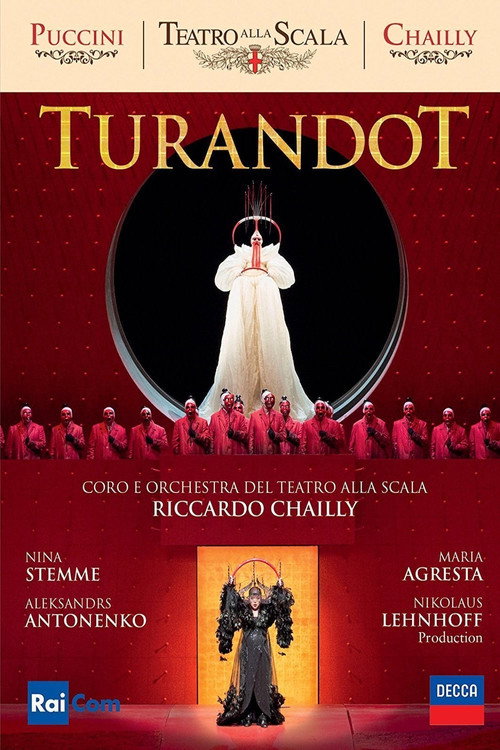
Puccini: Turandot - Teatro alla Scala (2015) artwork. Still a mystery after the credits.

Visually this is a gripping production which captures the drama of this opera perfectly. It's downright exciting! and I found the singing, acting, and orchestral playing reasonably fine. I found only one major problem with it, a problem that kept Puccini for quite a few years. Turandot has been looking for an opportunity to kill Calif and Calif has singlemindedly tried to get Turandot to love and wed him focusing on her and ignoring a better looking girl who loves him truly. The problem is how to get the audience to applaud the match once Calif gets his wish. Puccini couldn't figure out how to do it. The traditional quick ending doesn't do it, and Berio's attempt is longer , tries its best, but ends up making it plain this is one wierd couple.

Poster for Wagner: Götterdämmerung - Teatro alla Scala (2013). No votes yet on whether it has a post-credit scene.

Götterdämmerung, the final instalment of Wagner’s Ring of the Nibelung, is a story of human passions. Two essentially benevolent creatures, involved with and possibly doomed by their traffic with the gods, find treachery and evil in the world of the humans, and are ruined by the dark side of humanity. Iréne Theorin, acclaimed worldwide for her portrayal of Wagner’s heroines, stars as Brünnhilde opposite Lance Ryan, who continues his radiant portrayal of the tragic hero Siegfried. The strong cast also includes Mikhail Petrenko as the dark antagonist Hagen and Johannes Martin Kränzle, who once again shines as his father Alberich. Waltraud Meier has a memorable appearance as Brünnhilde’s sister Waltraute. With this 2013 recording of Götterdämmerung, the musically and visually compelling Scala Ring Cycle by Daniel Barenboim and Guy Cassiers was completed and proved to be one of the highlights of the Richard Wagner bicentenary.

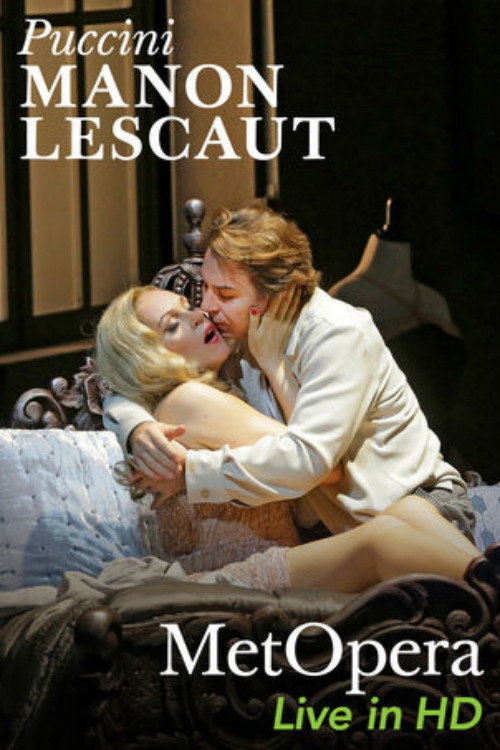
Manon Lescaut - Metropolitan Opera (2016) cover. Nothing recorded about its credits.

Kristine Opolais is the young woman whose conflicting desires for love and luxury lead to her tragic end, and Roberto Alagna plays the man who falls for her in Puccini’s early hit. Richard Eyre’s elegant production, which sets the action in 1940s occupied France, was one of the highlights of the Met’s 2015–16 season. Massimo Cavalletti as Manon’s brother and Brindley Sherratt as her aging admirer co-star, and Principal Conductor Fabio Luisi is on the podium.

Bizet: Carmen (2003) artwork. Still a mystery after the credits.

This 2003 performance of Georges Bizet's 19th century opera Carmen was produced and directed by filmmaker and stage director Franco Zeffirelli, best known to many for the Academy Award-winning big-screen adaptation of Shakespeare's Romeo and Juliet. Shot at the Arena di Verona, the production features Marina Domashenko in the title role and music by the Orchestra of the Arena di Verona under conductor Alain Lombard.

Movie art for Die Fledermaus (1984), post-credit scene unknown.

Most opera houses ring in the New Year with Johann Strauss Jr.'s most popular operetta--the festiveness of which is appropriate for the occasion--and this December 31, 1983, Covent Garden performance follows suit. An exceptional cast--led by Hermann Prey and Kiri Te Kanawa as the couple whose marriage survives the comic indiscretions of three long acts--obviously has as much fun as the audience. Plácido Domingo leads the Orchestra of the Royal Opera House through its paces with panache. Prince Orlofsky's Act II party is always a splendid opportunity to pull out all the stops with surprise "guests," and this performance makes the most of its chance: entering the proceedings to sing one of his tailor-made chansons, "She," is French crooner Charles Aznavour, who is followed by dancers Merle Park and Wayne Eagling, their delightful pas de deux flashily choreographed by Sir Frederick Ashton.

Wagner: Die Walküre - Royal Opera House (2025) poster. The count is still zero.

On a stormy night, fate brings two strangers together, unleashing a love that has the power to destroy entire worlds. Meanwhile, in the realm of the gods, an epic battle erupts between the ruler Wotan and his rebellious daughter Brünnhilde.

Image for Tchaikovsky: Iolanta / Bartók: Bluebeard's Castle (2015), a film with no post-credit data.

Valery Gergiev conducts Mariusz Trelinski’s thrilling new production of these rarely heard one-act operas. Anna Netrebko stars as the blind princess of the title in Tchaikovsky’s lyrical work, opposite Piotr Beczala as Vaudémont, the man who wins her love—and wakes her desire to be able to see. Nadja Michael and Mikhail Petrenko are Judith and Bluebeard in Bartók’s gripping psychological thriller about a woman discovering her new husband’s murderous past.

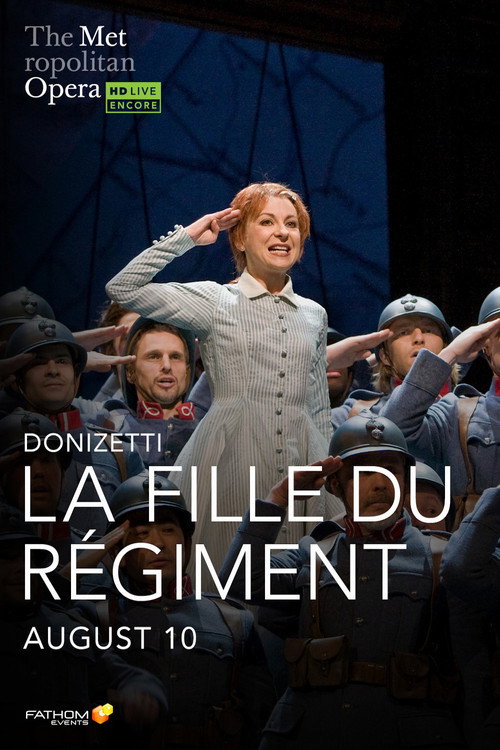
La Fille du Régiment - Metropolitan Opera (2008) poster. Still unanswered: is there a scene after the credits?

Madcap physical comedy and impeccable coloratura come together for Natalie Dessay’s indelible portrayal of the feisty tomboy raised by a regiment of French soldiers. Juan Diego Flórez is the young Swiss villager who conquers her heart—and a slew of high Cs. Also featuring uproarious performances by Felicity Palmer and Alessandro Corbelli, as well as a cameo by Tony Award winner Marian Seldes, this laugh-out-loud production was a runaway hit that left audiences exhilarated.

The Marriage of Figaro (1994). Nobody has said whether there is anything after the credits.

Live from Glyndebourne 1994. The first production to be filmed Live in Glyndebourne´s new opera house May 1994. The Marriage of Figaro is a continuation of the plot of The Barber of Seville several years later, and recounts a single “day of madness” in the palace of the Count Almaviva near Seville, Spain. Rosina is now the Countess; Dr. Bartolo is seeking revenge against Figaro for thwarting his plans to marry Rosina himself; and Count Almaviva has degenerated from the romantic youth of Barber into a scheming, bullying, skirt-chasing baritone. This follows the Count trying to obtain favours from Susanna, Figaro’s bride to be, under the nose of the Countess.

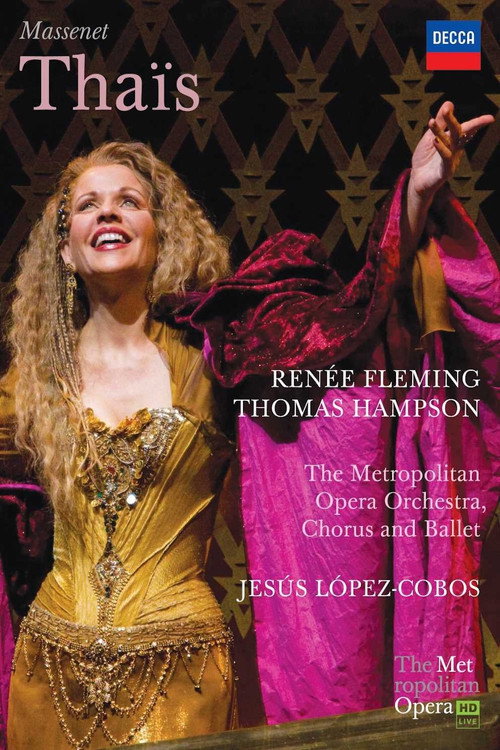
Film poster, Thaïs - Metropolitan Opera (2008). No post-credit verdict yet.

When the most voluptuous, sought-after courtesan in the world meets an ascetic monk whose life is devoted to God, you know erotic sparks are going to fly. And when the clash takes place in a glorious, but rarely performed, opera by Massenet, it’s a delight to the ear just as much as to the eye. Renée Fleming is every inch the glamorous Thaïs, swathed in elegant gowns designed by Christian Lacroix. Thomas Hampson is Athanaël, the tortured man of God. This production by John Cox, which premiered in December 2008, brilliantly sets the stage for a confrontation as old as civilization itself.

Hippolyte et Aricie - Staatsoper Berlin (2019) artwork. Still a mystery after the credits.

Staatsoper Berlin’s new production of Rameau’s tragédie lyrique, directed by Alletta Collins; featuring costumes, sets and lighting designed by Ólafur Eliasson; and musical direction by Simon Rattle, who makes his debut with the Freiburg Baroque Orchestra.

Poster, Wagner: Das Rheingold - Royal Opera House (2023). Nobody has voted on this one.

When a precious hoard of gold is stolen from the river Rhine, it unleashes a chain of destructive events, pitting gods and mortals against one another for generations. Wagner’s Ring cycle boasts some of the greatest music ever written for the opera stage. Join us as we embark on a spectacular journey into the world of myth, dream and memory, with the figure of Erda – Mother Earth herself – at its centre.

Richard Strauss: Capriccio - Semperoper Dresden (2021) cover. Nothing recorded about its credits.

Capriccio is the final opera by Richard Strauss, completed in 1942, and is subtitled "A Conversation Piece for Music." The opera explores the debate between the importance of words and music through the story of Countess Madeleine, who is courted by a poet and a composer, ultimately leaving the question of which art form is superior unresolved.

Poster for Il Trovatore - Staatsoper Berlin (2013). No votes yet on whether it has a post-credit scene.

Daniel Barenboim conducts the Staatskapelle Berlin in this production of Verdi's opera starring Anna Netrebko and Plácido Domingo. The Count Di Luna believes that his younger brother was murdered years before by a vengeful gypsy but still hopes that he may be alive. When he attempts to court the beautiful Leonora, he is enraged to discover that she has a lover – the troubadour, Manrico. Manrico and the Count duel, and afterwards Manrico reveals to Azucena, the woman he believes to be his mother, that when he had the opportunity to kill the Count he felt something holding him back.

Manon (2007) poster. The count is still zero.

Massenet's opera centres on its charming but contrary heroine, the vivacious young Manon who longs for luxury and excitement. We first encounter her en route to a convent, where her family are sending her to be educated. Along the way, she falls in love with the young student Des Grieux, and, impetuously, runs off with him. She soon leaves him, however, to become the mistress of a rich nobleman. Thus begins her descent into criminality and depravity, all too soon dragging the besotted Des Grieux with her, until she is imprisoned. Despite its tragic story, the opera is full of French charm and vitality – typified by the ambiguous Manon herself. Her plight is touching because of the subtle play of innocence and calculation in her character. The score contains many sparkling arias and ensembles, moving rapidly from moods of exuberance to tenderness, with perfect dramatic timing. Recorded live at the Staatsoper Unter den Linden, Berlin, April/May 2007.

Privacy policy

When you vote, we save your Yes or No answer and when you voted.

We use a cookie and your internet address to recognize your vote on each movie. This prevents repeat votes. The cookie lasts for five years.

Your votes are kept as part of the movie totals.