

In Ancient Polynesia, when a terrible curse incurred by Maui reaches an impetuous Chieftain's daughter's island, she answers the Ocean's call to seek out the demigod to set things right.
In Ancient Polynesia, when a terrible curse incurred by Maui reaches an impetuous Chieftain's daughter's island, she answers the Ocean's call to seek out the demigod to set things right.

The harrowing true story of the crew of the USS Indianapolis, who were stranded in the Philippine Sea for five days after delivering the atomic weapons that would eventually end WWII. As they awaited rescue, they endured extreme thirst, hunger, and relentless shark attacks.

Adventurer, filmmaker, inventor, author, unlikely celebrity and conservationist: For over four decades, Jacques-Yves Cousteau and his explorations under the ocean became synonymous with a love of science and the natural world. As he learned to protect the environment, he brought the whole world with him, sounding alarms more than 50 years ago about the warming seas and our planet’s vulnerability. In BECOMING COUSTEAU, from National Geographic Documentary Films, two-time Academy Award®-nominated filmmaker Liz Garbus takes an inside look at Cousteau and his life, his iconic films and inventions, and the experiences that made him the 20th century’s most unique and renowned environmental voice — and the man who inspired generations to protect the Earth.

Two college friends, now in their thirties, admire each others' lives and feel trapped in their own. Wes, tied to a demanding career and responsibilities to family, extends a work trip to drag his dispirited artist friend Luke to find Luke's "one that got away."

A squid dreams of becoming the star of a wildlife documentary. But when an aircraft sinks into the ocean, her peaceful world is suddenly thrown into danger.
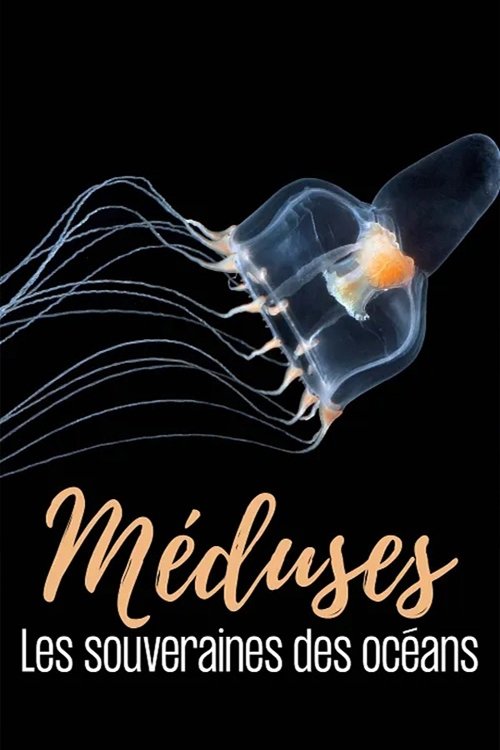
Jellyfish blooms are making headlines around the world. This is due to the damage they cause to tourism, fishing and our health. How can these creatures, which are over 98% water and have no shell, skeleton or brain, expand so rapidly? Although this is a normal stage in the life cycle of these gelatinous animals, we have to admit that blooms have become much more frequent and massive in recent decades. We're even witnessing jellyfish populations appearing in more and more regions where fish have been replaced by them, such as off the coast of Namibia, in the Black Sea, in the Sea of Japan and in certain areas of the Baltic Sea. What causes this? Why has the role of jellyfish in the ocean been underestimated, even though they outlived the dinosaurs? Are jellyfish on their way to dominating the oceans as they once did? What if they were to be the only ones left?

A marine biologist and a government agent investigate mysterious deaths and rumors of a sea monster in a secluded ocean cove, and find themselves involved with a marine biology professor conducting secretive experiments, international spies trying to steal his secrets, a radioactive light on the sea bottom, and the malevolent thing which guards it.
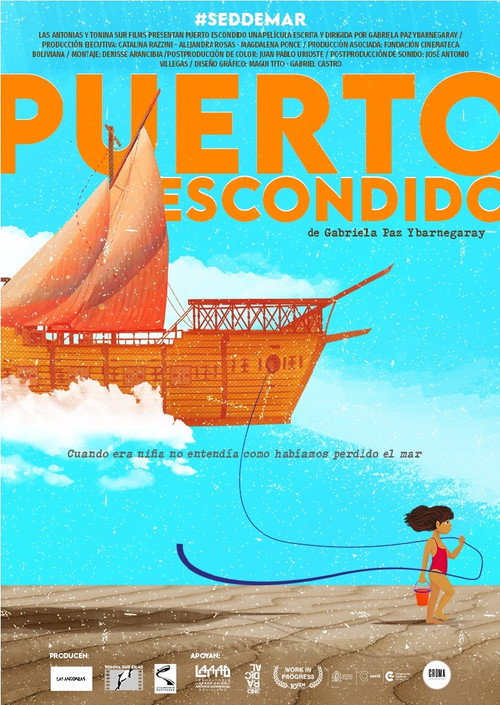
In 1879, Bolivia lost its access to the sea in a war. When I was a child I did not understand how we had lost it; he thought the Chileans had taken him away in buckets. It is a diary towards interior landscapes, myths, characters and contradictions in a country that relives this loss every day.

The Nereus is a fifty-year-old Ice Breaker, salvaged by an idealistic crew on a mission to catch illegal fisherman. On chase, the crew find themselves well off-course and bearing down on a body mysteriously floating in the middle of the Devil’s Sea. Superstitious or not, the team soon discovers they’ve rescued a deadly creature feeding on the lifeless body. Their new mission—kill or be killed and preferably before they hit land.

"The Sea Hornet" was a merchant ship sunk, supposedly by a torpedo, less than a mile off the California Coast during World War Two. Six years later when his buddy is killed, attempting to blow up the sunken ship, on the orders of Suntan Radford and Tony Sullivan, deep-sea diver "Gunner" McNeil has his suspicions aroused... especially since Suntan is the daughter of the ship's captain that died when the ship sunk, and Sullivan was a crew member. Plus the fact the ship had over a million dollars in cash on board. During the course of his investigation, he becomes romantically involved with Ginger Sullivan

The unfolding of daily life, a week after the incident.

When best friends, Kaitlin and Maddy, go missing during Spring Break, their mothers do everything they can to find them, while realizing that their different parenting styles may have led to their disappearances.

An underwater voyage to Indonesia to learn about its inhabitants such as giant rays and whale sharks as well as efforts being made in the region for ocean conservation.

Escaped Nazi POWs hold the denizens of a California resort hostage.

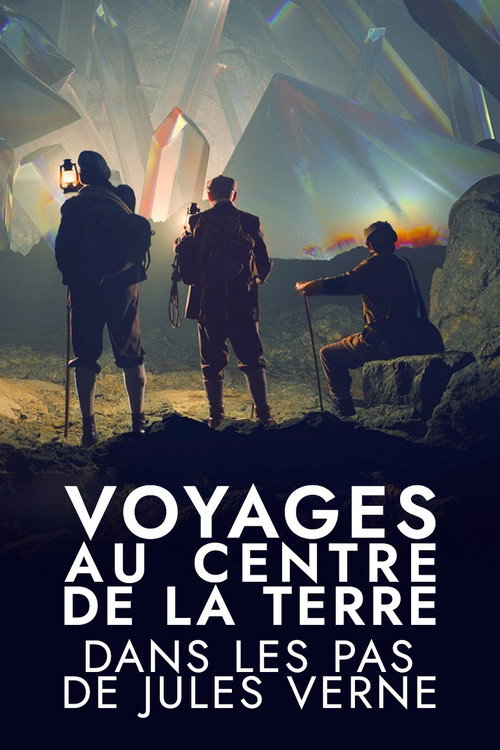

"Kon-Tiki" was the name of a wooden raft used by six Scandinavian scientists, led by Thor Heyerdahl, to make a 101-day journey from South America to the Polynesian Islands. The purpose of the expedition was to prove Heyerdal's theory that the Polynesian Islands were populated from the east- specifically Peru- rather than from the west (Asia) as had been the theory for hundreds of years. Heyerdahl made a study of the winds and tides in the Pacific, and by simulating conditions as closely as possible to those he theorized the Peruvians encountered, set out on the voyage.

Hawaii, Pacific Ocean. In this heavenly place, one of the most memorable battles of the Second World War took place 80 years ago. On December 7, 1941, at 7:53 am, a Japanese air squadron struck the American fleet which anchored in the waters of Pearl Harbor. The United States were struck at the heart of their defensive system and entered the conflict the very next day. How Pearl Harbor changed the face of World War II and therefore the face of the world? What are the diplomatic undersides of Pearl Harbor? Was the attack really a surprise attack? Is it really a Japanese victory?

Kenichi Horie is determined to challenge his family, the law and the nature crossing the Pacific to America in a small sailboat. Despite his careful planning, many unforeseen events will test his determination.

Frank Latimore is cast as Balboa, the heroic Spanish explorer who discovers the Pacific Ocean. Along the way, he must pacify the wrath of his enemies and battle his way through a forest inhabited by savage natives. This one features some really nice battles, stunning ocean photography, and tolerable reconstruction of historic events.