

As war and plague devastate 14th-century England, a humble peasant ignites a rebellion, uniting an army of commoners to defy the King’s might in a desperate fight for justice and survival.
As war and plague devastate 14th-century England, a humble peasant ignites a rebellion, uniting an army of commoners to defy the King’s might in a desperate fight for justice and survival.

A samurai answers a village's request for protection after he falls on hard times. The town needs protection from bandits, so the samurai gathers six others to help him teach the people how to defend themselves, and the villagers provide the soldiers with food.

Bestowed with superhuman strength, a young mortal named Hercules sets out to prove himself a hero in the eyes of his father, the great god Zeus. Along with his friends Pegasus, a flying horse, and Phil, a personal trainer, Hercules is tricked by the hilarious, hotheaded villain Hades, who's plotting to take over Mount Olympus!

The Fantastic Mr. Fox, bored with his current life, plans a heist against the three local farmers. The farmers, tired of sharing their chickens with the sly fox, seek revenge against him and his family.

Otis is a mischievous, carefree Holstein cow who lives on a farm where, unbeknownst to humans, the animals are anthropomorphic. He prefers having fun with his best friends: Pip the mouse, Freddy the ferret, Peck the rooster, and Pig the pig - rather than following strict rules and accepting responsibility. But when his adoptive father is killed in a coyote attack, he has a heavy responsibility thrust upon him to become leader of his farm home's community.

When their bus is crippled on the side of a deserted road, a team of high school athletes discover an opponent they cannot defeat – and may not survive.

Photographer Robert Kincaid wanders into the life of housewife Francesca Johnson for four days in the 1960s.

Jamie Graham, a privileged English boy, is living in Shanghai when the Japanese invade and force all foreigners into prison camps. Jamie is captured with an American sailor, who looks out for him while they are in the camp together. Even though he is separated from his parents and in a hostile environment, Jamie maintains his dignity and youthful spirit, providing a beacon of hope for the others held captive with him.

A harrowing tale of devotion, damnation and the devil within.

Set in the South just after the US Civil War, Laurel Sommersby is just managing to work the farm without her husband, believed killed in battle. By all accounts, Jack Sommersby was not a pleasant man, thus when he suddenly returns, Laurel has mixed emotions. It appears that Jack has changed a great deal, leading some people to believe that this is not actually Jack but an imposter. Laurel herself is unsure, but willing to take the man into her home, and perhaps later into her heart.

Peasant girl Jagna is forced to marry the much older, wealthy farmer Boryna, despite her love for his son Antek. With time, Jagna becomes the object of envy and disdain with the villagers and she must fight to preserve her independence.

The story is set at the beginning of the 20th century in Sicily. Salvatore, a very poor farmer, and a widower, decides to emigrate to the US with all his family, including his old mother. Before they embark, they meet Lucy. She is supposed to be a British lady and wants to come back to the States. Lucy, or Luce as Salvatore calls her, for unknown reasons wants to marry someone before to arrive to Ellis Island in New York. Salvatore accepts the proposal. Once they arrive in Ellis Island they spend the quarantine period trying to pass the examinations to be admitted to the States. Tests are not so simple for poor farmers coming from Sicily. Their destiny is in the hands of the custom officers.

The epic tale of a class struggle in twentieth century Italy, as seen through the eyes of two childhood friends on opposing sides.

On a turn-of-the-20th-century northern Italian farm, a group of sharecroppers eke out a threadbare existence. A priest advises Batisti and his wife Batistina that their young son Minec should be formally educated, so they sacrifice his help in the fields and send him to school. When Minec's wooden shoe breaks one day, Batisti--in an act of desperation--puts the family's future at risk to replace the clog.

When her husband is kicked in the groin by the village head, Qiu Ju, a peasant woman, despite her pregnancy, travels to a nearby town, and later a big city to deal with its bureaucrats and find justice.
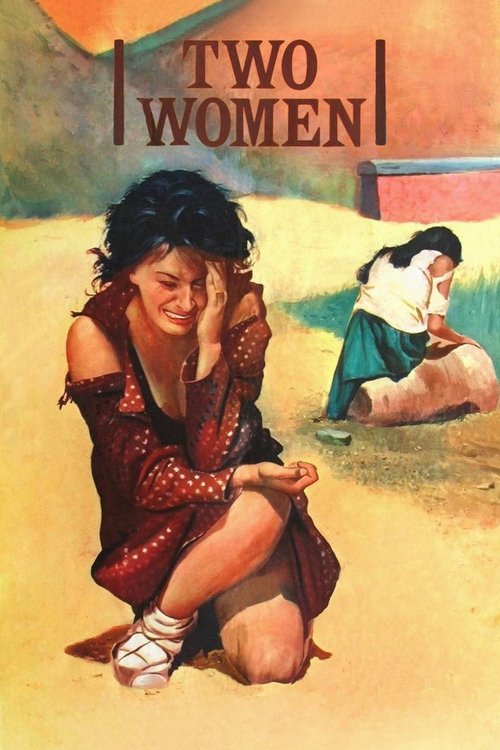
A young widow flees from Rome during WWII and takes her lonely twelve-year-old-daughter to her rural hometown but the horrors of war soon catch up with them.

A strong-willed peasant girl is sent by her father to the estate of some local aristocrats to capitalize on a rumour that their families are from the same line. This fateful visit commences an epic narrative of sex, class, betrayal, and revenge.

Devout Christians Töre and Märeta send their only daughter, the virginal Karin, and their foster daughter, the unrepentant Ingeri, to deliver candles to a distant church. On their way through the woods, the girls encounter a group of savage goat herders who brutally rape and murder Karin as Ingeri remains hidden. When the killers unwittingly seek refuge in the farmhouse of Töre and Märeta, Töre plots a fitting revenge.

A study in contrasts set in and around Havana that explores Cuba's 1959 revolution: a young woman's fascination with the excess of an American-owned casino leads to her downfall in the eyes of her street vendor boyfriend; a tenant farmer revolts the only way he knows how, attacking the land he works; university students gain first-hand knowledge of political upheaval; and, in the hills outside the city, the members of a poor peasant family are patriotically swept up into the burgeoning revolt.

1950s Saigon through the eyes of Mui, a Vietnamese servant girl. At 10 years-old, Mui leaves her village to work for an affluent, troubled family. As she comes of age, Mui finds work in the household of a pianist she has admired since childhood, and finds their relationship growing in complexity.