

A group of people find themselves trapped in the backwoods of West Virginia, fighting for their lives against a group of vicious and horribly disfigured inbred cannibals.
A group of people find themselves trapped in the backwoods of West Virginia, fighting for their lives against a group of vicious and horribly disfigured inbred cannibals.

After a bloody invasion of the BOPE in the High-Security Penitentiary Bangu 1 in Rio de Janeiro to control a rebellion of interns, the Lieutenant-Colonel Roberto Nascimento and the second in command Captain André Matias are accused by the Human Right Aids member Diogo Fraga of execution of prisoners. Matias is transferred to the corrupted Military Police and Nascimento is exonerated from the BOPE by the Governor.

A British ex-convict in colonial Australia and his fragile wife, haunted by the past crime that binds them, struggle to rebuild their lives when a young newcomer stirs long-buried passions and secrets.

Maria marries a young soldier in the last days of World War II, only for him to go missing in the war. She must rely on her beauty and ambition to navigate the difficult post-war years alone.

The story of two men on different sides of a prison riot -- the inmate leading the rebellion and the young guard trapped in the revolt, who poses as a prisoner in a desperate attempt to survive the ordeal.

A family has a hard time tying to stay together, because murder seems to be in their blood, and a their favorite type of gathering is a massacre.

A down on his luck young man stumbles into a gang of robbers who all get landed in prison. Will he be reformed, or is he ensnared into a life of crime?

Ramon is a guy who lives in a neighborhood, in the " fifth courtyard " in urban poverty. Nevertheless, aspires to the love of the daughter of his employer, a woman of another social class.

The soulless atmosphere of a women's penitentiary destroys the prisoners' personality, kills all femininity in them. The film looks at the rationality of the long prison terms for women with children.

Upon release from the penitentiary, Phillip Whitney tells his friend, Bennie, that he is going straight, and visits his lawyer brother John. Phillip looks up to John and while incarcerated maintained contact with him through a continental mailing agency. As John has no idea he was in prison, Phillip tells him that he has just returned from Japan.

Duke Jarrett is sent to jail at the John Dillinger prison. However, the prison looks more like a zoo, more or less ruled by the prisoners themselves.

Sarajevo, rush hour. Emir (15), accompanied by a social worker, is on his way to meet his father Safet for a weekend picnic at Igman, a semi-open penitentiary. Due to the heavy traffic they are late...

Imagine a prison with some ten thousand prisoners, many of them dangerous and, to control them, only a few unarmed employees. Small in number, these employees work in shifts. They are almost prisoners themselves, in a routine of tension, but also of humor and emotion. This prison was all too real. While it was in existence, the Carandiru was the largest prison in Latin America, administered by a reduced number of employees. The documentary shows, from the point of view of these few employees, holding the keys, how the prison operated: the delicate balance in the relationship with the prisoners, affinity among employees, moments of tension and, even, of happiness. These are stories told by former employees, among them, Dr. Dráuzio Varella, author of the book Estação Carandiru. These are the secrets of a place that no longer exists.
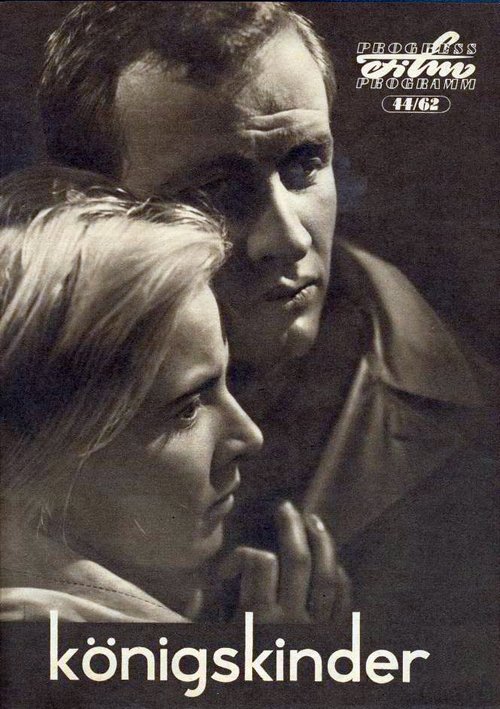
Magdalena and Michael have loved each other since they were children. But when the Nazis come to power, Michael rebels against the regime and is sentenced to fifteen years in a concentration camp. Magdalena, meanwhile, goes underground with the help of a friend and later immigrates to the Soviet Union. Michael, who has joined the Red Army, discovers on the way to Moscow that Magdalena is staying there. But when his plane lands, she is already on her way back to Germany. Michael hopes that one day, he and Magdalena will be reunited.

A story depicting the life of executed murderer and gang leader, Marciál "Baby" Ama. Ama, who became a gang leader with his prison mob while serving a sentence for lesser charges, was executed for murder at the age of 16 via electric chair on 4 October 1961.

A look beyond the shock and inhumanity of prison rape to the intricate social hierarchy that keeps it alive. A filmmaker goes deep inside Alabama's infamous Limestone penitentiary to uncover the long-term causes and consequences of prison rape. With a startling lack of inhibition, five inmates reveal the workings of an elaborate inner society.

August 29, 1979, Talavera Bruce Penal Institute, Bangu, Rio de Janeiro. After serving eight years in prison, Inês Etienne Romeu, the only survivor of the "House of Death" in Petrópolis and the first political prisoner sentenced to life in prison in Brazil, left prison benefiting from Amnesty. Norma Bengell filmed this moment: from the prison door to her home with her family, Inês was welcomed by family, friends and members of the Brazilian Amnesty Committee, in what marked the first act of the historic denunciation that Inês would carry out against her tormentors and the Military Regime.
