Post-credit scenes: results for “tag: perú”

Movie poster for Paddington in Peru (2024), which has a post-credit scene according to 1 votes.

Paddington travels to Peru to visit his beloved Aunt Lucy, who now resides at the Home for Retired Bears. With the Brown Family in tow, a thrilling adventure ensues when a mystery plunges them into an unexpected journey through the Amazon rainforest and up to the mountain peaks of Peru.

Poster for Chichero (2026). No votes yet on whether it has a post-credit scene.

In Peru in the 1980s, conflict between the Shining Path guerrillas and the army forced Josué, a young Quechua with dreams of becoming a boxing champion, to flee his hometown. Separated from his family and forced to enlist in the army, he vows to fight for a better future for them.

She (2018) artwork. Still a mystery after the credits.

A man complains about the tedium of routine. It seems that he has no power of decision or action.

Poster for The Living Stones of Sacsayhuamán (2014), blank on post-credit scenes.

Sacsayhuamán, an ancient citadel amidst the Peruvian Andes, is an architectural marvel. It was built more than 900 years ago, and no living person knows how such large rocks were fitted so perfectly into walls. This documentary takes us on a tour of Sacsayhuamán, offering a brief history of the site, and clues that may help to its understand how it was made. It was edited from photos and video taken in July 2012, when Russian geophysicists conducted soil research there, at the request of Peru's Ministry of Culture.

Poster, 1982 (2026). Nobody has voted on this one.

In an Andean village in Peru, in 1982, Tato, a 12-year-old boy is forced into exile when his family is threatened.

Remiendo (2022): nobody has checked the credits yet.

Before entering her house, Nova starts reliving the worst day of her life.

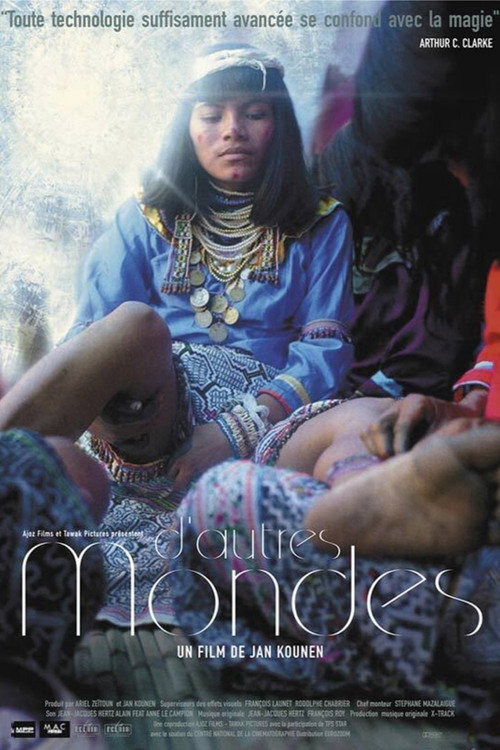
Poster for Other Worlds (2004), awaiting its first vote.

The secrets about unlocking the mysteries of consciousness by plant-drugs. The related chances and risks involved in this shamanism. While filming Blueberry, the Secret Experience, Jan Kounen met the Shipibo healers of the Peruvian Amazon and discovered their sacred plant: Ayahuasca, the spirit vine. Deeply affected by this experience, he decided to return to Peru to shoot a documentary on the plant and the medicinal rites of the shamans. To this end, he filmed the natives but also met neurologists, philosophers, artists, and chemists working on this subject. He notably interviewed Jean Giraud, the illustrator of Blueberry, and Kary Mullis, winner of the 1993 Nobel Prize in Chemistry. More than a traditional documentary, the film is an invitation to travel, a half-open door to another world or another perception of reality. The secrets about unlocking the mysteries of consciousness by plant-drugs. The related chances and risks involved in this shamanism.

Film poster, El Perú es un lugar para morir (2026). No post-credit verdict yet.

Using footage filmed in Peru in 1950 by a foreigner, Víctor writes a letter to his son to question the country he will inherit: among heartbeats and ruins, he searches for a hope that still endures amid disillusionment.

Poster for Metanoia (2024). No votes yet on whether it has a post-credit scene.

Sofia encounters with an old friend from her childhood, Mar. Both girls become inseparable, until that bond becomes so strong that Mar starts to develop a dependency for Sofia.

Aj Zombies! (2017) artwork. Still a mystery after the credits.

Claudia and Felipe can't be any more different. Only a zombie apocalypse could bring them together. A hilarious love story set in zombie times, Claudia, Felipe, a drunkard and a security guard must escape Lima together in search of safety.

Cover image for Nazca Desert Mystery (2022), not yet voted on.

One of the world’s greatest ancient enigmas, the Nazca lines are a dense network of criss-crossing lines, geometric shapes, and animal figures etched across 200 square miles of Peruvian desert. Who created them and why? Ever since they were discovered in the 1920s, scholars and enthusiasts have raised countless theories about their purpose. Now, archaeologists have discovered hundreds of long-hidden lines and figures as well as evidence of ancient rituals, offering new clues to the origins and motivations behind the giant desert symbols.

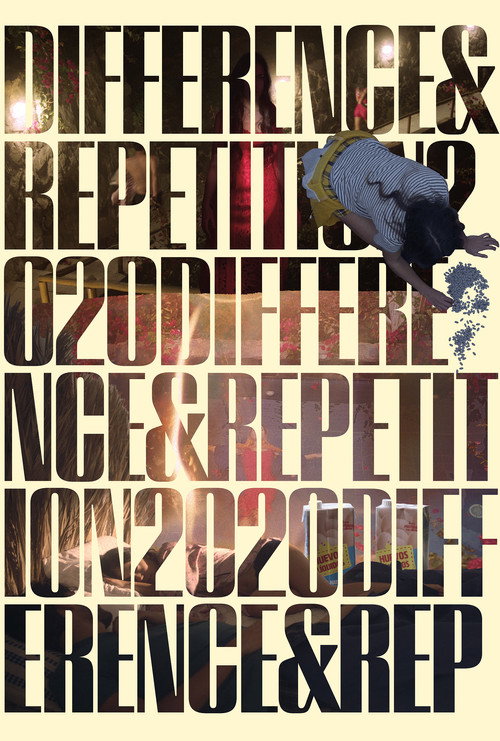
Image for Difference & Repetition, 2020 (2025), a film with no post-credit data.

In March 2020, an Argentine woman flees New York with her Peruvian husband for his family’s empty beach house outside of Lima, whereupon an unplanned pregnancy precipitates the destruction of her marriage. In the present, she rips the moments of this narrative from their context, and reconstructs her story to reckon with her profound feeling of loneliness and the experience of time in which it has trapped her.

Nasca Lines Decoded (2010) poster. The count is still zero.

They are striking works of art by any standard: but what purpose did they serve? Some of the theories put forward suggest that the lines were ancient running tracks, runways for aliens, and even a giant astronomical calculator. But after decades of misunderstanding, modern archaeology may finally have an answer to the puzzle of the Nasca lines.

Cover image for Rompe el Pasado (2024), not yet voted on.

A young woman shares her journey of overcoming adversity after being bullied at school, recounting how she found a way to heal her emotional wounds, as well as a path to self-confidence and resilience, especially through taekwondo.

Poster for Hablando Huevadas : ¡Hijo de...! (2023), blank on post-credit scenes.

Ricardo and Jorge are two successful comedians in Peru, who are facing a lawsuit against the Peruvian State. In the middle of this situation, a boy appears saying that he is Ricardo's son, so now he must face the trial and the new life of his father, with Jorge.

Key art for Pussy Trash (2021), unanswered on the post-credit question.

Pussy Trash is an ex dancer now invalid that lives with "Grandpa" in their poor home. After finding a video of his youth he will try to find a way to dance again despite his limitations.

Privacy policy

When you vote, we save your Yes or No answer and when you voted.

We use a cookie and your internet address to recognize your vote on each movie. This prevents repeat votes. The cookie lasts for five years.

Your votes are kept as part of the movie totals.