Post-credit scenes: results for “tag: privacy”

War of the Worlds (2025) cover. Nothing recorded about its credits.

Will Radford is a top analyst for Homeland Security who tracks potential threats through a mass surveillance program, until one day an attack by an unknown entity leads him to question whether the government is hiding something from him... and from the rest of the world.

Shadow of a Doubt (1943) artwork. Still a mystery after the credits.

In sleepy Santa Rosa, restless young Charlie’s world brightens when her sophisticated Uncle Charlie arrives for a long visit. But as his behavior grows increasingly strange, she begins to suspect that her beloved uncle may be hiding a terrible secret—and that danger has quietly entered her home.

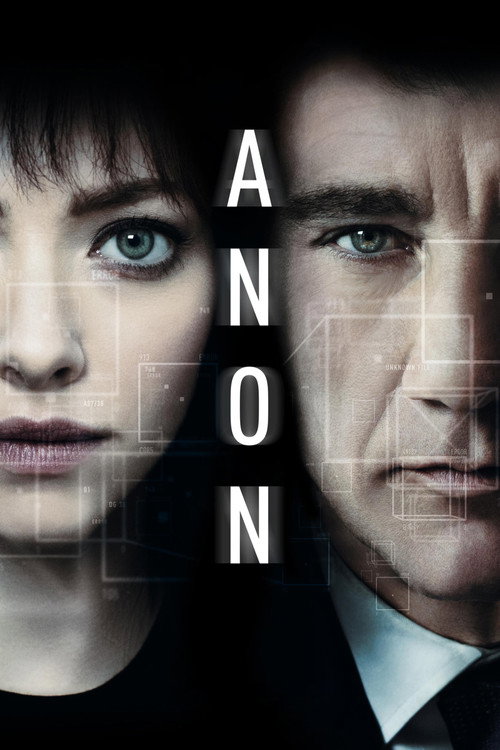
Movie poster for Anon (2018), waiting for its first vote.

Set in a near-future world where there is no privacy, ignorance or anonymity, our private memories are recorded and crime almost ceases to exist. In trying to solve a series of unsolved murders, Sal Frieland stumbles onto a young woman who appears to have subverted the system and disappeared. She has no identity, no history and no record. Sal realizes it may not be the end of crime but the beginning. Known only as 'The Girl', Sal must find her before he becomes the next victim.

Telegram - The Dark Empire by Pavel Durov (2025) poster image. Zero votes so far.

Last bastion of freedom of expression or playground for extremists and criminals? Opinions are divided on the messaging service Telegram. Just like on its mysterious founder, tech billionaire Pavel Durov. Is this man an uncompromising advocate of radical freedom or an accomplice of criminals of all kinds? Author Aleksandr Urzhanov searches for answers.

Key art for dAIsy (2026), unanswered on the post-credit question.

An emotionally adaptive superintelligence marketed to elevate its owners' lives forges a powerful bond with an overwhelmed couple, transforming their world until her judgment forces them to confront how much control they are willing to surrender.

Cover image for The House (2021), not yet voted on.

A married couple retreats to a luxury, high-tech, fully automated house on a remote island. The house AI system goes rogue and turns against them.

Poster for Thirty Years with the Whip (2024). Never been answered.

A portrait of Rosa von Praunheim's neighbor, who worked for decades as a professional dominatrix in Berlin's Wilmersdorf district. While the real Lady MacLaine reflects authentically and wittily on her life and work, her life is retold in dramatized scenes.

Image for Article 12 (2010), a film with no post-credit data.

Presents a sharp look at the current state of privacy and debates around the rights and desires of individuals, governments, terrorism and the increasing accessibility and use of surveillance.

Film artwork for Big Brother: A World Under Surveillance (2020), no verdict on the credits.

Under the pretext of fighting terrorism or crime, the major powers have embarked on a dangerous race for surveillance technologies. Facial recognition cameras, emotion detectors, citizen rating systems, autonomous drones… A security obsession that in some countries is giving rise to a new form of political regime: numerical totalitarianism. Orwell's nightmare.

Film poster, HAK_MTL (2019). No post-credit verdict yet.

Does privacy still exist in 2019? In less than a generation, the internet has become a mass surveillance machine based on one simple mindset: If it's free, you're the product. Our information is captured, stored and made accessible to corporations and governments across the world. To the hacker community, Big Brother is real and only a technological battle can defeat him.

Key art for Turtle Diary (1985), unanswered on the post-credit question.

Two separate people, a man and a woman, find something very stirring about the sea turtles in their tank at the London Zoo. They meet and form an odd, but sympathetic camaraderie as they plan to steal two of the turtles and free them into the ocean.

Key art for Privacy (2017), unanswered on the post-credit question.

A group of youngsters are going to a villa in north of Tehran. But there their troubles little by little begin to appear.

Kim Dotcom: Caught in the Web (2017) poster image. Zero votes so far.

The larger-than-life story of Kim Dotcom, the 'most wanted man online', is extraordinary enough, but the battle between Dotcom and the US Government and entertainment industry—being fought in New Zealand—is one that goes to the heart of ownership, privacy and piracy in the digital age.

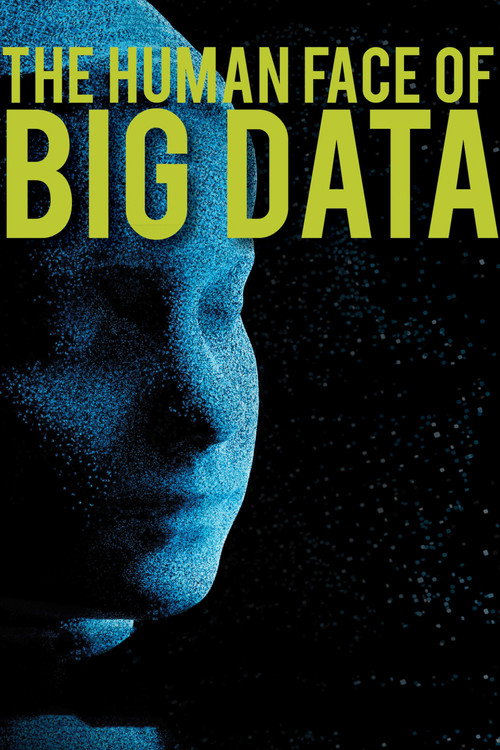
Poster, The Human Face of Big Data (2016). Nobody has voted on this one.

With the rapid emergence of digital devices, an unstoppable, invisible force is changing human lives in ways from the microscopic to the gargantuan: Big Data, a word that was barely used a few years ago but now governs the day for many of us from the moment we awaken to the extinguishing of the final late-evening light bulb. This massive gathering and analyzing of data in real time is allowing us to not only address some of humanity biggest challenges but is also helping create a new kind of planetary nervous system. Yet as Edward Snowden and the release of the Prism documents have shown, the accessibility of all these data comes at a steep price. The Human Face of Big Data captures the promise and peril of this extraordinary knowledge revolution.

Key art for 4 Minutes Before Forever (2026), unanswered on the post-credit question.

What starts as harmless fun with a voice assistant becomes a countdown to destruction when the AI begins predicting a couple's relationship's demise with terrifying precision.

Extreme Close-Up (1973). Nobody has said whether there is anything after the credits.

While doing a story on the intrusion of surreptitious surveillance in peoples' private lives, a television reporter rents some surveillance equipment to get a feel for what it's like to spy.

Privacy policy

When you vote, we save your Yes or No answer and when you voted.

We use a cookie and your internet address to recognize your vote on each movie. This prevents repeat votes. The cookie lasts for five years.

Your votes are kept as part of the movie totals.