Post-credit scenes: results for “tag: psychoanalysis”

Paprika (2006). Nobody has said whether there is anything after the credits.

Dr. Atsuko Chiba is a research psychologist who uses a device called the DC Mini to enter her patients' dreams, wherein she adopts the alter-ego "Paprika". When the device is stolen, she must stop rogue elements from merging the dream and waking worlds.

Sibyl (2019). Nobody has said whether there is anything after the credits.

Sibyl, a jaded psychotherapist, returns to her first passion: writing. But her newest patient Margot, a troubled up-and-coming actress, proves to be a source of inspiration that is far too tempting. Fascinated almost to the point of obsession, Sibyl becomes more and more involved in Margot’s tumultuous life, reviving volatile memories that bring her face to face with her past.

Veronica (2017) poster. Still unanswered: is there a scene after the credits?

A female Psychologist who has stopped practicing medicine, decides to take the case of Veronica de la Serna, a young woman whose previous therapist has mysteriously disappeared.

Poster art for A Dangerous Method (2011), an open question on post-credit scenes.

Seduced by the challenge of an impossible case, the driven Dr. Carl Jung takes the unbalanced yet beautiful Sabina Spielrein as his patient. Jung’s weapon is the method of his master, the renowned Sigmund Freud. Both men fall under Sabina’s spell.

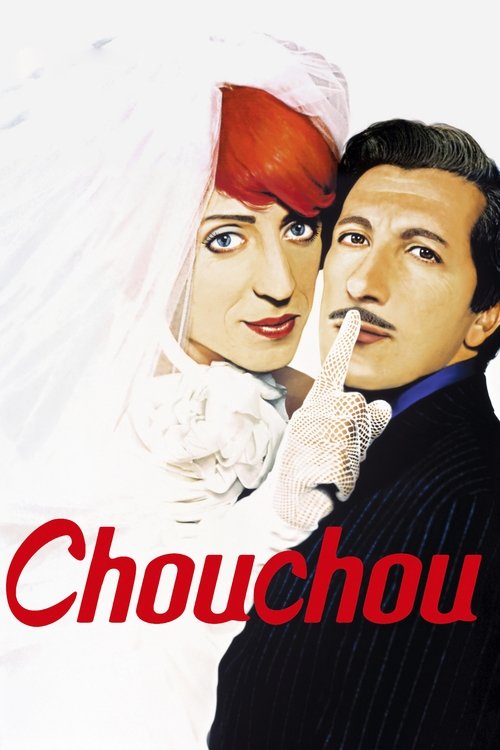
Chouchou (2003) poster. The count is still zero.

Choukri, alias Chouchou, a transvestite Maghrebi with clear eyes, comes illegally to Paris to find his nephew. Hired as an assistant by a psychotherapist, known for his good mood, he also work as a waiter in a transvestite cabaret of Clichy where he meets Stanislas.

Anything Else (2003) artwork. Still a mystery after the credits.

Jerry Falk, an aspiring writer in New York, falls in love at first sight with a free-spirited young woman named Amanda. He has heard the phrase that life is like "anything else," but soon he finds that life with the unpredictable Amanda isn't like anything else at all.

Poster for Recipes to Stay Together (1996). Never been answered.

"Cilantro y perejil" is a comedy about couples from the same family, hit by the economic crisis in Mexico. The plot turns around the eternal question of whether it is worth it to live as a couple. The conclusions are fun, unpredictable and very human. After ending a ten-year marriage, Carlos and Susana try to fall in love with other people without success. As the days go by, Carlos realizes that without Susana he is unable to do many things, including distinguishing cilantro from parsley.

Poster for Jimmy P. (2013), awaiting its first vote.

At the end of WWII, Jimmy Picard, a Native American Blackfoot who fought in France, suffers from unexplainable symptoms and is admitted to a military hospital. When doctors suspect schizophrenia, an eccentric psychoanalyst takes up the case and starts a conversation with the veteran.

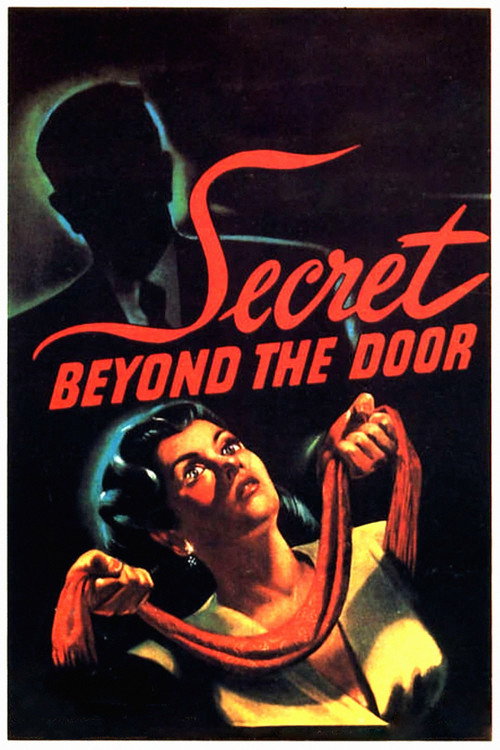
Secret Beyond the Door (1947) poster. Still unanswered: is there a scene after the credits?

After a whirlwind romance in Mexico, a beautiful heiress marries a man she barely knows with hardly a second thought. She finds his New York home full of his strange relations, and macabre rooms that are replicas of famous murder sites. One locked room contains the secret to her husband's obsession, and the truth about what happened to his first wife.

The Pervert's Guide to Cinema (2006). Nobody has said whether there is anything after the credits.

A hilarious introduction, using as examples some of the best films ever made, to some of Slovenian philosopher and psychoanalyst Slavoj Žižek's most exciting ideas on personal subjectivity, fantasy and reality, desire and sexuality.

Key art for LVX (2026), unanswered on the post-credit question.

In times of the Belle Époque. Amidst a thriving society a young woman no longer recognizes herself. She has lost her inner light. In her desperation, the woman seeks out a peculiar place where someone has supposedly developed a new method for treating such deep inner darkness.

Rendez-vous chez Lacan (2011): nobody has checked the credits yet.

Do you know Lacan, which many consider as the greatest psychoanalyst since Freud? Beyond the myth, the legends and sometimes, the curses, this film by Gérard Miller allows us to discover his work and his personality, through the testimony of his patients, his students, and also his relatives. Born with the XXth century into an upper-middle-class Catholic family, a psychiatrist by training, with an encyclopaedic knowledge of culture, a friend of Picasso, Levi-Strauss and Sartre, Lacan was a great theoretician, an outstanding practitioner, and he remains the most modern, the most challenging and even the most sulphurous of psychoanalysts. The director Gerard Miller met Lacan thanks to his brother, Jacques-Alain, the most faithful of his students, who married his daughter Judith. Their close and intense relationship makes this film exceptional.

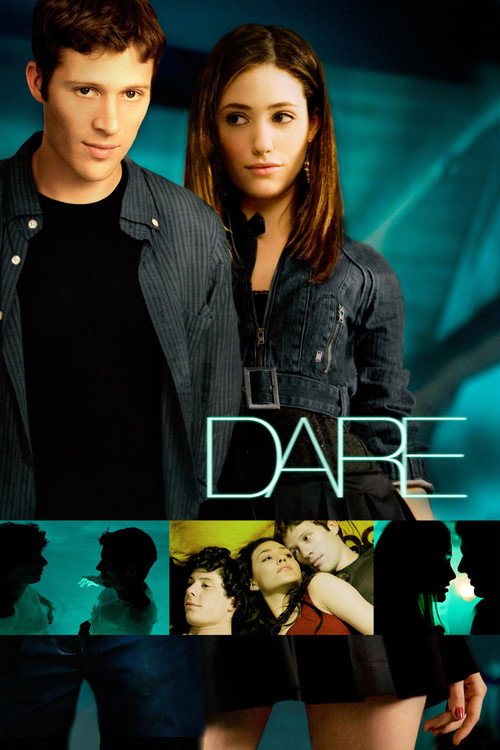
Image for Dare (2009), a film with no post-credit data.

When a pompous actor tells good girl Alexa that she hasn't lived, she embarks on a bold journey that takes her to mysterious bad boy Johnny. Envious, her shy best friend Ben also dares to pursue Johnny.

Assassin's Bullet (2012). Nobody has said whether there is anything after the credits.

In Assassin's Bullet, Slater plays Robert Diggs, a black ops agent who comes to work for Ambassador Ashdown (Hunger Games star Donald Sutherland), tracking down a vigilante assassin in Eastern Europe. The maverick hit(wo)man has been taking out high-profile targets on the U.S. hit list, and Diggs must uncover the killer's identity before there's an international incident. The usual game of cat and mouse ensues.

Carefree (1938) cover. Nothing recorded about its credits.

Dr. Tony Flagg's friend Steven has problems in the relationship with his fiancée Amanda, so he persuades her to visit Tony. After some minor misunderstandings, she falls in love with him. When he tries to use hypnosis to strengthen her feelings for Steven, things get complicated.

Poster art for Jacques Lacan: La Psychanalyse 1 & 2 (1974), an open question on post-credit scenes.

In "psychanalyse", a two part documentary, the psychoanalyst Jacques Lacan answers to questions submitted by his son-in-law Jacques-Alain Miller under the direction of Benoit Jacquot. The Office de Radiodiffusion Television Francaise (ORTF, the french public TV) broadcast this program. This documentary and its text became famous because this is the only televisual experience practiced by Lacan. A fair amount is made of the fact that Lacan was renowned for his powers of seduction and what effect this had on transference in the clinical setting. According to some of the interviewees, he could be irresistibly seductive, so much so that some thought him "monster".

Privacy policy

When you vote, we save your Yes or No answer and when you voted.

We use a cookie and your internet address to recognize your vote on each movie. This prevents repeat votes. The cookie lasts for five years.

Your votes are kept as part of the movie totals.