Post-credit scenes: results for “tag: psychoanalyst”

Movie art for Basic Instinct 2 (2006), post-credit scene unknown.

Novelist Catherine Tramell is once again in trouble with the law, and Scotland Yard appoints psychiatrist Dr. Michael Glass to evaluate her. Though, like Detective Nick Curran before him, Glass is entranced by Tramell and lured into a seductive game.

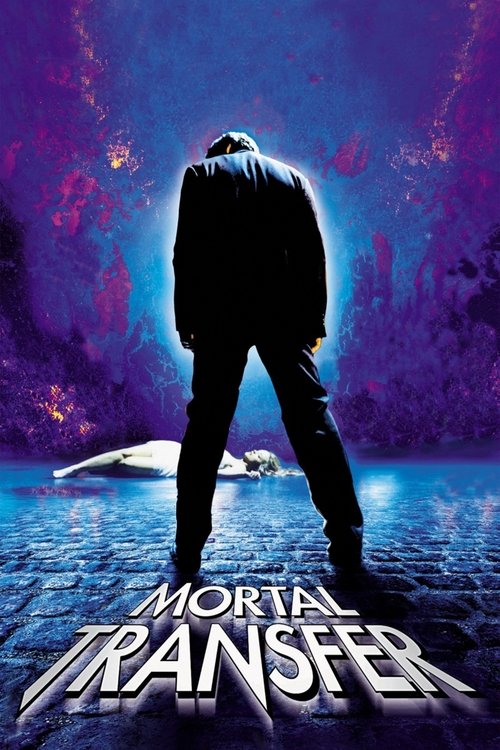
Film poster, Mortal Transfer (2001). No post-credit verdict yet.

Michel, a psycho-analyst, falls asleep while listening to his patient Olga, a kleptomaniac and a sexual pervert, tell him how she likes her husband beating her. When he wakes up, he finds Olga having been choked to death. He now has to deal with a body, with Olga's rich husband who thinks she stole money from him, and with all his patients' insanity that haunts him.

Poster for Recipes to Stay Together (1996). Never been answered.

"Cilantro y perejil" is a comedy about couples from the same family, hit by the economic crisis in Mexico. The plot turns around the eternal question of whether it is worth it to live as a couple. The conclusions are fun, unpredictable and very human. After ending a ten-year marriage, Carlos and Susana try to fall in love with other people without success. As the days go by, Carlos realizes that without Susana he is unable to do many things, including distinguishing cilantro from parsley.

Poster for The Thing That Hurts. No votes yet on whether it has a post-credit scene.

A group of patients converges in Paris following the demise of their renowned American psychoanalyst, unveiling profound bonds as they reminisce about the late therapist's deep influence on their lives.

That Naughty Girl (1956) cover. Nothing recorded about its credits.

Accused of dealing in counterfeit, Paul entrusts his daughter Brigitte to the care of a friend, Jean Clary. The girl, a walking catastrophe, finally wins Jean's heart. They unmask the forgers, clearing Paul's name and can now concentrate on their love.

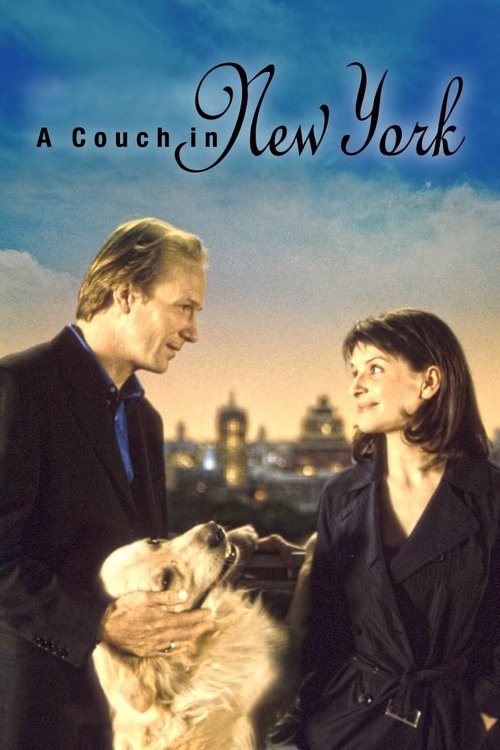
Image for A Couch in New York (1996), a film with no post-credit data.

A burnt-out New York psychoanalyst exchanges apartments with a Parisian woman. When his patients arrive, they talk to her and then pay. He returns early and becomes a patient as well.

Poster art for Whirlpool (1950), an open question on post-credit scenes.

The wife of a psychoanalyst falls prey to a devious quack hypnotist when he discovers she is an habitual shoplifter. Then one of his previous patients now being treated by the real doctor is found murdered, with her still at the scene, and suspicion points only one way.

Poster for Sahara Sandwich (1991), awaiting its first vote.

Ryder is a psychiatrist who can flawlessly analyze his clients' problems, but is hopelessly alone in solving his own mental distress. One day, Sleuth, a detective, bursts into Ryder's office with the news that Ryder is suspected of murdering three women. Ryder is unaware of any wrongdoing. However, he has received a mysterious letter announcing a murder, and Lizzy, his secretary, has disappeared without a trace. The confessions of a new patient set Ryder thinking. A verbal cat-and-mouse game ensues between Ryder and Sleuth, but it raises more questions than it answers. If the murders have been committed, what is the motive? And if there is no motive, can there be a suspect? Or has everything been staged? Perhaps by Sleuth or Ryder himself?

Poster for Straight Up (2020). Never been answered.

Todd is a hyper-articulate, obsessive compulsive gay twentysomething whose fear of dying alone leads him to a baffling conclusion: he might not be gay after all. When he meets Rory, a whip-smart struggling actress with her own set of insecurities, the two forge a relationship that’s all talk and no sex.

On Probation (2005) cover. Nothing recorded about its credits.

Mariano is a psychologist who must fulfill community service after losing a lawsuit by a traffic accident. He is forced to provide therapeutic support to Alfredo, a policeman depressed over his wife cheating on him. Mariano is then accidentally involved in a double homicide investigation being conducted by Alfredo.

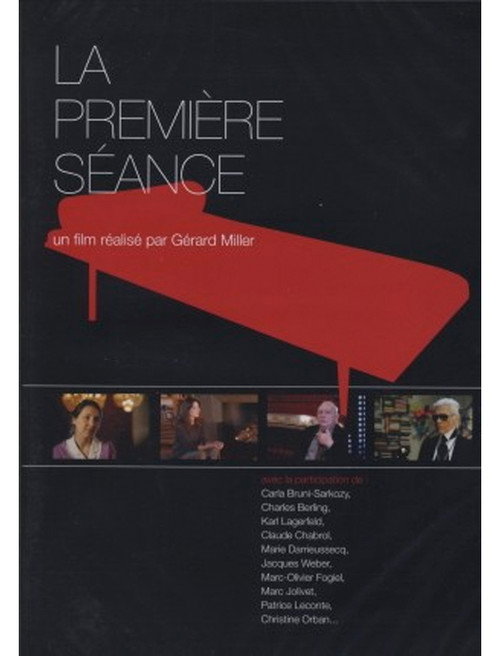
La première séance (2009) poster image. Zero votes so far.

For the first time, filmed by psychoanalyst Gérard Miller, famous and ordinary patients speak in a documentary about their “first session” of analysis—the one that sets the course for a personal journey that may last for years. Among them are Jacques Weber, Charles Berling, Marc-Olivier Fogiel, Marie Darrieussecq, and Carla Bruni-Sarkozy—who is the only wife of a sitting head of state to speak candidly about why and how she has been in analysis for the past eight years. But why did all these “analysands” go to see a psychoanalyst? What happened during their first session? Why did they continue? And why did some, like Karl Lagerfeld or Claude Chabrol, become critics of Freudian theory? The inside of the consulting room, where everyone dreams of being a fly on the wall and hearing what is said, but also… everything that goes on around, before, and after.

Heartsnatcher cover. Nothing recorded about its credits.

A psychoanalyst, newly arrived in a very superstitious village, encounters absurd events.

Poster for Carl G. Jung by Jerome Hill or Lapis Philosophorum (1991), awaiting its first vote.

In 1950 Jerome Hill went to Zurich with the intention of making a film about Dr. Carl G. Jung. The project was abandoned when Hill decided that Jung was not a good subject. After Hill's death, Jonas Mekas edited the film which focuses on Dr. Jung as a person.

Resonating Surfaces (2005) artwork. Still a mystery after the credits.

Resonating Surfaces is triple portrait, of a city, a woman and an attitude to life. For the personal story of Suely Rolnik, who is a Brazilian psychoanalyst currently living in São Paulo, involves the Brazilian dictatorship of the sixties as well as the Parisian intellectual climate surrounding Deleuze and Guattari in the seventies. The film is woven through by different themes: the other and the relation to otherness, the connection between body and power, the voice and, ultimately, the micropolitics of desire and of resistance.

Poster for Happily Mixed Up (2014). Never been answered.

A psychoanalyst learns to have an illness and as a consequence he decides to quit his job. All his patients get together to find a way to make him feel better.

Privacy policy

When you vote, we save your Yes or No answer and when you voted.

We use a cookie and your internet address to recognize your vote on each movie. This prevents repeat votes. The cookie lasts for five years.

Your votes are kept as part of the movie totals.