Post-credit scenes: results for “tag: robespierre”

The Visitors: Bastille Day (2016) artwork. Still a mystery after the credits.

Stuck in the corridors of time, Godefroy de Montmirail and his faithful servant Jacquouille are projected to a time of profound political and social upheavals: the French Revolution... specifically, The Terror, time of great dangers, during which the descendants of Godefroy and Jacquouille had their castle and all their property confiscated by arrogant aristocrats, fleeing and lifes hanging by a thread.

Poster for Danton (1983), blank on post-credit scenes.

Danton and Robespierre were close friends and fought together in the French Revolution, but by 1793 Robespierre was France's ruler, determined to wipe out opposition with a series of mass executions that became known as the Reign of Terror. Danton, well known as a spokesman of the people, had been living in relative solitude in the French countryside, but he returned to Paris to challenge Robespierre's violent rule and call for the people to demand their rights. Robespierre, however, could not accept such a challenge, even from a friend and colleague, and he blocked out a plan for the capture and execution of Danton and his allies.

Movie poster for The French Revolution (1989), waiting for its first vote.

A history of the French Revolution beginning from the decision of the king to convene the Etats-Generaux in 1789 in order to deal with France's debt problem. Part one spans the event until August 10, 1792 (when the King Louis XVI lost all authority and was imprisoned). Part two carries the story through the end of the terror in 1794.

Image for La mort de Danton (1970), a film with no post-credit data.

In 1794, Danton and Camille Desmoulins go against Robespierre. Danton claimes to be sick of the revolutionary struggle and seeks the company of women. He decides to meet Robespierre but is arrested shortly afterwards. At his trial, he rediscovers his oratorical powers, but whilst in prison, he expresses his feelings in the face of death...

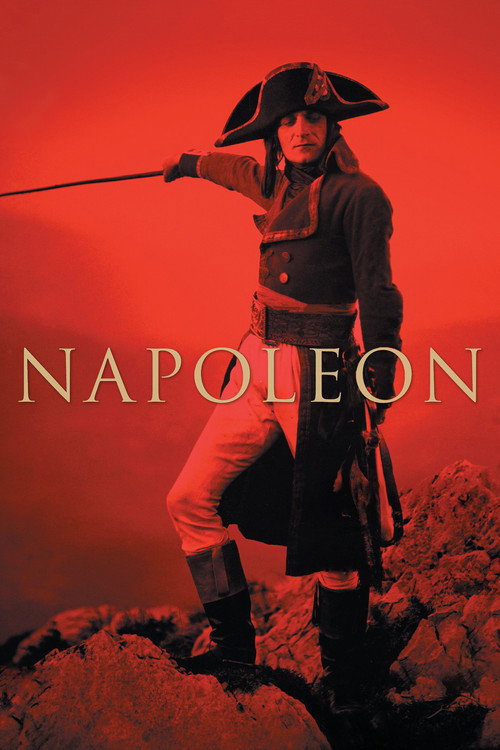
Poster for Napoleon (1927), blank on post-credit scenes.

A biopic of former Emperor of France, Napoleon Bonaparte, tracing the Corsican's career from his schooldays (where a snowball fight is staged like a military campaign) to his flight from Corsica, through the French Revolution (where a real storm is intercut with a political storm) and the Terror, culminating in his triumphant 1797 invasion of Italy.

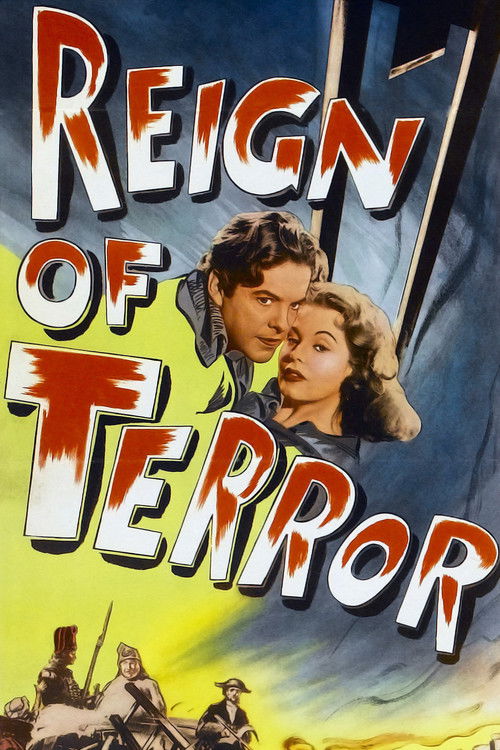
Reign of Terror (1949): nobody has checked the credits yet.

The French Revolution, 1794. The Marquis de Lafayette asks Charles D'Aubigny to infiltrate the Jacobin Party to overthrow Maximilian Robespierre, who, after gaining supreme power and establishing a reign of terror ruled by death, now intends to become the dictator of France.

Movie poster for Terror! Robespierre and the French Revolution (2009), waiting for its first vote.

In 1794, French revolutionary Maximilien Robespierre produced the world's first defense of "state terror" - claiming that the road to virtue lay through political violence. This film combines drama, archive and documentary interviews to examine Robespierre's year in charge of the Committee Of Public Safety - the powerful state machine at the heart of Revolutionary France. Contesting Robespierre's legacy is Slavoj Zizek, who argues that terror in the cause of virtue is justifiable, and Simon Schama, who believes the road from Robespierre ran straight to the gulag and the 20th-century concentration camp. The drama, based on original sources, follows the life-and-death politics of the Committee during "Year Two" of the new Republic.

Robespierre 1789-1989 (2019): nobody has checked the credits yet.

Robespierre, a child of the Enlightenment, passionate about justice and concerned with order, is thrust into the storms of the Revolution. He becomes one of its most tragic figures. The guiding thread of this dramatic development is Robespierre’s own speech. Excerpts from his major addresses are thus staged, emphasizing the contradictions of a man who advocates for the abolition of the death penalty yet justifies the Reign of Terror, who tirelessly fights for universal suffrage but helps establish an exceptional regime. His life and exercise of power are confronted, thirty years apart, with the analyses and judgments of historians and political figures from the Bicentennial and the early 21st century: Michel Vovelle, Michel Biard, Hervé Leuwers, Patrice Gueniffey, Jacques Chaban-Delmas, Michel Debré, Lionel Jospin, Jean-Louis Bourlanges, and Alexis Corbière.

Privacy policy

When you vote, we save your Yes or No answer and when you voted.

We use a cookie and your internet address to recognize your vote on each movie. This prevents repeat votes. The cookie lasts for five years.

Your votes are kept as part of the movie totals.