Post-credit scenes: results for “tag: ronin”

Key art for Harakiri (1962), unanswered on the post-credit question.

Down-on-his-luck veteran Tsugumo Hanshirō enters the courtyard of the prosperous House of Iyi. Unemployed, and with no family, he hopes to find a place to commit seppuku—and a worthy second to deliver the coup de grâce in his suicide ritual. The senior counselor for the Iyi clan questions the ronin’s resolve and integrity, suspecting Hanshirō of seeking charity rather than an honorable end. What follows is a pair of interlocking stories which lay bare the difference between honor and respect, and promises to examine the legendary foundations of the Samurai code.

Poster art for 47 Ronin (2013), an open question on post-credit scenes.

Kai—an outcast—joins Oishi, the leader of 47 outcast samurai. Together they seek vengeance upon the treacherous overlord who killed their master and banished their kind. To restore honour to their homeland, the warriors embark upon a quest that challenges them with a series of trials that would destroy ordinary warriors.

Poster for Yojimbo (1961), awaiting its first vote.

A nameless ronin, or samurai with no master, enters a small village in feudal Japan where two rival businessmen are struggling for control of the local gambling trade. Taking the name Sanjuro Kuwabatake, the ronin convinces both silk merchant Tazaemon and sake merchant Tokuemon to hire him as a personal bodyguard, then artfully sets in motion a full-scale gang war between the two ambitious and unscrupulous men.

13 Assassins (2010) poster. Still unanswered: is there a scene after the credits?

A bravado period action film set at the end of Japan's feudal era in which a group of unemployed samurai are enlisted to bring down a sadistic lord and prevent him from ascending to the throne and plunging the country into a war-torn future.

Poster for After the Rain (2000), blank on post-credit scenes.

A group of travelers is stranded in a small country inn when the river floods during heavy rains. As the bad weather continues, tensions rise amongst the trapped travelers.

Blade of the Immortal (2017) cover. Nothing recorded about its credits.

Manji, a highly skilled samurai, becomes cursed with immortality after a legendary battle. Haunted by the brutal murder of his sister, Manji knows that only fighting evil will regain his soul. He promises to help a young girl named Rin avenge her parents, who were killed by a group of master swordsmen led by ruthless warrior Anotsu. The mission will change Manji in ways he could never imagine.

Poster, Lone Samurai (2025). Nobody has voted on this one.

A violent and reckless samurai is shipwrecked on a remote island left without an avenue for his rage. After undertaking a spiritual journey to appease his aggressive thoughts, he finds himself abducted by external demons taking the form of cannibals, putting his sense of reality and deadly talents to the test.

Film poster, The Tale of Zatoichi (1962). No post-credit verdict yet.

The adventures of a blind, gambling masseur and master swordsman. Zatoichi targets a yakuza-controlled village, because war with a neighbouring town's smaller gang is brewing.

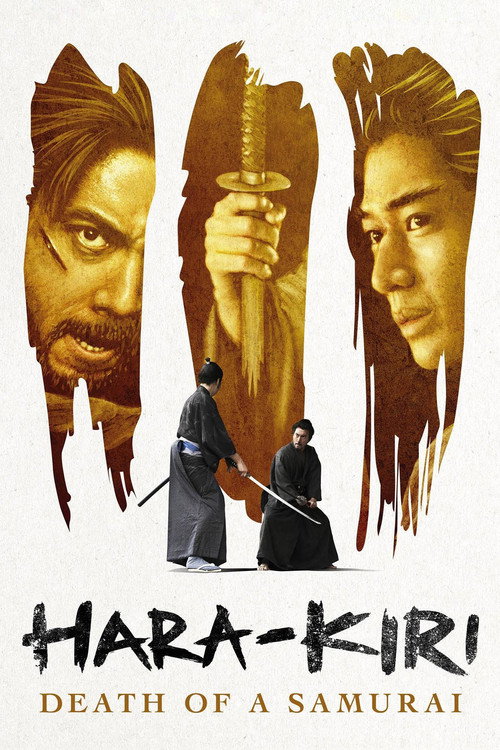
Cover image for Hara-Kiri: Death of a Samurai (2011), not yet voted on.

A tale of revenge, honor and disgrace, centering on a poverty-stricken samurai who discovers the fate of his ronin son-in-law, setting in motion a tense showdown of vengeance against the house of a feudal lord.

Film artwork for Samurai III: Duel at Ganryu Island (1956), no verdict on the credits.

A humble and simple Takezo abandons his life as a knight errant. He's sought as a teacher and vassal by Shogun, Japan's most powerful clan leader. He's also challenged to fight by the supremely confident and skillful Sasaki Kojiro. Takezo agrees to fight Kojiro in a year's time but rejects Shogun's patronage, choosing instead to live on the edge of a village, raising vegetables. He's followed there by Otsu and later by Akemi, both in love with him. The year ends as Takezo assists the villagers against a band of brigands. He seeks Otsu's forgiveness and accepts her love, then sets off across the water to Ganryu Island for his final contest.

Movie poster for Bushido (2024), waiting for its first vote.

Kakunoshin, renowned for his skills with a sword and in the game of go, embodies the samurai code. Falsely accused of a theft, he is forced to become a lowly ronin. Years later, when a case of missing gold pulls him into a new web of intrigue, Kakunoshin uncovers the truth behind his downfall. With the real culprit exposed, the go board flips, and a hellstorm of righteous vengeance follows.

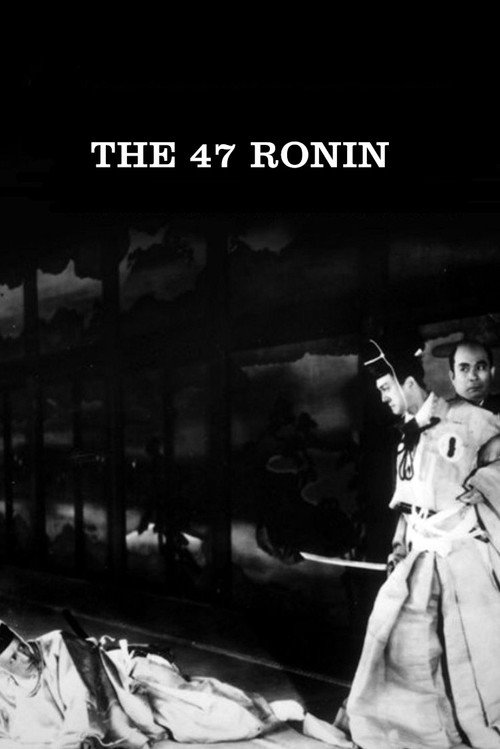
The 47 Ronin (1941) poster image. Zero votes so far.

In the early 18th-century, Lord Takumi-no-kami Asano, feuding with Lord Kira, tries to kill his opponent in the corridors of the Shogun's palace. The Shogun sentences Asano to seppuku and deprives the palace and lands from his clan, but does not punish Kira. Asano's vassals leave the land and his samurais become ronin and want to seek revenge against the Lord's dishonour. But their leader Kuranosuke Oishi seeks to restore the Asano clan with his brother Daigaku Asano. One year later, the Shogun refuses, and Oishi and 46 rōnin are out for revenge.

Samurai Assassin (1965). Nobody has said whether there is anything after the credits.

Japan, 1860. The men of the Mito clan, victims of the Ansei purge, anxiously prowl around the Sakurada Gate of Edo Castle with the intention of assassinating Naosuke Ii of Hikone, tairō of the Tokugawa shogunate and responsible for their misfortune.

Image for Demons (1971), a film with no post-credit data.

Gengobe Satsuma, an exiled samurai cast out as an Asano clan retainer, is given a second chance to join his brothers in arms to become the 48th Ronin against the Shogunate. His faithful servant gathers the 100 ryo required for his acceptance. Gengobe is also in love with a greedy geisha named Koman. About to be sold to another man, Gengobe learns that in order to keep her, her debt is exactly 100 ryo.

Poster for Three Outlaw Samurai (1964), blank on post-credit scenes.

Shiba, a wandering ronin, encounters a band of peasants who have kidnapped the daughter of their dictatorial magistrate, in hopes of coercing from him a reduction in taxes. Shiba takes up their fight, joined by two renegades from the magistrate's guard, Sakura and Kikyo. The three outlaws find themselves in a battle to the death.

Poster for Nemuri Kyoshiro (2026). No votes yet on whether it has a post-credit scene.

Blue-eyed ronin Nemuri Kyōshirō is ordered to eliminate assassins targeting a senior official. A rosary links the plot to hidden Christians, drawing him into rival power struggles—and multiple factions trying to kill him.

Image for Ronin-gai (1990), a film with no post-credit data.

Near the end of Japanese civil war, several disgraced ronin living in Edo's red light district attempt to regain their honor by defending a brothel from a hostile militia bent on wiping out local prostitutes.

Privacy policy

When you vote, we save your Yes or No answer and when you voted.

We use a cookie and your internet address to recognize your vote on each movie. This prevents repeat votes. The cookie lasts for five years.

Your votes are kept as part of the movie totals.