Post-credit scenes: results for “tag: rope”

Film artwork for The Descent (2005), no verdict on the credits.

After a personal tragedy, Sarah joins her friends on a caving expedition in the Appalachian Mountains. But when a rockfall traps them deep underground, their adventure turns into a nightmare. As they search for a way out, the group discovers they are not alone—lurking in the darkness are savage, cave-dwelling creatures. With rising tension and dwindling trust, the women must fight to survive against both the predators and each other.
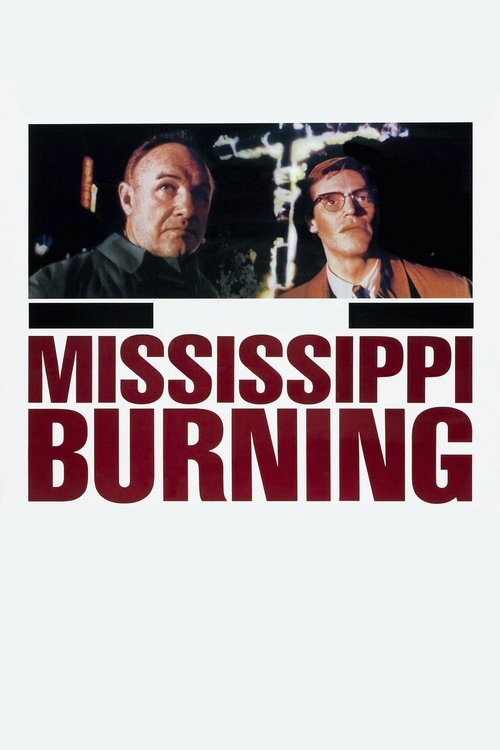
Image for Mississippi Burning (1988), a film with no post-credit data.

Two FBI agents investigating the murder of civil rights workers during the 60s seek to breach the conspiracy of silence in a small Southern town where segregation divides black and white. The younger agent trained in FBI school runs up against the small town ways of his partner, a former sheriff.

Poster art for The Chaser (2008), an open question on post-credit scenes.

Joong-ho is a dirty detective turned pimp, who's in financial trouble as several of his girls have recently disappeared without clearing their debts. While trying to track them down, he finds a clue that the vanished girls were all called up by the same client, whom one of his girls is meeting with right now.

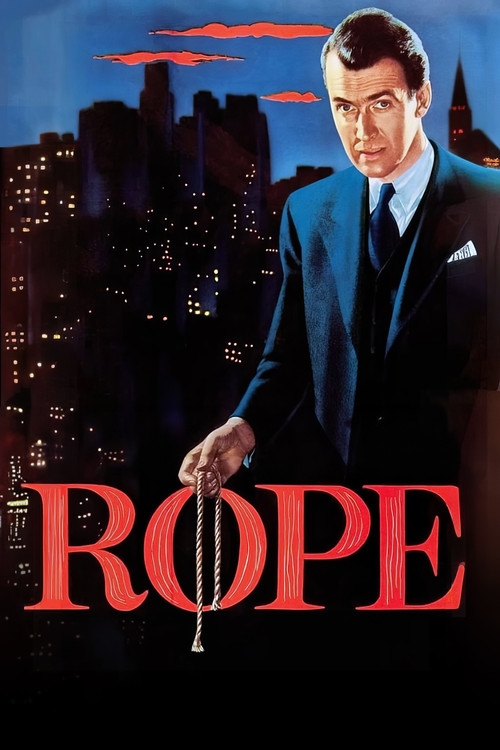
Rope (1948) cover. Nothing recorded about its credits.

Two young men attempt to prove they committed the perfect murder by hosting a dinner party for the family of a classmate they just strangled to death.

Poster for Female Perversions (1996). Never been answered.

An ambitious female attorney wallows in excess and meaningless sex with both male and female partners, while dealing with her personal life problems including helping her kleptomaniac sister.

Film artwork for Son of the White Mare (1981), no verdict on the credits.

A horse goddess gives birth to three powerful brothers who set out into the Underworld to save three princesses from three evil dragons and reclaim their ancestors' lost kingdom.

Poster, Tethered (2022). Nobody has voted on this one.

Miles from civilization, a blind teenager and the hunter he befriends are tormented by a mysterious creature lurking in the woods.

Poster for The Thief of Bagdad (1924), awaiting its first vote.

A nameless thief falls in love with the Caliph of Bagdad's daughter. The Caliph will give her hand to the suitor that returns with the rarest treasure after seven moons. The thief sets off on a magical journey while, unbeknownst to him, another suitor, the Prince of the Mongols, is not playing by the rules.

Poster for Presto (2008), blank on post-credit scenes.

Dignity. Poise. Mystery. We expect nothing less from the great turn-of-the-century magician, Presto. But when Presto neglects to feed his rabbit one too many times, the magician finds he isn't the only one with a few tricks up his sleeve!

White Track (1932). Nobody has said whether there is anything after the credits.

"Bialy Slad" featured as the main characters amateur actors, who were by that time well-known Polish skiers, among them Andrzej, Herr Krzeptowski's brother. The film depicts the story of two orphans, Zoska and Wladek; Zoska is in love with Jasiek, a hunter, but this is an unrequited love because Jasiek loves Hanka, who at the same time is desired by the handsome and strong Andrzej, a mountain climber.

Poster for Autour d'un Film de Montagne (1944), awaiting its first vote.

Making of the cinematographic shooting of "Premier de Cordée" directed by Louis Daquin in the Mont-Blanc massif. In 1943. Alain Pol films the risky adventure of filming in the high mountains with a team of seventy people. The images of the making-of reveal the technical constraints encountered by the actors and technicians: falling rocks, crossing glaciers and long approach walks at altitude to the filming locations. Six actors and technicians will also be injured and the main role - that of Pierre - will be reassigned to André Le Gall following a bad fall by Roger Pigaut.

Poster for Zoom Up: The Beaver Book Girl (1981). No votes yet on whether it has a post-credit scene.

A sexually perverse mystery set within the adult magazine industry. A woman is brutally assaulted in an abandoned factory, and her assailant escapes into the darkness after dropping a wad of money. A few years later, a photographer specializing in schoolgirl panty shots meets his match when a mysterious femme fatale volunteers to be his new model. This woman used to be the “queen” of the skin magazines, but she is also hiding a terrible secret and may be a wanted fugitive. Will the photographer escape her sexual grasp?

Key art for Generator, unanswered on the post-credit question.

A homeless man is murdered by a group of friends in early 2001. Five of the six friends are imprisoned. One receives probation in place of jail time. Five years later, it seems someone has come to hand down a much harsher sentence.

Poster for Cervino 1901 (1903). Never been answered.

On September 28th, 1903, the Urban Mountaineering Expedition, headed by Frank Ormiston-Smith, left Zermatt to attempt the conquest of the Matterhorn. On the 29th, the conquest was completed by the filming of the panorama from the actual summit of the mountain. The film consists of 20 scenes and illustrates the whole ascent from Zermatt through the Hornli Ridge. A copy of the film was found in Zermatt in 1953 and was was erroneously attributed to Frederick Burlingham and dated 1901. Since then, the film has been widely publicized as the first mountain film under the title of 'Cervin 1901', but this is incorrect. Ormiston previously had made 'Alpine series' (1901), 'The ascent of Mont Blanc' (1902), 'Climbing the Great Schreckhorn' (1902) and 'Ascent of the Jungfrau' (1903). The pictures and descriptions of the Charles Urban Trading 1903 film catalogue show without any doubt that 'Ascent of the Matterhorn' and 'Cervin 1901' are the same film.

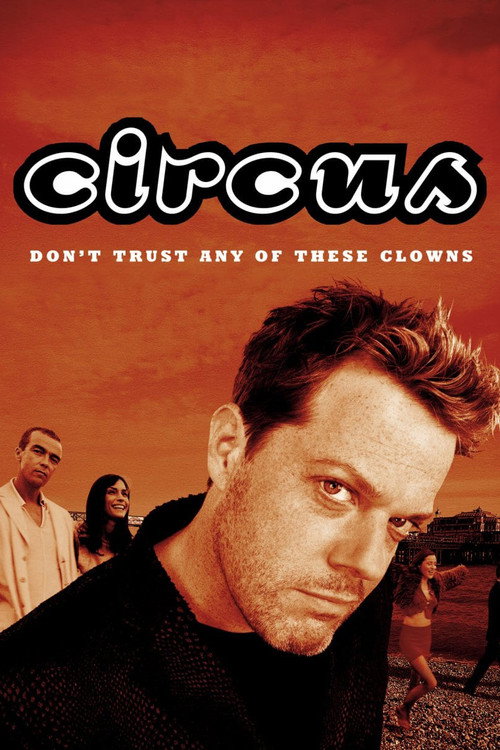
Circus (2000) poster. Still unanswered: is there a scene after the credits?

Bruno, a sadistic criminal, wants clever con man Leo out of the way. Leo and his equally clever wife, Lily, are up to something. So too is Julius: he hires Leo to kill Gloria, Julius's wife. Leo does it, but then Julius shows up with the murder on tape, saying Gloria isn't his wife - it's blackmail. Leo's bookie, Troy, is also closing in, wanting to be paid. Bruno and Lily as well as Bruno and Julius have their own scams running, and Leo is their target. Maybe Leo can get Troy off his back, avoid Moose (Bruno's huge enforcer), send Gloria's corpse out of England, turn the tables on Bruno's murderous brother Caspar, and outfox Lily. Or is Lily his fox? It's a three-ring circus.

Poster for Battle for the Mountain (1941), awaiting its first vote.

Sound and shortened version of 'Im Kampf mit dem Berge', Arnold Fanck's second major mountaineering film, from 1921. The film follows two mountain enthusiasts, battling through a glacier area in the Swiss mountains. The mountaineers are two very prominent skiers at the time, Hannes Schneider and Ilse Rohde, who climb the Lyskamm. Arnold Fanck's film production company (Berg und Sportfilm GmbH) was acquired in 1925 by the UFA, whose cultural department reedited the film into a short and sound version in 1940 with the music of Giuseppe Becce.

Poster for Champions on the Snow (1941), awaiting its first vote.

A documentary illustrating the mountain sports activities of the university students of the GUF (Gruppi universitari fascisti) in Val Gardena, Madonna di Campiglio and Roccaraso. The film starts with a rock climbing winter ascent to Sasso Lungo (Langkofel). A party of four men make an approach on skis and climb roped from the base of the mountain to the summit. Then the film shows images of different competitions: ski (cross country, slalom, ski jumping), skating (figure, speed) and biathlon. A propaganda film of the Italian fascist regime.

Poster art for The Mountain Calls (1938), an open question on post-credit scenes.

During an early, unsuccessful attempt at climbing the Matterhorn, Edward Whymper finds himself rescued by an italian guide, Jean Antoine Carrel. The two men quickly build a friendship and agree to reach the peak together. However, local villagers ploto to divide the alliance of Whymper and Carrel and both men join rival teams as they set out in a race to conquer the mountain. A mountaineering drama based on the novel by Carl Haensel and inspired in the dramatic true story of Edward Whymper, who led the first successful ascent of the Matterhorn in 1865. There is another version of the film titled The Challenge, shot the same year in English.

Three Lives and a Rope (1934). Nobody has said whether there is anything after the credits.

The idea is a simple one: three alpinists climb in the Mont Blanc Massif. This situation brings one face to face with the dangers of the mountain: avalanches, crevasses, fog, the climbing of the rocks, roping up, etc. All of this is magnified, transcended by a remarkable and strong use of the language of cinema. One of the first films about high mountains with Roger Frison-Roche and magnificent music by Maurice Jaubert

Privacy policy

When you vote, we save your Yes or No answer and when you voted.

We use a cookie and your internet address to recognize your vote on each movie. This prevents repeat votes. The cookie lasts for five years.

Your votes are kept as part of the movie totals.