Post-credit scenes: results for “tag: science”

Picture a Scientist (2020): nobody has checked the credits yet.

Women make up less than a quarter of STEM professionals in the United States, and numbers are even lower for women of color. But there is a growing group of researchers who are writing a new chapter for women scientists, exposing longstanding discrimination, and leading the way in making science more inclusive.

Poster for Fantastic Fungi (2019), awaiting its first vote.

A vivid journey into the mysterious subterranean world of mycelium and its fruit— the mushroom. A story that begins 3.5 billion years ago, fungi makes the soil that supports life, connecting vast systems of roots from plants and trees all over the planet, like an underground Internet. Through the eyes of renowned mycologist Paul Stamets, professor of forest ecology Suzanne Simard, best selling author Michael Pollan, food naturalist Eugenia Bone and others, we experience the power, beauty and complexity of the fungi kingdom.

Poster for Artemis II – Zurück zum Mond (2026). No votes yet on whether it has a post-credit scene.

For the first time since the legendary Apollo missions over 50 years ago, humans are once again setting out for the Moon on April 1, 2026. NASA’s Artemis II mission marks the beginning of a new era in space exploration, and Germany will play a key role. This documentary follows the four astronauts during their preparations and offers exclusive insights into the Orion spacecraft. German astronauts Alexander Gerst and Matthias Maurer, along with other space experts, explain how the mission will proceed and why it is being undertaken. It's a journey that blends science, adventure, and the fundamental question: Why do people risk their lives to reach other celestial bodies and distant worlds?

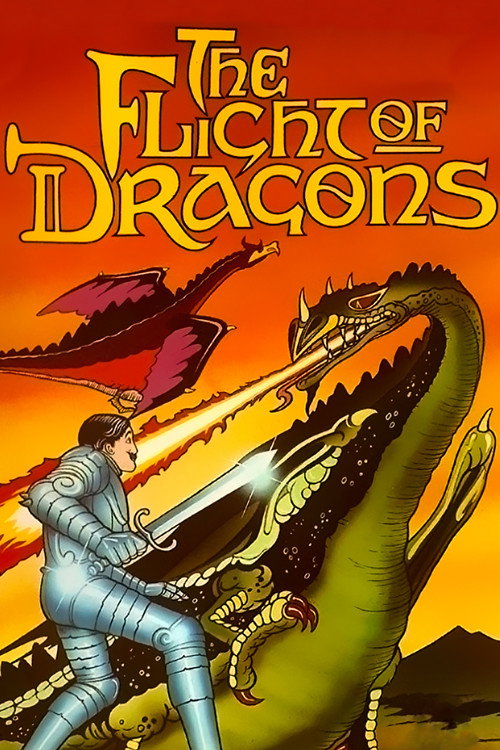
Movie art for The Flight of Dragons (1982), post-credit scene unknown.

The realm of magic is being threatened by the realm of logic, so the green wizard, Carolinus, decides to shield it for all time. Ommadon, the evil red wizard, stands in his way. Carolinus then calls for a quest that is to be led by a man named Peter Dickinson, who is the first man of both the realms of science and magic. It is Peter's job to defeat Ommadon.

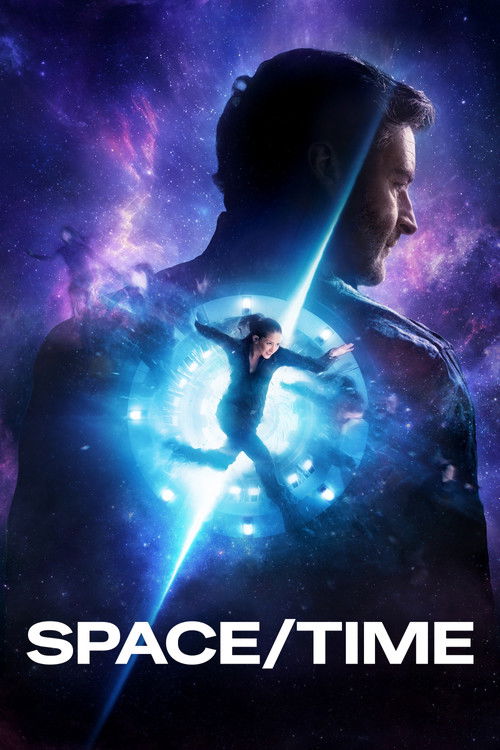
Space/Time (2025) artwork. Still a mystery after the credits.

After a fatal test shuts down their project, a disgraced team of scientists enters the criminal underworld to rebuild a forbidden space-bending engine that could rescue humanity or annihilate it entirely.

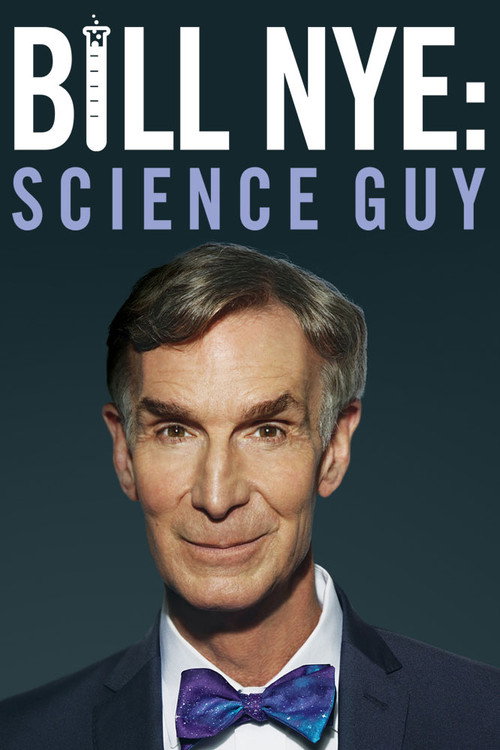
Bill Nye: Science Guy (2017) cover. Nothing recorded about its credits.

Bill Nye is retiring his kid show act in a bid to become more like his late professor, astronomer Carl Sagan. Sagan dreamed of launching a spacecraft that could revolutionize interplanetary exploration. Bill sets out to accomplish Sagan's mission, but he is pulled away when he is challenged by evolution and climate change contrarians to defend the scientific consensus. Can Bill show the world why science matters in a culture increasingly indifferent to evidence?

Microcosmos (1996): nobody has checked the credits yet.

A documentary of insect life in meadows and ponds, using incredible close-ups, slow motion, and time-lapse photography. It includes bees collecting nectar, ladybugs eating mites, snails mating, spiders wrapping their catch, a scarab beetle relentlessly pushing its ball of dung uphill, endless lines of caterpillars, an underwater spider creating an air bubble to live in, and a mosquito hatching.

If Only I Could Hibernate (2024): nobody has checked the credits yet.

Ulzii, a teenager from a poor neighborhood in Ulaanbaatar, is determined to win a sciences-physics competition to get a scholarship. His illiterate mother finds a job in the countryside, leaving him and his brother and sister in the middle of winter. Ulzii wanders around at night looking for things to burn for heat while preparing for the national competition.

Hawking: Can You Hear Me? (2021): nobody has checked the credits yet.

A documentary telling the remarkable human story of Stephen Hawking. For the first time, the personal archives and the testimonies of his closest family reveal both the scale of Hawking's triumphs and the real cost of his disability and success.

Movie poster for Shepherd Moon (2025), waiting for its first vote.

The power struggle between an alien and her human test subject gets complicated when they both see their relationship differently.

Fascination of the Deep Sea (2026): nobody has checked the credits yet.

The deep sea has long fascinated humanity, inspiring both wonder and fear of the unknown. Covering most of our planet, it remains largely unexplored. This documentary reveals rare underwater footage and extraordinary marine life while exploring how human resource extraction threatens a vital ecosystem - inviting us to see the deep sea as an essential part of Earth's future.

Poster art for Moon Crab (2025), an open question on post-credit scenes.

Moon Crab is a meditation on the horseshoe crab, one of Earth's oldest living species now struggling with extreme population decline. Blending reflections on nature's cycles with experimental visuals, the film employs an array of techniques, including eco-processed film developed with seaweed, to immerse the viewer in the crab's subaquatic world. Narrated with intimate depth by physiologist Dr. Abner Lall, the filmmaker’s neighbor, this documentary captures a timeless story of resilience and fragility, urging us to reconsider our connection to the natural world.

Poster for Cosmic Dawn (2025). Never been answered.

For over three decades, NASA and an international team of scientists and engineers pushed the limits of technology, innovation, and perseverance to build and launch the James Webb Space Telescope, the most powerful space observatory ever created. Cosmic Dawn brings audiences behind the scenes with the Webb film crew, and never-before-heard testimonies revealing the real story of how this telescope overcame all odds.

Key art for Life Story (1987), unanswered on the post-credit question.

Watson and Crick race to find the structure of DNA before Linus Pauling, Maurice Wilkins, or Rosalind Franklin can find the key to unlocking the secret.

Planet (2025): nobody has checked the credits yet.

Planet tells the story of a man who dreams of building an artificial planet from the ground up, asking the question, "Is the sacrifice required to create something truly great worth it in the end?" Set in the year 2730 IA, Dr. Evren Kon dares to think beyond a United Council request to build an orbital supercomputer and proposes an idea far bolder: a plan to build an artificial planet. The film takes place during the final century of the project.

Poster for Phenomena (2026), blank on post-credit scenes.

A psychedelic odyssey into the fabric of the universe, guided by a filmmaker’s immersive practical experiments that transcend into a deeply hypnotic audio-visual experience of awe and human connection to the natural world.

The Disruptors (2022) cover. Nothing recorded about its credits.

ADHD is one of the most commonly diagnosed-and widely misunderstood-neurological conditions in the world today, affecting nearly 10% of kids and a rising number of adults. But what if having an ADHD brain is actually an asset? A growing number of innovators, entrepreneurs, CEO's, Olympic athletes, and award-winning artists have gone public about their diagnosis, saying that their ADHD, managed effectively, has played a vital role in their success. The Disruptors hears from many of those game-changing people speaking candidly about their ADHD, and intimately takes viewers inside a number of families as they navigate the challenges, and the surprising triumphs, of living with ADHD. The Disruptors takes an immersive look at our approach to ADHD that debunks the most harmful myths, and examines the flip side of this trait that ultimately offers a revelatory understanding of the diagnosis, and real hope for millions of kids, families and adults with ADHD.

Plastic People (2024). Nobody has said whether there is anything after the credits.

Are we becoming Plastic People? Our ground-breaking feature documentary investigates our addiction to plastic and the growing threat of microplastics on human health. Almost every bit of plastic ever made ends up ground down into "microplastics". These microscopic particles drift in the air, float in the water and sit in the soil. And now, leading scientists are finding them in our bodies: organs, blood, brain tissue and even the placentas of new mothers. What is the impact of these invisible invaders on our health? Ziya Tong, author and science journalist, makes it personal by visiting leading scientists and undergoing experiments in her home, on her food, and on her body.

Privacy policy

When you vote, we save your Yes or No answer and when you voted.

We use a cookie and your internet address to recognize your vote on each movie. This prevents repeat votes. The cookie lasts for five years.

Your votes are kept as part of the movie totals.