Post-credit scenes: results for “tag: skinhead”

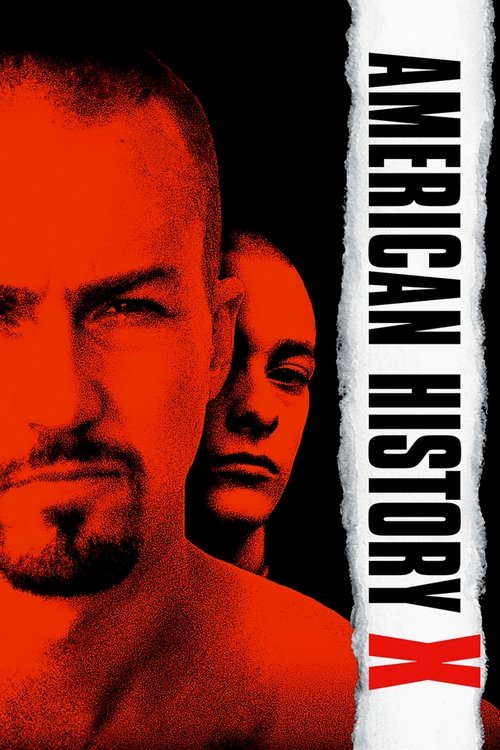
Poster for American History X (1998), awaiting its first vote.

Derek Vineyard is paroled after serving 3 years in prison for killing two African-American men. Through his brother, Danny Vineyard's narration, we learn that before going to prison, Derek was a skinhead and the leader of a violent white supremacist gang that committed acts of racial crime throughout L.A. and his actions greatly influenced Danny. Reformed and fresh out of prison, Derek severs contact with the gang and becomes determined to keep Danny from going down the same violent path as he did.

Movie poster for Freaky Tales (2025), waiting for its first vote.

In 1987 Oakland, a mysterious force guides The Town's underdogs in four interconnected tales: teen punks defend their turf against Nazi skinheads, a rap duo battles for hip-hop immortality, a weary henchman gets a shot at redemption, and an NBA All-Star settles the score.

The Crimson Rivers (2000) poster. Still unanswered: is there a scene after the credits?

Two French policemen, one investigating a grisly murder at a remote mountain college, the other working on the desecration of a young girl's grave by skinheads, are brought together by the clues from their respective cases. Soon after they start working together, more murders are committed, and the pair begin to discover just what dark secrets are behind the killings.

Scorpion in Love (2013) cover. Nothing recorded about its credits.

Julian (Álex González) and his friend Luis (Miguel Angel Silvestre) are two neighborhood boys who are part of a gang of violent neo-Nazis, led by Solis (Javier Bardem). After start training in a gym, Julian is transformed gradually thanks to the discipline of boxing, the nobility of his coach (Carlos Bardem) and the love of a young latin girl (Judith Diakhate). All of this takes away from the group, but Luis is not ready to accept that leave the "herd".

Image for Skinning (2010), a film with no post-credit data.

Novica is a mathematics champion in a Belgrade high school. In an attempt to overcome the ‘geek’ status at school, Novica becomes attracted to the world of skinheads by his school friend Relja. Novica is exposed to violence, hooliganism and racism; embracing the ideology and climbing up the ladder in the gang hierarchy.

Movie poster for Skin (2019), waiting for its first vote.

A destitute young man, raised by racist skinheads and notorious among white supremacists, turns his back on hatred and violence to transform his life, with the help of a black activist and the woman he loves.

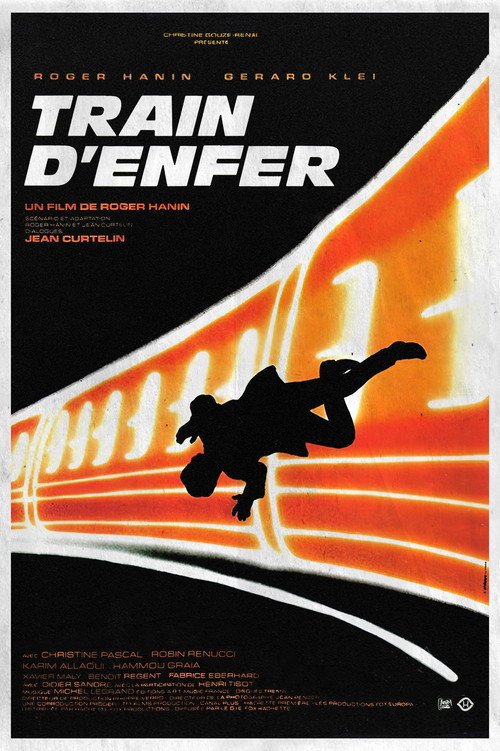
Hell Train (1985) poster. The count is still zero.

Hell Train is a French film based on a true story. One evening at a ball in a small town, a fight breaks out in an atmosphere tinged with racism. Three of the ringleaders end up at the police station. The next day, November 14, 1983, on the Bordeaux-Ventimiglia train, the three men who were candidates for enlistment in the Foreign Legion beat Habib Grimzi, a 26-year-old Algerian, before throwing him out of a window. A young woman, who witnessed the murder, alerted the police. The investigation begins in a climate of extreme tension. In the city, provocations and attacks are increasing...

Poster for Leroy (2007), awaiting its first vote.

A gently humorous look at otherness and xenophobia in modern day German with this tale of a black Berlin teen named Leroy who rediscovers his roots after falling for a pretty white girl and meeting her racist family.

Movie art for Made in Britain (1983), post-credit scene unknown.

16-year-old skinhead Trevor has no regard for authority, and would rather spend his time stealing cars than sitting in the detention centre to which he is sent. Social worker Harry Parker tries his best, but Trevor is only interested when there's something in it for him. The centre authorities try to conform Trevor to the norms of society, but he takes no notice, and would rather speak in a torrent of four-letter words and racial abuse.

Romper Stomper (1992) poster. Still unanswered: is there a scene after the credits?

Nazi skinheads in Melbourne take out their anger on local Vietnamese, who are seen as threatening racial purity. Finally the Vietnamese have had enough and confront the skinheads in an all-out confrontation, sending the skinheads running. A woman who is prone to epileptic seizures joins the skins' merry band, and helps them on their run from justice, but is her affliction also a sign of impurity?

Movie art for La cravate (2020), post-credit scene unknown.

Bastien is twenty years old and has been an activist for five years in the main extreme right party. When the presidential campaign begins, he's invited by his superior to commit even further. Initiated into the art of decking himself out like a politician, he starts to dream of a career, but old demons surge forth...

Movie poster for My Dog Killer (2013), waiting for its first vote.

Môj pes Killer is a one-day drama portraying eighteen-year-old Marek living near the Slovak-Moravian border with his dad and his racist friends. However, Marek's best true friend is his dog. His life is shaken up when he discovers the secret of his lost mother Marika.

Image for This Is England (2007), a film with no post-credit data.

A story about a troubled boy growing up in England, set in 1983. He comes across a few skinheads on his way home from school, after a fight. They become his new best friends, even like family. Based on experiences of director Shane Meadows.

The Parade (2011) cover. Nothing recorded about its credits.

The Parade, in a tragicomic way, tells the story about ongoing battle between two worlds in contemporary post-war Serbian society - the traditional, oppressive, homophobic majority and a liberal, modern and open-minded minority... The film, which deals with gay rights issues in Serbia, features footage of the 2010 Belgrade gay pride parade. The film introduces a group of gay activists, trying to organize a pride parade in Belgrade.

Key art for 16 Years of Alcohol (2003), unanswered on the post-credit question.

16 Years of Alcohol is a 2003 drama film written and directed by Richard Jobson, based on his 1987 novel. The film is Jobson's first directorial effort, following a career as a television presenter on BSkyB and VH-1, and as the vocalist for the 1970s punk rock band The Skids.

Meantime (1983). Nobody has said whether there is anything after the credits.

A working-class family in London's East End is struggling to stay afloat during the recession under Prime Minister Margaret Thatcher's premiership. Only the mother Mavis is working; father Frank and the couple's two sons Colin, a timid, chronically shy individual and Mark, an outspoken, headstrong young man, are on the dole. This situation is contrasted by the presence of Mavis's sister Barbara, and her husband John, whose financial and social loftiness appears to be a comfortable facade over the unspoken soreness of a lackluster marriage.

Movie art for The Story of Skinhead (2016), post-credit scene unknown.

Don Letts examines the history of this notorious subculture in a fascinating documentary, which features interviews with members of different skinhead scenes through the decades. Beginning in the late 1960s, Don fondly recalls a time of multiracial harmony as youngsters bonded over a love of ska, reggae and smart clothes as white working-class kids were attracted to Jamaican culture and adopted its music and fashions. But when far-right politics targeted skinheads in the 1970s and 1980s, an ugly intolerance emerged, and Don reveals how the once-harmonious subgroup has since struggled to shake this stigma.

Privacy policy

When you vote, we save your Yes or No answer and when you voted.

We use a cookie and your internet address to recognize your vote on each movie. This prevents repeat votes. The cookie lasts for five years.

Your votes are kept as part of the movie totals.