

A woman moves into a Manhattan apartment, where she learns that the previous tenant's life ended under mysterious circumstances.
A woman moves into a Manhattan apartment, where she learns that the previous tenant's life ended under mysterious circumstances.

The James Webb Telescope stirs imaginations with vivid photos of distant galaxies. This documentary tracks its historic journey from inception to launch.

Austin, Texas, is an Eden for the young and unambitious, from the enthusiastically eccentric to the dangerously apathetic. Here, the nobly lazy can eschew responsibility in favor of nursing their esoteric obsessions. The locals include a backseat philosopher who passionately expounds on his dream theories to a seemingly comatose cabbie, a young woman who tries to hawk Madonna's Pap test to anyone who will listen and a kindly old anarchist looking for recruits.

Blue Peter presenters Helen Skelton and Barney Harwood want to learn more about the solar system so they challenge scientists Helen Czerski and Jem Stansfield to find out more. They look at how to make telescopes and rockets, and use a toilet roll to measure the distances between planets.

In the not-too-distant future, the evil Dr. Forrester forces a temp named Mike into a series of experiments, where he's forced to watch cheesy movies so the mad scientist can monitor his mind. However, as Mike can't control where the movies begin or end, he'll try to keep his sanity with the help of his robot friends.

A giant ball of gas and raw energy with a temperature of up to 15 million degrees, the sun is the origin of life on earth and influences an infinite number of natural phenomena. This documentary is dedicated to the search for the significance of our home star for mankind, science and nature. Researchers at the American Space Agency NASA, the Canary Islands observatories, and the hottest and coldest places on earth share their insights. We can expect an emotional journey through science and history, peppered with human stories, at the end of which the complex bandwidth of life is revealed. Never before in the history of mankind has it been more important to uncover the secrets of the sun. Because for our earth, the sun is not just any star. It is the ultimate star.
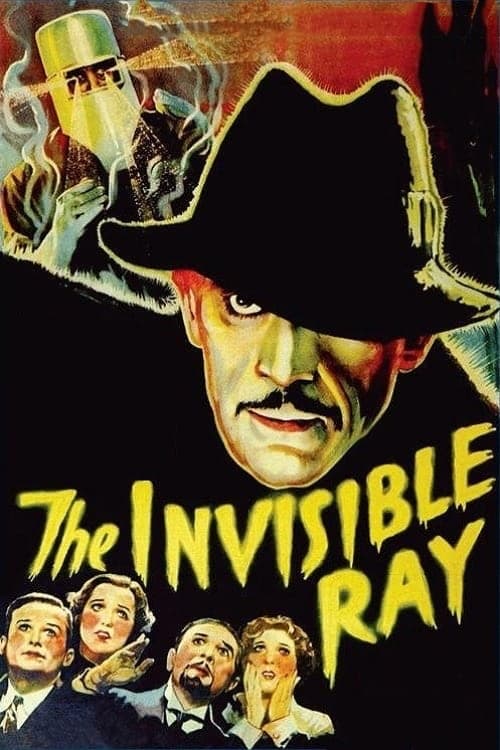
Dr. Janos Rukh discovers a certain type of radium that has almost magical healing properties. But the element has a dangerous side, too, and it has already started affecting Rukh. Consumed by paranoia, he begins to suspect that his wife is having an affair. Wild for revenge, Rukh hatches a deadly plot...using his own poisoned body as a weapon to kill.
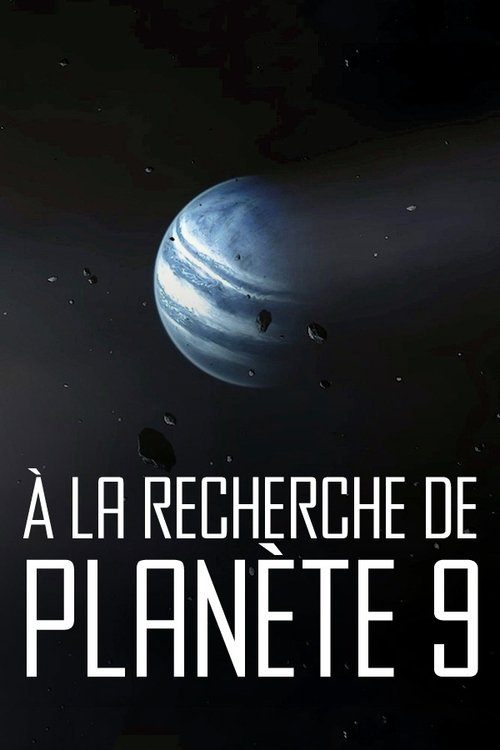
At the edge of our solar system supposedly lies an immense planet. Five to ten times the size of the Earth. Several international teams of scientists have been competing in a frantic race to detect it, in uncharted territories, far beyond Neptune. The recent discovery of several dwarf planets, with intriguing trajectories, have put astronomers on the trail of this mysterious planet. Why is this enigmatic planet so difficult to detect? What would a ninth planet teach us about our corner of the universe? Could it help us unlock some of the mysteries of our solar system?

A young man who recently lost his father, goes away to a cabin in the woods to deal with his grief

The idea is a simple one: three alpinists climb in the Mont Blanc Massif. This situation brings one face to face with the dangers of the mountain: avalanches, crevasses, fog, the climbing of the rocks, roping up, etc. All of this is magnified, transcended by a remarkable and strong use of the language of cinema. One of the first films about high mountains with Roger Frison-Roche and magnificent music by Maurice Jaubert

Three female room-mates fall in and out of love and chase the wrong men. Through their relationships they learn a lot about life, love and their own personalities.

When the body of Violet Feverel is discovered on the Central Park bridle path, Inspector Oscar Piper presumes her death was accidental, until his friend, amateur detective Hildegarde Withers, locates Violet’s horse and discovers it is streaked with blood.

An astronomer has a terrifying dream.

A young man, accompanied by his mysterious mechanical bear, visits an abandoned observatory to confront memories of his past and follow his Father on a journey into the unknown.

A shy woman and her police protector are watched by her admirer, a weird woman with a telescope.


For over three decades, NASA and an international team of scientists and engineers pushed the limits of technology, innovation, and perseverance to build and launch the James Webb Space Telescope, the most powerful space observatory ever created. Cosmic Dawn brings audiences behind the scenes with the Webb film crew, and never-before-heard testimonies revealing the real story of how this telescope overcame all odds.

A history of the telescope and a look at the James Webb telescope, and at the universe through the eyes of scientists and telescopes since the beginning.

Although the mountain volcano Mauna Kea last erupted around 4,000 years ago, it is still hot today, the center of a burning controversy over whether its summit should be used for astronomical observatories or preserved as a cultural landscape sacred to the Hawaiian people. For five years the documentary production team Nā Maka o ka 'Āina ("the eyes of the land") captured on video the seasonal moods of Mauna Kea's unique 14,000-foot summit, the richly varied ecosystems that extend from sea level to alpine zone, the legends and stories that reveal the mountain's geologic and cultural history, and the political turbulence surrounding the efforts to protect the most significant temple in the islands: the mountain itself.

A documentary chronicling the history of the telescope from the time of Galileo. Featuring interviews with leading scientists discussing Galileo's first use of the telescope to the latest discoveries in cosmology.