

In this endearing supernatural love story spanning two decades, a university student finds himself communicating with a female classmate from the same school through an antique ham radio.
In this endearing supernatural love story spanning two decades, a university student finds himself communicating with a female classmate from the same school through an antique ham radio.

The universe is ancient - 50,000 times older than our species. On a cosmic time scale, human history is as brief as the blink of an eye. By compressing all 13.8 billion years of time into a 10 minute scale, this video shows just how young we truly are, and just how ancient and vast our universe is. Starting with the big bang and culminating in the appearance of homo sapiens, this experience follows the unfolding of time at 22 million years per second, adhering closely to current scientific understanding.

How's it all gonna end? This experience takes us on a journey to the end of time, trillions of years into the future, to discover what the fate of our planet and our universe may ultimately be. We start in 2019 and travel exponentially through time, witnessing the future of Earth, the death of the sun, the end of all stars, proton decay, zombie galaxies, possible future civilizations, exploding black holes, the effects of dark energy, alternate universes, the final fate of the cosmos - to name a few.

Days slip away in a former baptist church haunted by its past

In the town of Xoco, the spirit of an old villager awakens in search of its lost home. Along its journey, the ghost discovers that the town still celebrates its most important festivities, but also learns that the construction of a new commercial complex called Mítikah will threaten the existence of both the traditions and the town itself.

DEO A reimagining of Deo Gratias (ca. 1497) by Johannes Ockeghem. A Film by Eric Leiser. Animation by Eric Leiser. Composed by Pauline Kim Harris and Spencer Topel Deo is an acoustic-electronic transcription of Johannes Ockeghem’s stunning Deo Gratias devised as a complement to Ambient Chaconne. Notable as a 36-part canon, Ockeghem evokes singing of angels in heaven via an innovation on a traditional canon, using this ancient musical device as a kind of acoustic feedback delay. In essence, our Deo expands this idea of delays to a canon of thousands, in an ever expanding and infinite soundscape, where the melodies eventually dissolve into resonance.

The sound of a ticking kitchen timer introduces a slim, nude woman who is standing in semi-profile against a bare, off-white wall. Her expression is impassive. Her image flickers slightly, and we watch her abdomen grow, realizing we are seeing a time-lapse sequence of her pregnancy. After 17 seconds, the timer rings; a baby appears in her arms, and the time-lapse gives way to real time. A mother's beatific smile appears as she cuddles the child.

LAND is a fluid series of formal land animation experiments based upon the imprint of landscapes in various locations and intuitive interpretations of those movements. Shot in New York, Thimble Islands Bear Island, Connecticut, Armstrong Redwoods, Sonoma County, California, Hastings, England. note* (part of the EYE Filmmuseum Permanent Collection)

'Resilience', Choi's second-year film at CalArts, is about the ravaged nature finding its strength and gradually recovering alongside the vibrant resurgence of life.

Time lapse of a flight of stairs. One of five segments from Intervalometer Experiments (2001-2003).


An analysis of the flow of water from mountain to aqueduct, city to sea. Shot at and around the Eastern Sierra Nevada, Owens Valley, Los Angeles Aqueduct, Los Angeles River and Pacific Ocean.

An audio-visual experience through the perspective of an iPhone depicting a harmonious city during the day quickly descend into technological madness as night falls.

King Bee is a time-lapse documentary/comedy about contemporary society and times. The collective portrait of the people of Spišský Hrhov – a Slovak village featured in the New York Times – strives to find answers to whether or not ideal community life is still attainable. In the 21st century, our society emphasises the importance of individual self-realisation, thus forgetting about our interdependence. Are we just going to bitterly, yet with admiration, watch the prosperous bee kingdom?

This is a companion piece to the Fall time-lapse. Intended to be the polar opposite of the first one. Not just the Fall vs Spring. But wide shots vs close ups, everything in focus vs shallow depth of field, very cutty vs one shot, contemporary music vs classical, static camera vs moving camera.

"At the beginning of the 19th century there is no Chicago. There was a fort that was set on fire by Indians shortly thereafter. Later, the turbulent expansion of a settlement began, which became a center for the immigrant workforce, traditional industry, slaughterhouses, and, in 1941, armaments for war. The Windy City on Lake Michigan is the fastest changing city in the world. This 35mm Arriflex film time-lapse footage is annotated with classic techno cuts and information about the tunnels under Chicago, the slaughterhouses, organized crime, Sears & Roebuck catalogs and other peculiarities of this strange city."
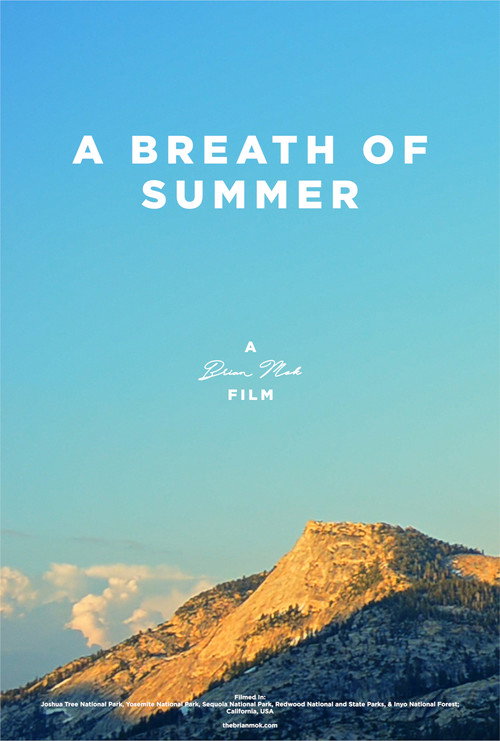
Feel the rush of the breathtakingly beautiful National Parks of California with one deep breath of the summer air.

Timelapse of Fall in NYC by Jamie Scott.
Tiny parasols sprout up like fungi across a beautiful wooded landscape in this hybrid stop motion/timelapse short film.
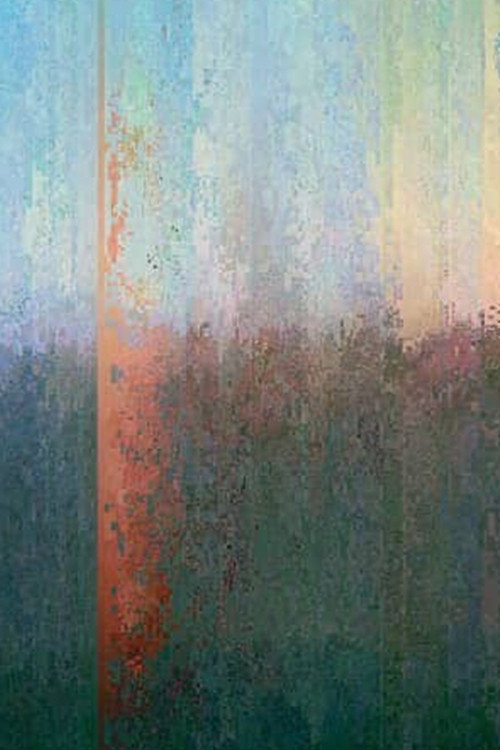
A 1963 timelapse recording shows the effects of air pollution during an entire day on Santa Monica Bay in Los Angeles. A machine interpretation of an unstable version of the original file is divided into slits and rearranged in time, giving rise to a time panorama that mirrors an uncertain, abstract future lying ahead of us.