
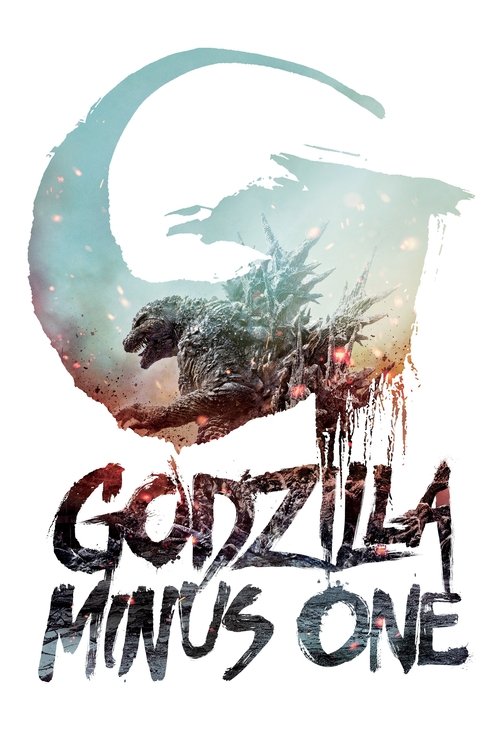
In postwar Japan, Godzilla brings new devastation to an already scorched landscape. With no military intervention or government help in sight, the survivors must join together in the face of despair and fight back against an unrelenting horror.
In postwar Japan, Godzilla brings new devastation to an already scorched landscape. With no military intervention or government help in sight, the survivors must join together in the face of despair and fight back against an unrelenting horror.

War reduced Japan to zero, and Godzilla plunged it into minus. Two years have passed since then, and the country has faced agonizing struggles to achieve recovery and finally reclaim its daily life. Just as humanity managed to cling to a hard-won peace, a new threat strikes, crushing hope in an instant. There is no third time. Everything ends here.

When a massive, gilled monster emerges from the deep and tears through the city, the government scrambles to save its citizens. A rag-tag team of volunteers cuts through a web of red tape to uncover the monster's weakness and its mysterious ties to a foreign superpower. But time is not on their side - the greatest catastrophe to ever befall the world is about to evolve right before their very eyes.

Japan is thrown into a panic after several ships are sunk near Odo Island. An expedition to the island led by Dr. Kyohei Yamane soon discover something far more devastating than imagined in the form of a 50 meter tall monster whom the natives call Gojira. Now the monster begins a rampage that threatens to destroy not only Japan, but the rest of the world as well.
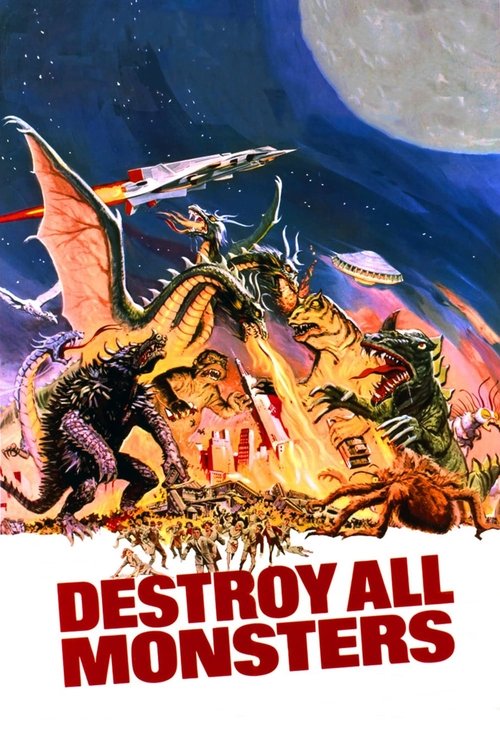
At the turn of the century, all of the Earth's monsters have been rounded up and kept safely on Monsterland. Chaos erupts when a race of she-aliens known as the Kilaaks unleash the monsters across the world.

The advertising director of Pacific Pharmaceuticals, frustrated with the low ratings of their sponsored TV program, seeks a more sensationalist approach. He orders his staff to Faro Island to capture King Kong for exploitation. As Godzilla re-emerges, a media frenzy generates with Pacific looking to capitalize off of the ultimate battle.

Astronauts Glenn and Fuji investigate Planet X and encounter mysterious aliens known as the Xiliens, who ask Earth's people to help save their world from "Monster Zero". In exchange for borrowing Godzilla and Rodan, the Xiliens offer a cure for cancer. As Glenn investigates, he develops a romance with Miss Namikawa and uncovers the Xilien's true intentions.
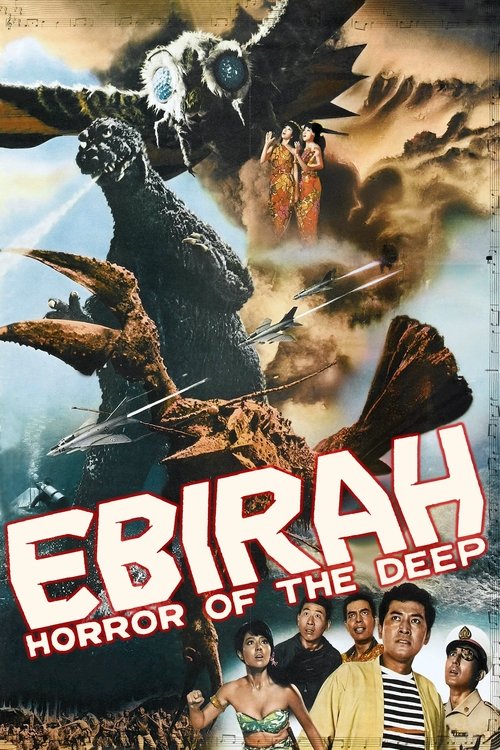
Searching for his brother, Ryota stows away on a boat belonging to a criminal alongside two other teenagers. The group shipwrecks on Letchi island and discover the Infant Island natives have been enslaved by a terrorist organization controlling a crustacean monster. Finding a sleeping Godzilla, they decide to awaken him to defeat the terrorists and liberate the natives.
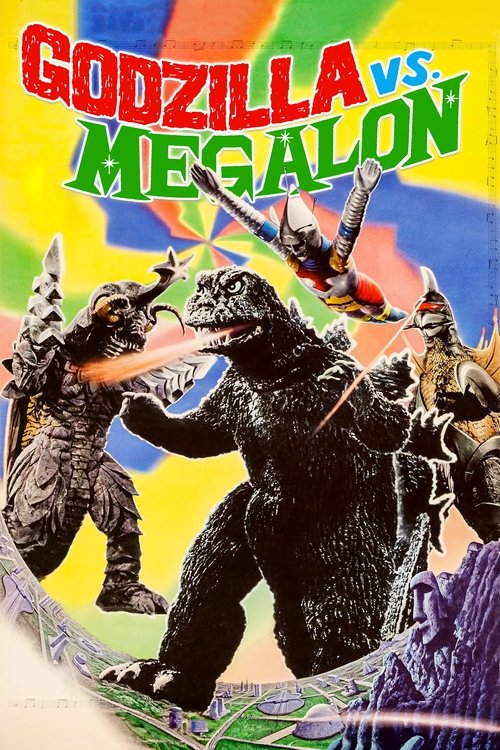
Inventor Goro Ibuki creates a humanoid robot named Jet Jaguar. It is soon seized by an undersea race of people called the Seatopians. Using Jet Jaguar as a guide, the Seatopians send Megalon as vengeance for the nuclear tests that have devastated their society.

When an underhanded pharmaceutical company goes to a remote tropical island to steal King Kong for advertising purposes, they get more than they bargained for when the gigantic ape attacks an unsuspecting village and an enormous octopus.

Mining engineer Shigeru investigates the disappearance and death of his fellow coworkers when prehistoric nymphs are discovered emerging from the mines. After an attack on the local village, Shigeru heads deeper into the mines only to make a more horrifying discovery in the form a prehistoric flying creature. Soon a second monster appears as the two converge in Fukuoka.

An Okinawan prophecy that foretells the destruction of the Earth is seeming fulfilled when Godzilla emerges to return to his destructive roots. But not all is what it seems after Godzilla breaks his ally Anguirus's jaw. Matters are further complicated when a second Godzilla emerges, revealing the doppelgänger as a mechanical weapon.

During an assignment, foreign correspondent Steve Martin spends a layover in Tokyo and is caught amid the rampage of an unstoppable prehistoric monster the Japanese call 'Godzilla'. The only hope for both Japan and the world lies on a secret weapon, which may prove more destructive than the monster itself.

An ever evolving alien life-form arrives on a comet from the Dark Gaseous Nebula and proceeds to consume pollution. Spewing mists of sulfuric acid and corrosive sludge, neither humanity nor Godzilla may be able to defeat this toxic menace.

During WWII, Germans obtain the immortal heart of Frankenstein's monster and transport it to Japan to prevent it being seized by the Allies. Kept in a Hiroshima laboratory, it is seeming lost when the United States destroys the city with the atomic bomb. Years later a wild boy is discovered wandering the streets of the city alone, born of the immortal heart.

The Japanese government sets up a special task force to fight the giant creatures suddenly appearing across the country. Soon, the squad unexpectedly meets a giant silver humanoid who starts appearing every time a space monster attacks!
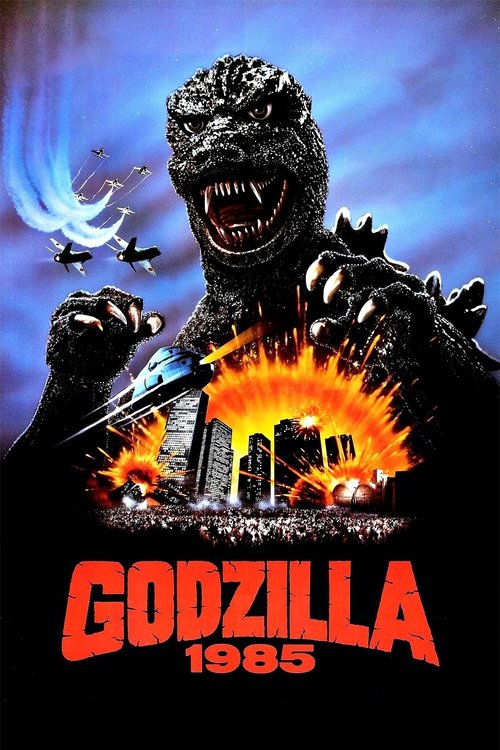
Originally released in Japan as "The Return of Godzilla" in 1984, this is the heavily re-edited, re-titled "Godzilla 1985". Adding in new footage of Raymond Burr, this 16th Godzilla film ignores all previous sequels and serves as a direct follow-up to the 1956 "Godzilla King of the Monsters", which also featured scenes with Burr edited into 1954's "Godzilla". This film restores the darker tone of the original, as we witness the nuclear destruction of giant lizard terrorizing Japan.

A man forced to bear power and stripped of humanity. A woman skeptical of happiness. Takeshi Hongo, an Augmentation made by SHOCKER, and Ruriko Midorikawa, a rebel of the organization, escape while fighting off assassins. What’s justice? What’s evil? Will this violence end? Despite his power, Hongo tries to remain human. Along with freedom, Ruriko has regained a heart. What paths will they choose?

Two fishing scout pilots make a horrifying discovery when they encounter a second Godzilla alongside a new monster named Anguirus. Without the weapon that killed the original, authorities attempt to lure Godzilla away from the mainland. But Anguirus soon arrives and the two monsters make their way towards Osaka as Japan braces for tragedy.

An adaptation of the Rankin/Bass cartoon, "The King Kong Show". King Kong is brought in by the evil Dr. Who to dig for Element X in a mine when the robot Mechani-Kong is unable to do the task. This leads to the machine and the real Kong engaging in a tremendous battle atop Tokyo Tower.