

Through unlikely bonds formed during night shifts at a local aquarium, Tova, an elderly widow, learns of a life-changing discovery that may bring her joy and wonder once again.
Through unlikely bonds formed during night shifts at a local aquarium, Tova, an elderly widow, learns of a life-changing discovery that may bring her joy and wonder once again.

Three fanatical bird-watchers spend an entire year competing to spot the highest number of species as El Nino sends an extraordinary variety of rare breeds flying up into the U.S., but they quickly discover that there are more important things than coming out on top of the competition.

When Addison investigates the murder of his friend Kevin with the help of Phoebe, they discover that the truth is darker than they had ever imagined.

A young person finds themselves chased by a mysterious presence in rural Eastern Washington
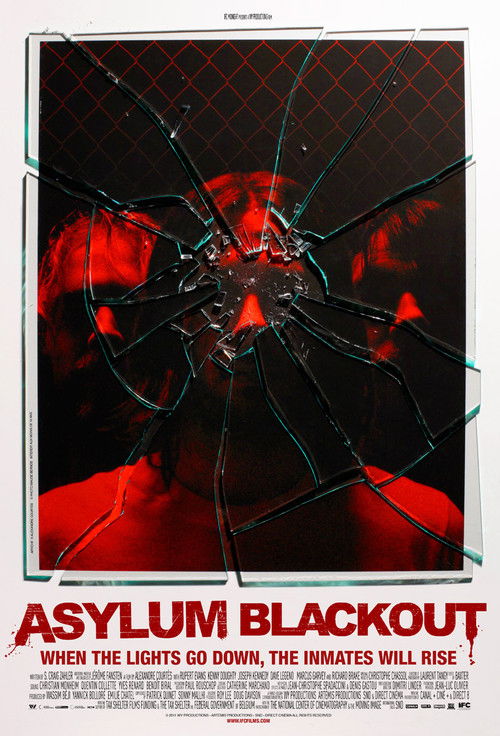
A group of cooks at an asylum for the criminally insane get locked in with the inmates during a massive thunderstorm

An early silent color film of Glacier National Park and Mount Rainier. The film is part of the 'Our Colorful World' series, produced by Bell & Howell. It shows a drive up to the Logan Pass in Glacier National Park, and a two-day ascent to Mount Rainier through Nisqually Glacier by two men and a woman. This Filmosound Library series produced in the early 1940s initially included thirty-seven single reels, for the most part silent, bringing beauty spots and wildlife of America and the world to the school screen in full natural color.

Above the Clouds in Rainier National Park shows a two-day climb from Paradise Inn to the summit of Mt. Rainier. The film was produced by the Kodak Cinegraph to be sold and rented in 16mm format for the domestic market. The footage may be from the early twenties or a bit before and the film was released prior to 1926.

An ascent of 'The Tooth' via the South-east Face. The film was made by Burge Bickford and Lyman Boyer. It features Jim Crooks leading Fred Beckey on a rock climbing ascent of the southeast face of The Tooth, near Snoqualmie Pass, Washington. At the summit, the climbers find a brass tube with a Mountaineers register book inside. Illustrates Cascade Mountains climbing just before World War II. The leader never places any protection such as pitons or slings. The film focuses on the climbers' hand and foot work intermixed with mountain views.

A closer look at the parks and forests of Washington state.

The film was produced by Jerome Hill as 'a document of skiing according to the principles of Hannes Schneider.' It features Otto Lang, director of the Mt Rainier and Mt Baker ski schools. As the film opens, Otto emerges from a cabin beneath Table Mountain at the Mt Baker ski area with his canine friend. He applies wax-on climbing skins to his skis. Then he steps into his bindings and climbs to a scenic ridge. The narrator describes each technique in detail as Otto demonstrates again. Several of the maneuvers are done in slow motion on a slope meticulously packed by side-stepping.

The title of this video, taken from the texts of the architect Kengo Kuma, suggests a way of looking at everything as “interconnected and intertwined” - such as the historical and the present and the tool and the artifact. Images and representations of two structures in the Portland Metropolitan Area that have direct and complicated connections to the Chinookan people who inhabit(ed) the land are woven with audio tapes of one of the last speakers of chinuk wawa, the Chinookan creole. These localities of matter resist their reduction into objects, and call anew for space and time given to wandering as a deliberate act, and the empowerment of shared utility.

A botanist has a run in with a group of cocaine dealers and is kidnapped, but not before calling on her brother for help.

A coming-of-age film about a group of outsider teenagers in Seattle dealing with the consequences of accidental gun violence in their hometown.

Known also as 'The Crystal Ascension', the film chronicles an exploration of Mount Hood and its glaciers by a mountain-climbing party who explore the snowfields of the Eliot Glacier, the largest glacier on Mount Hood. It shows excellent close views of mountain glaciers and strange ice formations. The film was produced by Robert Cameron Bruce for the Education Films Corporation of America as part of the Bruce Scenic Series.

Released on July 30th, 1917. Produced by Burton Holmes.