Post-credit scenes: results for “tag: ancient greece”

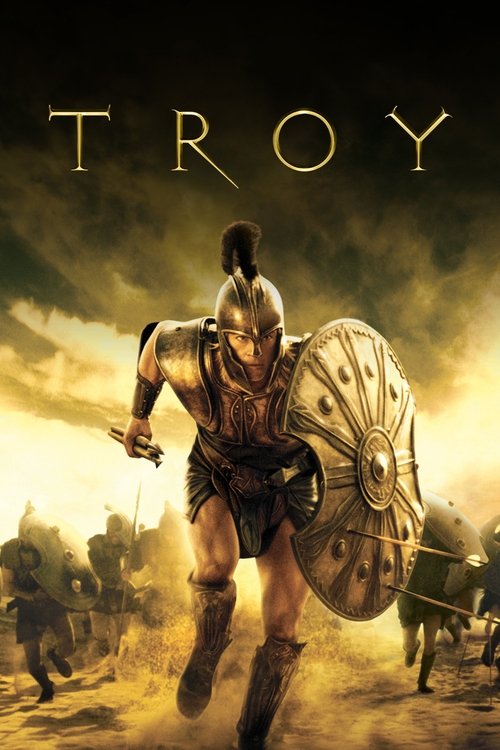
Image for Troy (2004), a film with no post-credit data.

In year 1250 B.C. during the late Bronze age, two emerging nations begin to clash. Paris, the Trojan prince, convinces Helen, Queen of Sparta, to leave her husband Menelaus, and sail with him back to Troy. After Menelaus finds out that his wife was taken by the Trojans, he asks his brother Agamemnon to help him get her back. Agamemnon sees this as an opportunity for power. They set off with 1,000 ships holding 50,000 Greeks to Troy.

Hercules (1997) cover. Nothing recorded about its credits.

Bestowed with superhuman strength, a young mortal named Hercules sets out to prove himself a hero in the eyes of his father, the great god Zeus. Along with his friends Pegasus, a flying horse, and Phil, a personal trainer, Hercules is tricked by the hilarious, hotheaded villain Hades, who's plotting to take over Mount Olympus!

Image for Wrath of the Titans (2012), a film with no post-credit data.

Perseus tries to live a quieter life as a village fisherman while – dangerously weakened by humanity's lack of devotion – the gods are losing control of the long-imprisoned Titans and their ferocious leader, Kronos.

Poster for Hercules (2014). No votes yet on whether it has a post-credit scene.

When a new enemy threatens the innocent, Hercules must lead his fearless team of warriors in a battle against overwhelming odds.

300 (2007) cover. Nothing recorded about its credits.

A story very loosely based the 480 B.C. Battle of Thermopylae, where the King of Sparta led his army against the advancing Persians.

Image for Clash of the Titans (2010), a film with no post-credit data.

Born of a god but raised as a man, Perseus is helpless to save his family from Hades, vengeful god of the underworld. With nothing to lose, Perseus volunteers to lead a dangerous mission to defeat Hades before he can seize power from Zeus and unleash hell on earth. Battling unholy demons and fearsome beasts, Perseus and his warriors will only survive if Perseus accepts his power as a god, defies fate and creates his own destiny.

300: Rise of an Empire (2014) poster. Still unanswered: is there a scene after the credits?

Greek general Themistocles attempts to unite all of Greece by leading the charge that will change the course of the war. Themistocles faces the massive invading Persian forces led by mortal-turned-god, Xerxes and Artemesia, the vengeful commander of the Persian navy.

Alexander (2004) poster. The count is still zero.

Alexander, the King of Macedonia, leads his legions against the giant Persian Empire. After defeating the Persians, he leads his army across the then-known world, venturing farther than any Westerner had ever gone, all the way to India.

Film artwork for Immortals (2011), no verdict on the credits.

Theseus is a mortal man chosen by Zeus to lead the fight against the ruthless King Hyperion, who is on a rampage across Greece to obtain a weapon that can destroy humanity.

Movie art for The Legend of Hercules (2014), post-credit scene unknown.

In Ancient Greece 1200 B.C., a queen succumbs to the lust of Zeus to bear a son promised to overthrow the tyrannical rule of the king and restore peace to a land in hardship. But this prince, Hercules, knows nothing of his real identity or his destiny. He desires only one thing: the love of Hebe, Princess of Crete, who has been promised to his own brother. When Hercules learns of his greater purpose, he must choose: to flee with his true love or to fulfill his destiny and become the true hero of his time. The story behind one of the greatest myths is revealed in this action-packed epic - a tale of love, sacrifice and the strength of the human spirit.

The Return (2024) poster. The count is still zero.

After twenty years away, Odysseus washes up on the shores of Ithaca, haggard and unrecognizable. The king has finally returned home, but much has changed in his kingdom since he left to fight in the Trojan war.

Cover image for Clash of the Titans (1981), not yet voted on.

To win the right to marry his love, the beautiful princess Andromeda, and fulfil his destiny, half-God-half-mortal Perseus must complete various tasks including taming Pegasus, capturing Medusa's head and battling the feared Kraken.

Poster for Jason and the Argonauts (1963). Never been answered.

Jason, a fearless sailor and explorer, returns to his home land of Thessaly after a long voyage to claim his rightful throne. He learns, however, that he must first find the magical Golden Fleece. To do so, he must embark on an epic quest fraught with fantastic monsters and terrible perils.

Ulysses (1954) poster. Still unanswered: is there a scene after the credits?

A retelling of Homer's The Odyssey, focusing on Ulysses's ten-year journey home to Ithaca following the Trojan War, where he faces various mythical challenges while his wife Penelope fends off suitors.

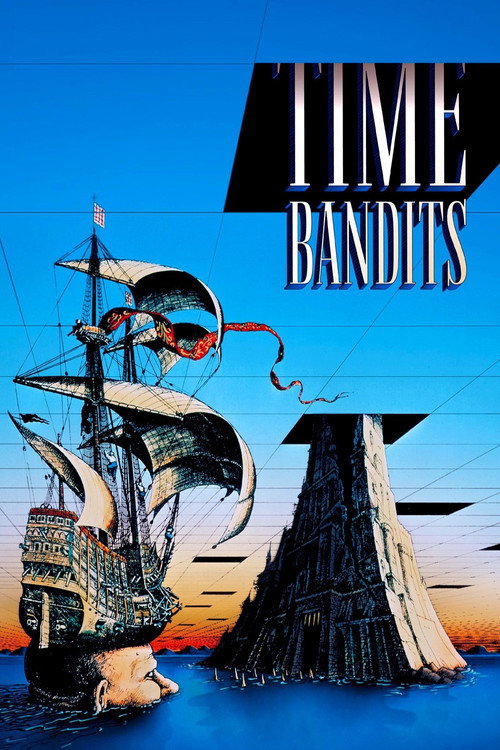
Cover image for Time Bandits (1981), not yet voted on.

Young history buff Kevin can scarcely believe it when six dwarfs emerge from his closet one night. Former employees of the Supreme Being, they've purloined a map charting all of the holes in the fabric of time and are using it to steal treasures from different historical eras. Taking Kevin with them, they variously drop in on Napoleon, Robin Hood and King Agamemnon before the Supreme Being catches up with them.

Poster art for The Colossus of Rhodes (1961), an open question on post-credit scenes.

While on holiday in Rhodes, Athenian war hero Darios becomes involved in two different plots to overthrow the tyrannical king, one from Rhodian patriots and the other from sinister Phoenician agents.

Movie art for The 300 Spartans (1962), post-credit scene unknown.

The 300 Spartans is an account of the 480 B.C. Battle of Thermopylae, in which the Greek Spartan King Leonidas, played by Richard Egan, led a remarkably small number of Greek Sparta to victory over an invading Persian army led by evil King Xerxes that was thought to number over 25,000. This spectacular conflict gave the Grecians enough time to organize a force to ultimately repel the Persians, and thus change the course of Western civilization.

Poster, Medea (1969). Nobody has voted on this one.

Based on the plot of Euripides' Medea. Medea centers on the barbarian protagonist as she finds her position in the Greek world threatened, and the revenge she takes against her husband Jason who has betrayed her for another woman.

Poster for Artemis - The Lost Temple (2023). No votes yet on whether it has a post-credit scene.

The location of the sanctuary of Artemis at Amarynthos has long remained one of the last great archaeological enigmas of Ancient Greece. This vast Artemision is mentioned in several ancient texts, which even go so far as to specify the distance that separates the sanctuary from the ancient city of Eretria. But despite the efforts of numerous scientific expeditions since the end of the 19th century, no trace of the sanctuary or its temple has ever been found. In the 1960s, a young archaeologist - Denis Knoepfler - set out in search of the lost temple of Artemis. His investigations soon led him into the hinterland of the island of Euboea, well beyond the limits of previous expeditions. It would take five decades of searching, unshakeable faith and moving tons of earth to finally unravel the mystery. In 2017, a tenacious Swiss-Greek team of archaeologists formally identified the sanctuary of Artemis, where Denis Knoepfler had predicted it lay buried.

Privacy policy

When you vote, we save your Yes or No answer and when you voted.

We use a cookie and your internet address to recognize your vote on each movie. This prevents repeat votes. The cookie lasts for five years.

Your votes are kept as part of the movie totals.