

A clash of ideologies. One stands for the people, the other feeds on control. Their paths collided once before. Years later, a child’s silent fear ignites the past, drawing a former police officer into a battle far bigger than personal revenge.
A clash of ideologies. One stands for the people, the other feeds on control. Their paths collided once before. Years later, a child’s silent fear ignites the past, drawing a former police officer into a battle far bigger than personal revenge.

Danton and Robespierre were close friends and fought together in the French Revolution, but by 1793 Robespierre was France's ruler, determined to wipe out opposition with a series of mass executions that became known as the Reign of Terror. Danton, well known as a spokesman of the people, had been living in relative solitude in the French countryside, but he returned to Paris to challenge Robespierre's violent rule and call for the people to demand their rights. Robespierre, however, could not accept such a challenge, even from a friend and colleague, and he blocked out a plan for the capture and execution of Danton and his allies.

May, 1980. Man-seob is a taxi driver in Seoul who lives from hand to mouth, raising his young daughter alone. One day, he hears that there is a foreigner who will pay big money for a drive down to Gwangju city. Not knowing that he’s a German journalist with a hidden agenda, Man-seob takes the job.

In 1988, Chilean military dictator Augusto Pinochet, due to international pressure, is forced to call a plebiscite on his presidency. The country will vote ‘Yes’ or ‘No’ to Pinochet extending his rule for another eight years. Opposition leaders for the ‘No’ vote persuade a brash young advertising executive, René Saavedra, to spearhead their campaign. Against all odds, with scant resources and while under scrutiny by the despot’s minions, Saavedra and his team devise an audacious plan to win the election and set Chile free.

Since the late 18th century American legal decision that the business corporation organizational model is legally a person, it has become a dominant economic, political and social force around the globe. This film takes an in-depth psychological examination of the organization model through various case studies. What the study illustrates is that in the its behaviour, this type of "person" typically acts like a dangerously destructive psychopath without conscience. Furthermore, we see the profound threat this psychopath has for our world and our future, but also how the people with courage, intelligence and determination can do to stop it.

Set during the volatile final months of Indonesia’s New Order regime, the narrative chronicles a young student activist's perilous commitment to pro-democracy underground movements and his family's subsequent, grueling quest for justice following his forced disappearance.

Thirty-seven diverse men and women confront the problem of saving their democracy from fascism.

Song Woo-seok is a lawyer with no clients. When his friend's son is falsely accused of a crime and tortured, he takes up the case and the course of his life changes for good.

On 9 April 1940, German soldiers arrive in the city of Oslo. The King of Norway faces a choice that will change his country forever. The King's Choice is a story about the three most dramatic days in Norway's history, the royal family's escape and King Haakon's difficult choice after Nazi Germany's invasion of Norway.

This iconic statue was a gift from France to the new-born American Republic and was the first crowd-funded monument of all time. A symbol of emancipation and freedom, which took two decades to be completed. The film features original 3D virtual reconstitutions of Auguste Bartholdi’s Atelier in Paris and travels back in time to bring viewers at the heart of the Statue’s original construction, revealing the founding ideals of our democracies.

In 1987 Korea under an oppressive military regime, the unlawful interrogation and death of a college student ignite ordinary citizens to fight for the truth and bring about justice.
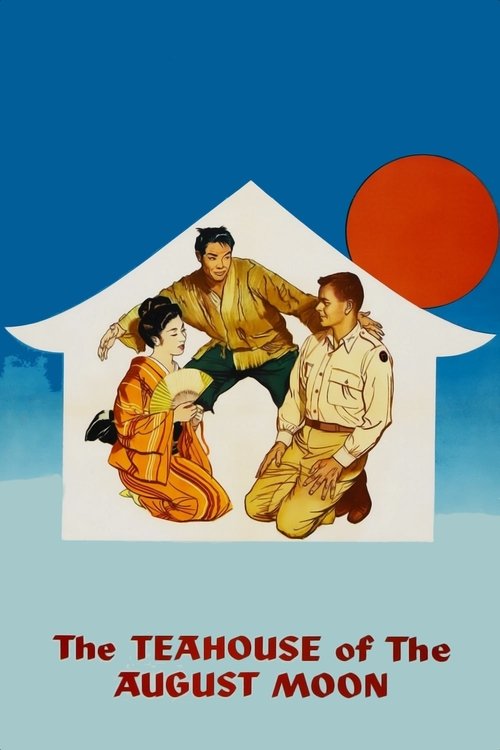
In post-WWII Japan, an American captain is brought in to help build a school, but the locals want a teahouse instead.

In 2017, twenty years after the British handed over Hong Kong to China in 1997, young people, more politicized than any previous generation and proud of their land, do not feel Chinese and actively fight against the oligarchs who want to subdue them to China's authoritarian power.

What would American democracy look like in the hands of teenage girls? In this documentary, young female leaders from wildly different backgrounds in Missouri navigate an immersive experiment to build a government from the ground up.

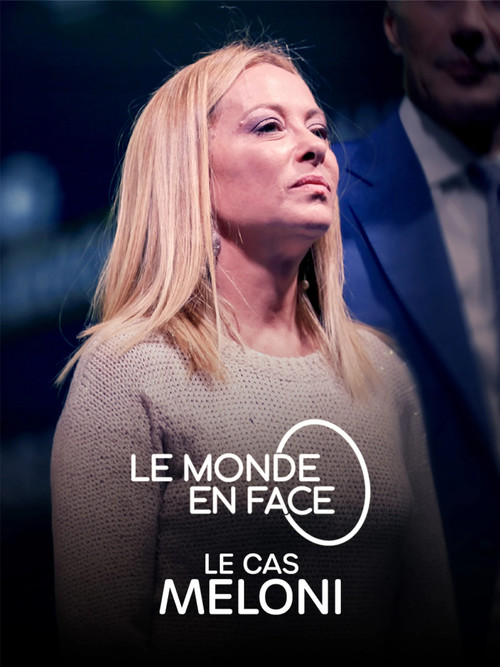

After the 9/11 attacks, after the smoke was gone, after the rubble cleared away, New Yorkers had a city to rebuild. In response to fast-tracked redevelopment plans, more than 5,000 people gathered in the largest town hall in American history. They came to vote on the city’s six proposals for rebuilding Ground Zero. But instead, the people rejected the top down approach and successfully charted a new path forward. Their work determined what is at Ground Zero today. And their story is an example of what democracy can look like.

Khian, Pim and Karn, young rebellious students, work together to make a protest to uncover the corruption in their school by folding hundreds of paper cranes. But as they tried to unfold the truth, the trio are threatened by the shadowy powers.

When Israel is hijacked from within by extremist political forces, a group of citizens transform overnight into protest leaders. They embark on an epic struggle for their democracy - one that pushes the nation to the brink of civil war. Then war does break out, and the stakes rise even higher.

In September 1847, the people gathered at the “Salmen” inn in Offenburg and put forward 13 demands: freedom of the press, trial by jury, fair taxation and a parliament representing the people. What began as a protest became the revolution in Baden. In April 1848, Friedrich Hecker set out from Konstanz with a volunteer militia, in September Gustav Struve proclaimed the republic in Lörrach, and in May 1849 the Baden army went over to the people. Grand Duke Leopold fled and a provisional government took control of the country. Only Prussian troops brought the Baden Revolution to an end: on 23 July 1849, the fortress of Rastatt surrendered.