Post-credit scenes: results for “tag: wall”

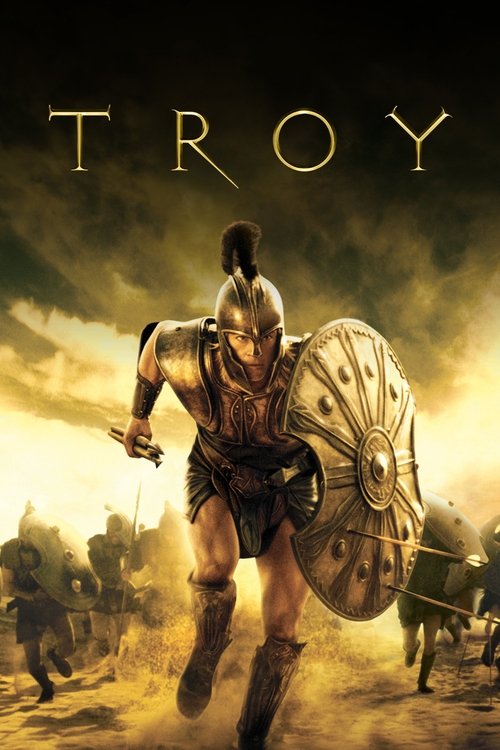
Image for Troy (2004), a film with no post-credit data.

In year 1250 B.C. during the late Bronze age, two emerging nations begin to clash. Paris, the Trojan prince, convinces Helen, Queen of Sparta, to leave her husband Menelaus, and sail with him back to Troy. After Menelaus finds out that his wife was taken by the Trojans, he asks his brother Agamemnon to help him get her back. Agamemnon sees this as an opportunity for power. They set off with 1,000 ships holding 50,000 Greeks to Troy.

Poster, Stardust (2007). Nobody has voted on this one.

In a countryside town bordering on a magical land, a young man makes a promise to his beloved that he'll retrieve a fallen star by venturing into the magical realm. His journey takes him into a world beyond his wildest dreams and reveals his true identity.

Attack on Titan (2015). Nobody has said whether there is anything after the credits.

100 years ago, titans suddenly appeared on Earth. Soon, human civilization veered on collapse due to the titans. Humans then built a giant wall to defend themselves. Within the giant walls, humans lived in peace, but, 100 years later, the giant wall is broken.

Poster art for Dragonheart 3: The Sorcerer's Curse (2015), an open question on post-credit scenes.

When aspiring knight Gareth goes in search of a fallen comet rumored to contain gold, he is shocked to instead find the dragon Drago. After Drago saves Gareth's life the two become intricately bonded, and must work together to defeat an evil sorcerer and stop his reign of terror. Along the way, Gareth learns the true meaning of being a knight in this fantasy action-adventure for the ages.

Poster, Destiny (1921). Nobody has voted on this one.

As a young couple stops and rests in a small village inn, the man is abducted by Death and sequestered behind a huge doorless, windowless wall. The woman poisons herself in order to join him and is met by Death, who gives her three opportunities to prove that love is stronger than death, thereby freeing her beloved from his fate.

The Promised Neverland (2020) cover. Nothing recorded about its credits.

A number of children are being well fed, taken care of, and pampered at a very meticulate and managed orphanage. The facility and grounds are impressive, but the wall acting as a barrier is high. There is a secret to the place and once revealed to several orphans, they're desperate to escape.

Poster art for Berlin Tunnel 21 (1981), an open question on post-credit scenes.

In Berlin in 1961, an American soldier and a German engineer join forces to build a tunnel under the Berlin Wall in order to smuggle out refugees, including the soldier's East German girlfriend.

Cover image for The Eye and the Wall (2021), not yet voted on.

Condemned to live in scarcity behind a colossal wall that divides Gabhán City in two, Alba is part of a network that distributes medicines and water to the most needy in a clandestine hospital. Her godmother, Lucre, seeks to save her by risking her life in a covert traffic of illegal people to the other side of the wall. Alba refuses to leave her people and the hospital, so Lucre is forced to lie to her in order to convince her and thus embark her on a journey across the border that changes her life forever.

7 1/2 Women (2006): nobody has checked the credits yet.

A man is haunted successively by seven women who have lost their keys. He reacts to the request that he be allowed to use the toilet with increasing helplessness and despair, which is discharged in violence.

Beyond the Walls (1984): nobody has checked the credits yet.

In Israel's Central Prison, the security officer is corrupt, supplying drugs and stirring the hatred between Jewish and Arab prisoners to his advantage. Uri, in for 12 years for armed robbery, and Issan, in for 50 years for PLO violence, command the respect of their cells. When the Arabs are framed for the murder of a Jewish prisoner and a young inmate commits suicide rather than lie about what happened, Uri and Issan form an unlikely partnership, leading the security block on a strike. Prison officials try to break it. In the background are Uri's daughter and Issan's wife, women of beauty and passion who embody the distance from inside a cell to the outside.

Poster for Bil'in Habibti (2006), blank on post-credit scenes.

The Israeli filmmaker Shai Corneli Polak records the building of the 'security wall' through Palestinian territory at the village of Bil'in. The villagers protest mostly peacefully, while the Israeli army doesn't react peacefully. By now the Israeli High Court has ruled that the building of the wall was illegal.

Film poster, Untitled (1977). No post-credit verdict yet.

"Untitled begins with a flat, out-of-focus, reddish-pink screen on which blurry white patterns quickly appear and disappear. After awhile a space seems to emerge behind the screen. The swiftly changing patterns generate an experience of soft floating motion, through a field of snowflakes that whirl about in the wind. There is simultaneous serenity and agitation in the portrayed motions. The background appears soft, almost quivering at first, as if alive, and the reddish color suggests warmth and contrast with the snow. As the film progresses the snowflakes get smaller and better focused, yielding a kind of distance perspective and the background acquires more and more substantiality. At some point and often quite suddenly, the trans-like floating experience is broken by the discovery of what lies ahead: a red brick wall! The entire meaning of the earlier experience undergoes a sudden shift as this prototype of the impenetrable obstacle becomes apparent."– Robert Becklen

Film poster, Mur (2015). No post-credit verdict yet.

Mariusz lives in a cramped apartment in an old tenement with his mother, who suffers from depression and has not left the house for two years. The family survives on his father's pension. Mariusz should be finishing technical school, but he doesn't go to school. He earns money by finishing apartments in new housing estates and dealing drugs. He wants to improve his lot. He leaves his mother and rents an apartment in a new housing development. He thinks he will move up the social hierarchy by moving there. It turns out that it is not so easy to escape from his previous life and become a different person.

Poster, Land of mines (2019). Nobody has voted on this one.

Western Sahara is a conflict region located in North West Africa. After a bloody war in the region, the land is littered with landmines and war ruminants and explosives. There are about 7 to 10 million landmines still buried there, especially in the area close to the wall built by Morocco and which separates Western Sahara into two. Landmines in the area have a huge impact on life in general; human casualties, cattle and irreversible environmental catastrophes.

Cover image for A Cragsman's Day (1946), not yet voted on.

Rock climbing on the "Cobbler". Awarded first prize by Michael Powell in the 1948 Scottish Amateur Film Festival

Privacy policy

When you vote, we save your Yes or No answer and when you voted.

We use a cookie and your internet address to recognize your vote on each movie. This prevents repeat votes. The cookie lasts for five years.

Your votes are kept as part of the movie totals.